









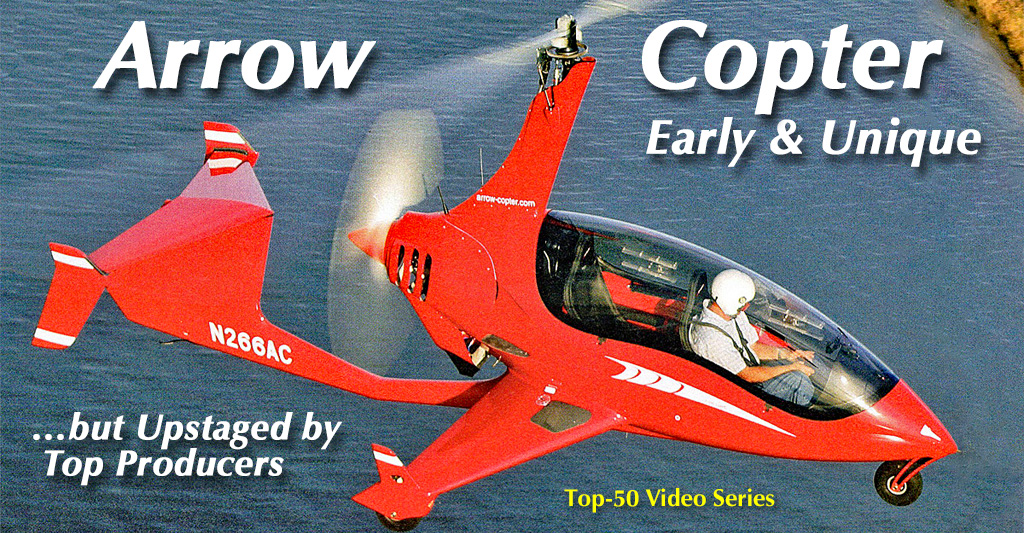

A dozen years ago, fixed wing pilots thought very little about “gyrocopters” — as some people called them. Actually that word is a model name established by Igor Bensen, widely thought of as the father of this activity along with Juan de la Cierva of Spain, known for his pioneering autogyro work.
 The preferred term these days is “gyroplane.” Names aside, what pilots care about is having fun in the air and being able to afford a flying machine. When an aircraft also looks terrific, heads turn.
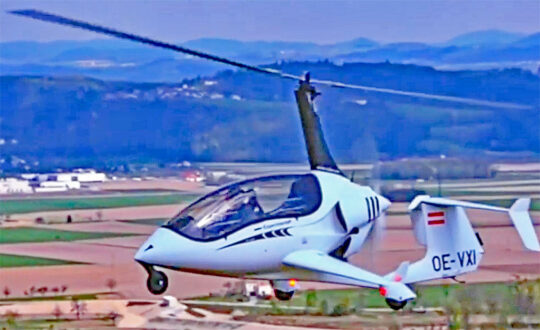 From eleven years ago comes the #3 in our list of Top 50 Aircraft Videos. More than 450,000 views of this video show broad interest in ArrowCopter, quite the head turner in its day.
Gyroplane interest grew quickly after European designers took the lead from American manufacturers. Think back to the days of Ken Brock’s gyro or the former Air Command (now under new management). Those machines were simpler. Euro designs went much further and kept on going. ArrowCopter was one of the early leads in this fascinating development.
Fly Like An Arrow
Getting right to the point, although this rakish design attracted a large video audience over the years, ArrowCopter failed in the marketplace. The company is no more. Why the product failed could hinge on any number of reasons but at least one early video review of ArrowCopter was not very complimentary, faulting both the company organization and its flight qualities. The reviewer liked ArrowCopter’s speed, but he did not like the way it behaved at those speeds. Reviews like that can kill a fledgling design.
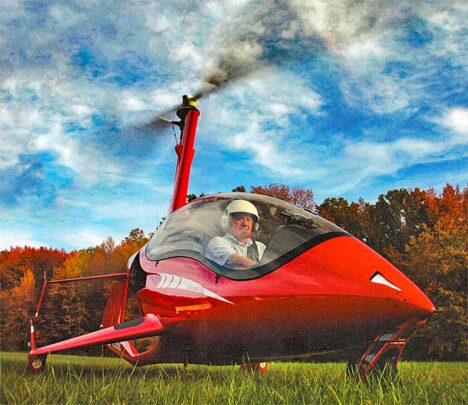 Great detail is unnecessary since you cannot buy a new ArrowCopter and I know of no used ones for sale although at least two were sold into the United States (they appear in pictures). Still, it’s worthwhile to look at some of its unique qualities.
American gyroplane enthusiasts first saw ArrowCopter back in 2014, only three years after its maiden flight. If you were at Bensen Days that year and admired ArrowCopter, you may be aware you’ve seen nothing since.
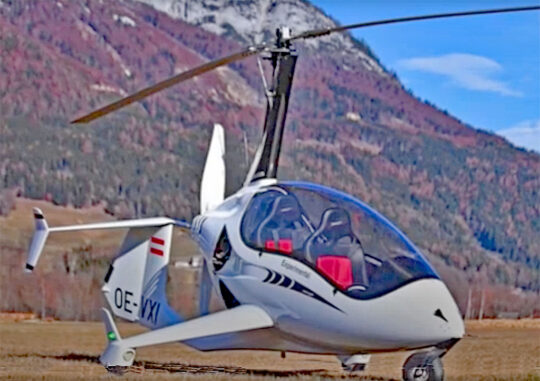 ArrowCopter’s aerodynamically shaped landing gear strakes provide lift in horizontal flight, claimed some reviewers, and serve as fuel tanks. This design feature is one of several distinctive ideas that ArrowCopter designer Dietmar Fuchs incorporated.
As ArrowCopter accelerated down the runway, pilots looked for 60 mph (52 knots) and 340 rotor rpm. At that point ArrowCopter is ready to launch. Climb out occurs at 60 mph while cruise speed is 99 mph (86 knots). ArrowCopter’s never-exceed speed was 120 mph (104 knots).
Non-gyroplane pilots may not find that particularly fast. Certainly, it is not compared to a fixed-wing, high-powered mLSA aircraft. As gyros go, though, that’s fairly quick. It’s smooth lines explain much.
What you should know is that gyroplanes are some of the best aircraft in recreational aviation at performing well in stronger winds. This is true of all gyroplanes, not only ArrowCopter.
Market Changes
Today, ArrowCopter is gone but others have risen to carry on with striking designs and innovative ideas. Along the way, Rotax has continually raised the power output of its 9-series engines. The Austrian engine giant acknowledged that for several years in the mid- to late-2010s, gyroplane manufacturers were the single biggest segment buyers of 9-series engines. Gyroplanes were hot, hot, hot. Sadly, ArrowCopter missed the chance to grab many sales.
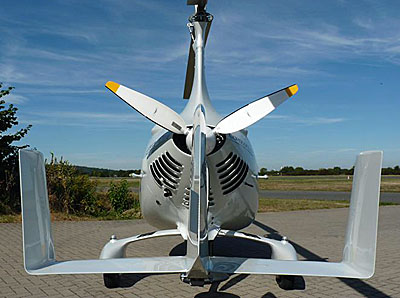
Brands like Germany’s AutoGyro rose quickly and sold large numbers of aircraft. They steadily refined these and produced several models that remain among the most popular designs on the market.
Others like Magnigyro from Italy also flourished and also offered increasingly advanced models. More recently, side-by-side seating has made inroads into what had been exclusively tandem-seating aircraft. It’s worth noting here that most of the earlier American gyro models were single place but it was a much earlier time.
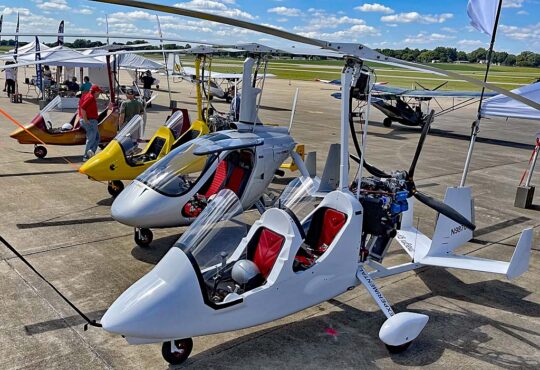
As the Europeans began selling faster, American producers like SilverLight reintroduced gyroplanes as a Made-in-American product. The Zephyr Hills, Florida manufacturer enjoyed a good early run as its Ranger arrived on the market. SilverLight later added a full enclosure for their model but it remains tandem seating.
Side-by-side interactions included the Rotorvox also from Germany. This product somewhat emulated ArrowCopter by being spacious inside. Rotorvox has not made a big impact in the market but it was rather late to the party. As gyroplane sales cooled somewhat weaker producers lost out to the majors.
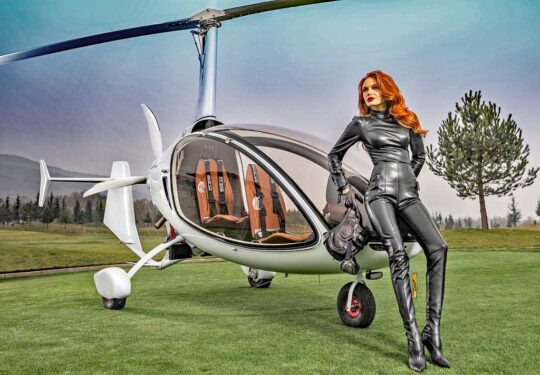
A newer entry but one also full of innovations is the Niki I wrote about recently (link below).
So, while our #3 aircraft subject has disappeared from the recreational aircraft scene, the market remains rich with gyroplanes, most of them quite handsome and clever. Now, with Mosaic proposing to finally allow factory-built gyroplanes, we may see a new renaissance in gyroplane adoption.
Stay tuned as I work my way through the Top 50 aviation videos of the last decade. Can you guess what’s next?
ARTICLE LINKS:
With ArrowCopter gone, here are gyroplane producers in business today; list does not include all manufacturers with regrets to any missed products:
- Gyro Technic (single seat), all content on this website
- AutoGyro, Video Pilot Report
- Magnigyro, article on this website
- SilverLight, article on this website
- Rotorvox, article on this website
- Niki, or Niki Gyro, 2 articles on this website
- Hummingbird, article on this website
- Air Command (renewed product), article on this website
- Skyblazer, mention in this article
- Fusioncopter Nano, a Part 103 gyroplane covered in this article
- ELA Eclipse, contact information, plus video
MORE GYRO INFO:
- Gyroplanes or Autogyros, article on this website comparing the two types
- Market Share Report on gyroplanes in America
- Bulldog Autogyro, video on this website (beautiful production no longer offered)

Here is the video that ranked so high with YouTube enthusiasts: