









In a major win for the aviation community, the FAA on Tuesday announced it has finalized the Modernization of Special Airworthiness Certification (MOSAIC) ruling, dramatically changing certification requirements for light sport aircraft (LSA).
The new regulation shifts away from arbitrarily fixed requirements, such as the previous 1,320-pound weight limit for LSA certification, to a performance-based standard. Under MOSAIC aircraft that have a clean stall speed of up to 59 knots are eligible under the category to be flown by pilots with a sport pilot certificate.
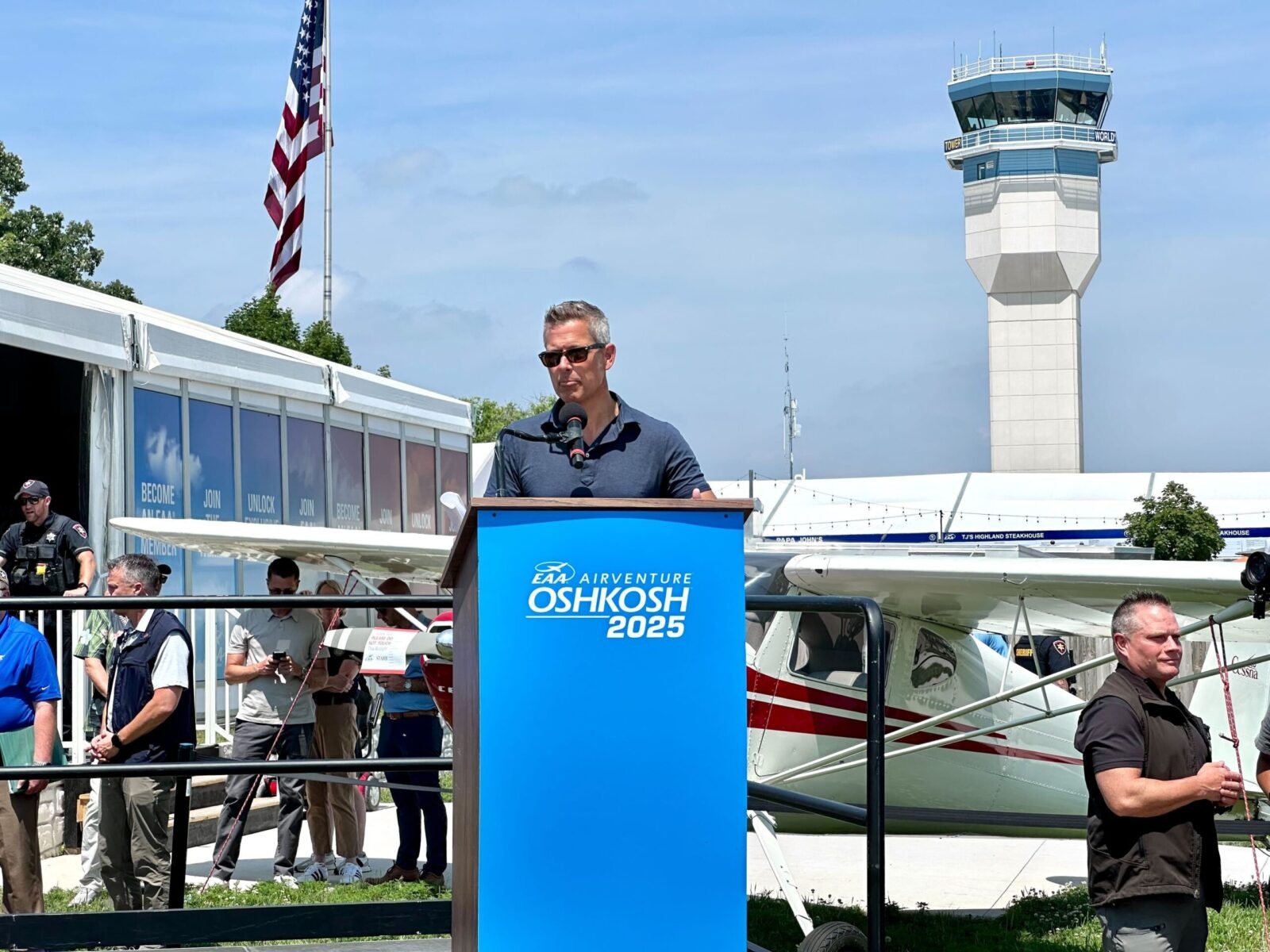
Officially signed on July 18, U.S. Transportation Secretary Sean Duffy made the announcement of the new ruling at EAA AirVenture in Oshkosh, Wisconsin, to a crowd of around 500 outside the EAA Member Center.
“I can’t think of a better place than at the largest general aviation airshow in the U.S. to announce that we’re unleashing American ingenuity,” said Duffy. “This new rule will promote better designs, safer materials, and upgraded technology in the recreational aviation sector. Our recreational pilots and plane manufacturers have correctly noted outdated regulations were inhibiting innovation and safety. No more.”
Left unchanged since its inception in 2004, the original ruling establishing the LSA and sport pilot category has been scrutinized by industry partners for over a decade. In 2023, the FAA first issued a Notice of Proposed Rulemaking (NPRM), outlining MOSAIC and its potential changes. Following the NPRM, the agency opened up a period of public comment, where it received over 1,300 comments providing feedback on the proposed rule.
MOSAIC fundamentally changes the GA industry. At its most basic function, the ruling gives sport pilots the ability to operate a much larger breadth of high-performing aircraft that was previously unavailable to them. More than that, manufacturers are now open to a whole new side of innovation. Rather than crafting LSAs to meet rigid weight requirements, designers can develop cutting-edge aircraft that fall within performance parameters and not sacrifice efficiency or safety.
There is also the hope that MOSAIC attracts a completely new crowd to the aviation community—one that was previously barred by an expensive market or arduous certification process. Obtaining a sport pilot certificate remains relatively simple, including the benefit of using a U.S. driver’s license to meet the medical eligibility.
With Boeing recently projecting the need for 2.4 million new commercial aviation jobs through 2044, stimulating interest in aviation remains a priority.
Even before MOSAIC’s final posting, certain manufacturers were developing aircraft in the anticipation of the changes.
Czech Republic-based TL Sport Aircraft unveiled its new Sirius BackCountry on Monday at AirVenture. The company said the high-wing, performance-based aircraft is positioned as “MOSAIC-ready” to take advantage of all the excitement surrounding the rule.
While most commercial work is still restricted under MOSAIC, the ruling does allow for sport pilots to conduct infrastructure and forest inspections, photography and filming, and agricultural surveillance.
Enforcement of the rule will be rolled out over the next year. Changes for sport pilots will take effect 90 days after the final rule is published, with changes for LSA certification coming 365 days after the publishing.