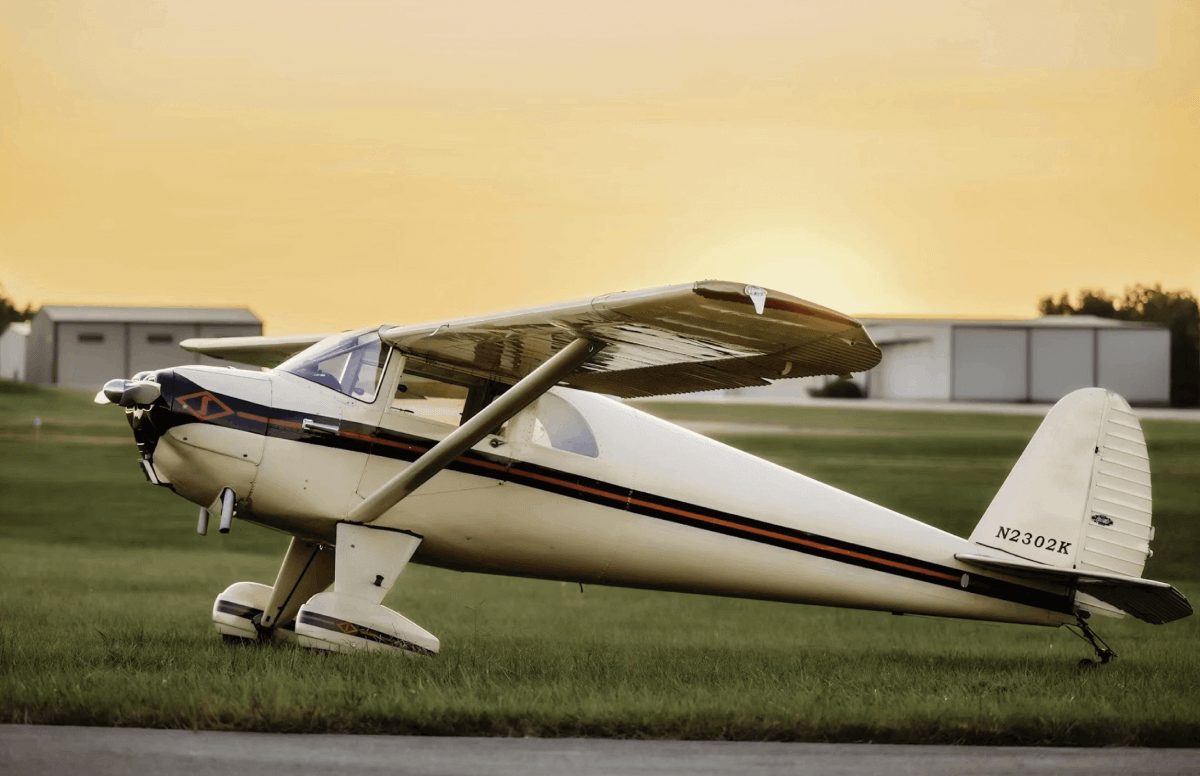











![Seaplanes taxiing to docks are a common site around the Keweenaw Peninsula. [Credit: Visit Keweenaw]](https://planeandpilotmag.com/wp-content/uploads/2026/05/Keweenaw-46651.b2.jpg)

Once, Michigan’s Keweenaw Peninsula supplied half the copper for U.S. Now it’s a paddlers’ paradise of quiet coves and deep forests.
Bring your favorite fly rod or play golf, tour an old mine, and savor a classic Cornish pasty. Want to really get away? Hop aboard a ferryboat or seaplane—maybe even your seaplane—to Isle Royale, America’s least-visited national park. Spend a day or a week kayaking, hiking, or camping in this remote forested wonderland of moose, bats, beavers, and wolves.
Keweenaw Peninsula Guide
You’ll be flying to the northernmost part of Michigan’s Upper Peninsula, which juts into Lake Superior from the south. Houghton County Memorial Airport (KCMX) lies just north of the Keweenaw Waterway that divides the Keweenaw from the rest of the U.P. Seaplane landings are permitted on any open water around the islands off the peninsula.
From the airport, travel northeast up the Keweenaw Peninsula toward Copper Harbor. Take a guided tour of the huge Quincy Mine in Hancock, between Houghton and the airport.
In Laurium near Calumet Township, you can stay at the luxurious, yet affordable, historic Laurium Manor Inn. Many area miners originally came from Cornwall, England, and Cornish pasties, a meal of meats and veggies wrapped in dough and baked, are a lunchtime mainstay of the area’s “Yooper” cuisine. Some of the best pasties are at Toni’s Country Kitchen in Laurium—I can’t visit this area without having one.
In downtown Calumet you’ll see a 9,392-pound single piece of float copper, an 1883 locomotive house, and the Coppertown Mining Museum. Catch a concert or play at the Calumet Theatre, established in 1900. Shop for everything copper at Copper World, housed inside an 1869-era wood-framed building. Like the Quincy Mine, the entire city is a part of the Keweenaw National Historic Park, a confederation of sites centered on the mining towns of the peninsula.
Park headquarters are at the historic Calumet & Hecla Mining Company General Office Building. If you want more Cornish pasties, the Mohawk Superette also makes good ones, but call ahead to be sure they’ve got them (906-337-2102). I usually head to the coast for birding and fine dining.
At Ahmeek, take 5 Mile Point Road toward Lake Superior. Visit the North Woods Conservancy’s Merganser Pond—home to ducks, eagles, and trumpeter swans. Then follow the road along the shoreline to Eagle River, where there’s fine dining, lovely wines, and sensational views at Fitzgerald’s Restaurant.
Continue northeast on beautiful Highway 26, referred to as “Sand Dunes Drive,” to the red brick Eagle Harbor Lighthouse, surrounded by four small nautically themed museums, a blacksmith shop, and more. The operational light station is open mid-June to mid-October.
Between Eagle Harbor and Copper Harbor, you’ll pass several wildlife sanctuaries. Board a narrated boat tour to visit the Copper Harbor Lighthouse. At Fort Wilkins State Park, you can check out 19 restored buildings that date back as far as 1844. Fort Wilkins also offers a living history program, camping, hiking, and fishing.
You can rent a mountain bike or kayak to explore Copper Harbor, or join a guided single-day or multiday kayak trip. Expert paddlers can take six to eight days to kayak the 100-mile complete loop around the peninsula via the Keweenaw Water Trail, exploring remote rocky islands, Michigan’s wildest coastline, and the Keweenaw Waterway.
Copper Harbor also provides plenty of lodging. Choose a private cabin on the lake from Eagle Lodge and Lakeside Cabins, a 1950s-style motel at the Minnetonka Resort (I love the eclectic book collection in its gift shop) or the historic WPA-era Keweenaw Mountain Lodge and cabins, where you can also play golf.
Dine on the water at the Harbor Haus Restaurant, watch another Lake Superior sunset, and toast your good fortune to have found such a magical place.
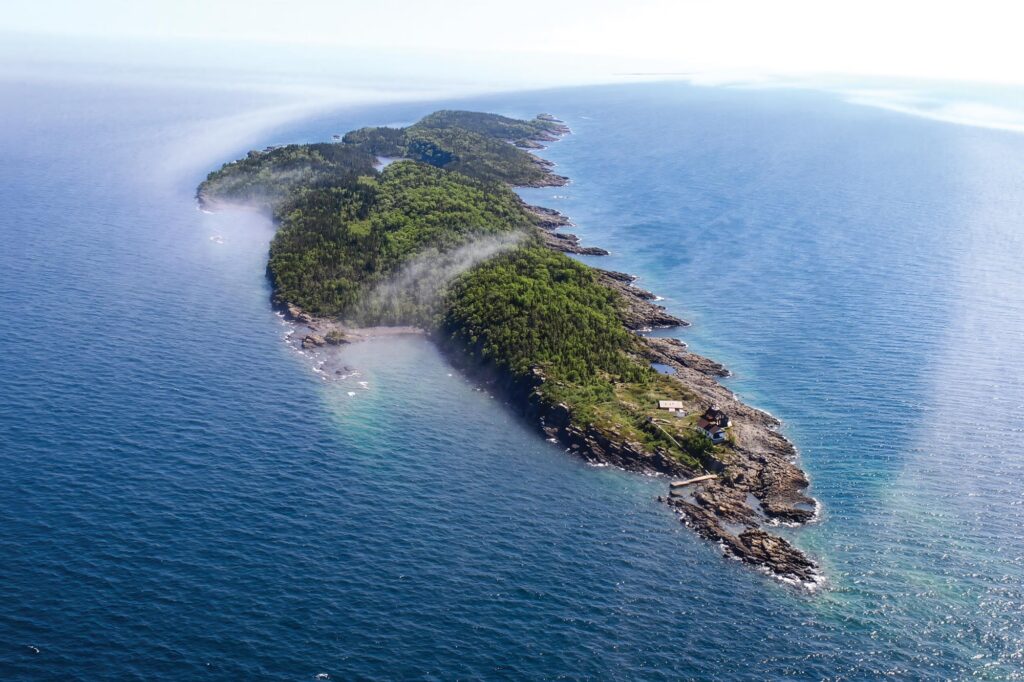
Isle Royale National Park
Forty miles off the Keweenaw Peninsula, Isle Royale is the least-visited national park in the Lower 48, averaging around 17,000 visitors per year.
Isle Royale is a designated wilderness, so land-based motor vehicles aren’t allowed. You can get there via ferry or commercial or private seaplane. The park is only open from April 16 to October 31. The park and its three visitor centers are closed from November 1 to April 15.
The Houghton Visitor Center on the south side of the Keweenaw Waterway sits just a mile away from the world-renowned A.E. Seaman Mineral Museum, which boasts over 30,000 gemstones, rocks, and fluorescent minerals—a rockhound’s paradise.
The two closest airports to Isle Royale are Grand Marais/Cook County (KCKC) in Minnesota and Houghton County Memorial (KCMX).
The park’s two main access points are Rock Harbor, near the island’s northeast end, and Windago, near the southwest end. Both sites provide a visitor center, plus canoe and kayak rentals.
Rock Harbor offers a full-service lodge with 60 rooms and two restaurants. A grocery store stocks camping food and supplies, fishing supplies, and sundries. Amenities are sparser at Windago, as there’s a pair of camper cabins, each with electricity, a barbecue grill, and bunk beds (linens and cooking sets can be rented for a nominal fee). and a general store.
The island also sports 36 campgrounds across its 40-mile length. No pets are allowed on the island, Lodging and ferry details can be found on the National Park Service website.
How to Get There
There are only two ways to access Isle Royale—by ferry and seaplane. Ferries offer overnight or day trips, which last 90 minutes to six hours one-way, depending on the route and ship. Ferries depart from Houghton, Copper River, and Grand Portage. Ferries dock at Windago and Rock Harbor.
You can fly your own seaplane, or board a Cessna 206 or de Havilland Beaver with Isle Royale Seaplanes. It provides direct flights from its base on the western shore of Torch Lake, a 15-minute drive from KCMX. Destinations include either Windago or Rock Harbor.
Isle Royal Seaplanes also offers intraisland flights between Windago and Rock Harbor. Flights are typically 45 minutes, and it’s suggested to arrive 45 minutes prior to boarding.
If you’re planning a camping trip, note that solid fuels and flammable gas or liquids (including backpacking stove fuel) are not permitted on transportation service’s aircraft. Backpacking stove fuel can be purchased at the Rock Harbor Dockside Store or Windigo Store.
Seaplanes may land and dock at three sites at Isle Royale National Park. The locations are shown on the sectional with asterisks but aren’t named. The locations are Windago (at the southwest end), Tobin Harbor (near Rock Harbor at the northeast end), and Mott Island (3.5 nm southwest of Rock Harbor).
Although you may dock at Mott Island, it’s a park service administrative base and provides no visitor services, so we’ll focus on the other two landing sites. Remember that 99 percent of Isle Royale is federally designated wilderness. The park requests that pilots attempt to conduct flight ops over the lake rather than over the land to minimize noise disruptions to wildlife and wilderness users.
Before departure, pull up Isle Royale on Google Earth to get a better look at it. Call the park (906-482-0984) to let officials know you’re flying in. This way they can expect you and let the commercial seaplane pilot know to keep an eye out, and you can clarify exactly where to tie up.
The Windago docks are at the far northeast end of Washington Harbor, with Beaver Island in the center. If winds are strong out of the south, you might want to come around to the north side of Beaver Island.
Rock Harbor has a large marina designed for the ferries and other boating activity, not seaplanes. Tobin Harbor, which lies just north of Rock Harbor, is sheltered from waves, and that’s where you’ll land. It’s only about a 700-foot walk across the narrow spit of land from Tobin to Rock Harbor.
After docking, check in with a ranger at the visitor center. Pay the $7-per-day fee (including arrival and departure days), and arrange for your free overnight permit, if you’re staying. There are no fuel services.
Other Fees
Especially if you arrive via commercial seaplane or ferry, it’s smart to pay visitor fees online before departure.
If you or your party’s total individual daily fee is greater than $60, it’s more economical to purchase the $60 Isle Royale Season Pass or $80 annual Federal Recreational Lands Pass. The park waives daily entrance fees for pass holders and up to three additional adults (four total) in the same party.
Children under 16 are free. If you already have a federal or Isle Royale pass, be sure to bring it with you.
This feature first appeared in the May/June 2026 Issue of Plane + Pilot magazine.