









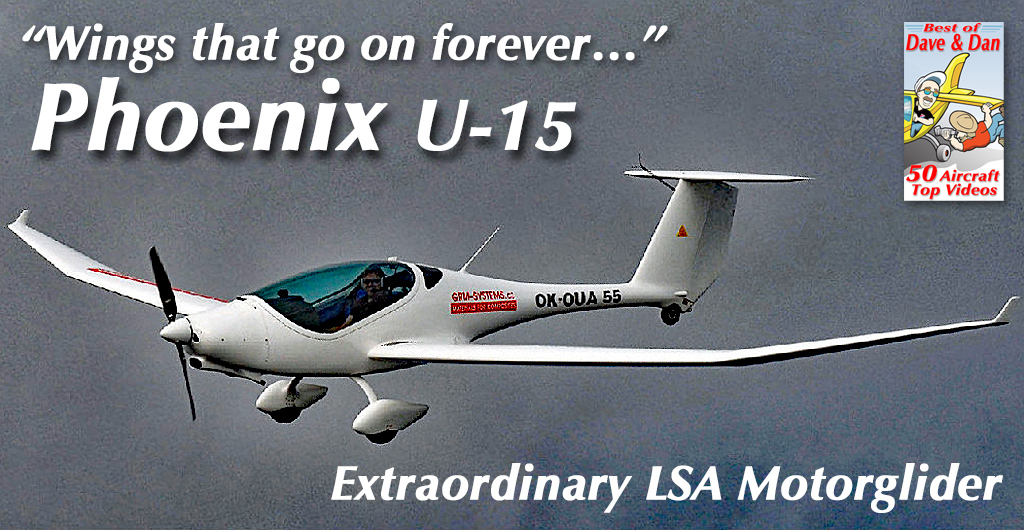

The Top 50 video series has gone over very well and continues with this post about the Phoenix LSA motorglider. If you thought it disappeared and were unhappy about that, have I got good news for you!

I am aware of a very positive development regarding Phoenix that I am working to confirm. As soon as I have fuller details I will update this article but the prospects for LSA motorglider look promising.
In North America, Phoenix Air USA is run by Ed Babovec (email) and he is excited about 2024. …more as it unfolds.
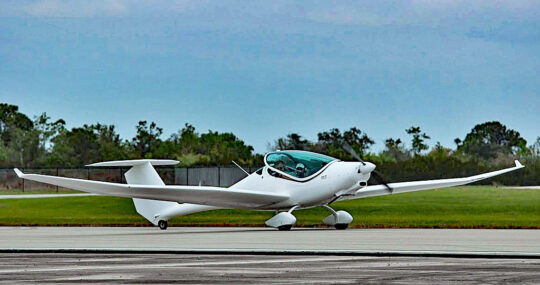
Motorgliders as a subset of all aircraft enjoy some very special privileges that endear them to the recreational flying community. In particular, motorgliders do not require an aviation medical. That alone makes them desirable but long-gliding capabilities make them safer to some pilots and simply more enjoyable to others. Let’s look a little more deeply.
ePhoenix (Why Not?)
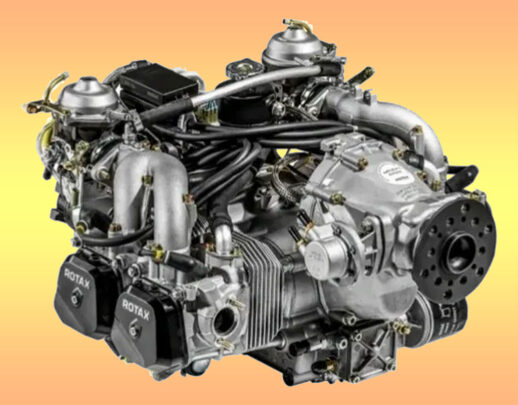
Equipped a gasoline engine, Phoenix comes with either the 80 or 100 horsepower Rotax ULS that has powered so many aircraft in light aviation. In fact, for this particular aircraft the 80 horse version (image below) is an especially tempting engine, with its nearly-bulletproof operation and its ability to use 87-octane autogas that can be obtained almost anywhere.
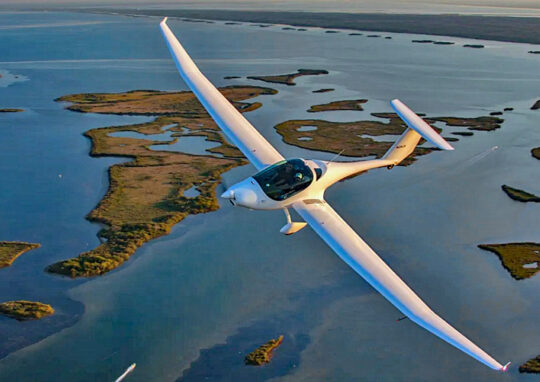 Despite a highly workable gasoline engine that many will prefer, the temptation of electric is especially strong with Phoenix.
Think about optimal benefits of electric propulsion.
I have long stated that Part 103 ultralights are already the first to be highly functional with electric propulsion, precisely because they are so light and their mission so modest. It’s a simple formula: lighter weight = less batteries = less expense = a workable aircraft in 2024. That Part 103 ultralights aren’t trying to travel long distances makes electric even more viable.
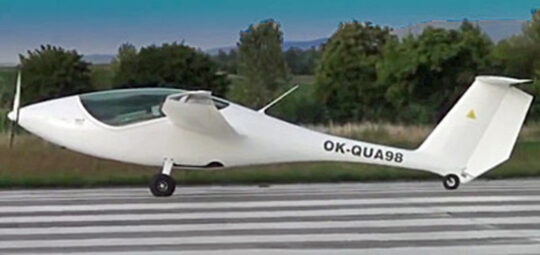
Beside Part 103, I can think of two other categories that could benefit from electric: aerobatic aircraft and motorgliders or self-launching sailplanes. The former only needs perhaps 20 or 30 minutes of power for an aerobatic demonstration and electric motors offer high torque that aerobatic pilots crave. Motorgliders only need power for a few minutes to get up 2-3,000 feet where lift is easy to catch in a long-gliding aircraft. Neither aircraft type needs long duration from its powerplant.
I’ve had coverage on the ePhoneix motorglider (this article) and a video on the development appears below.
(Gas or Electric)
Landing an Aircraft
that Glides 32-to-1
Motorgliders have various forms of appeal. Some folks are enticed by taking one of these machines aloft and seeing how long they can work the air without a power source. I am one who enjoys that kind of flying challenge.
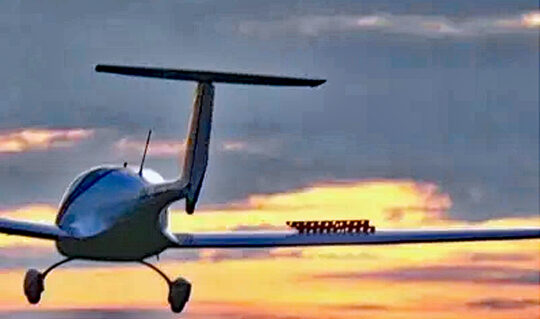
Other folks respect that capability but mostly want to fly the aircraft as an efficient cross-country cruiser, one that has a great safety advantage by virtue of its long reach, should the engine go quiet on the pilot.
The challenge with such a long gliding performance is getting one of these special flying machines on the ground without having a three-mile-long runway. Motorgliders come with the controls to handle them safely. However, pilots have to learn some new tricks. Here’s how the factory pilots the expert Phoenix pilots say to conduct landing.
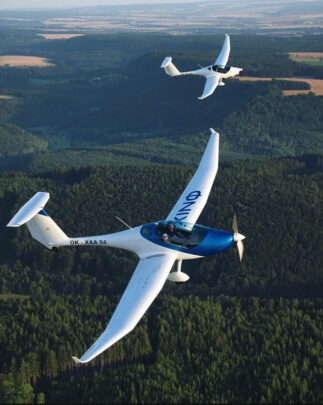 “The Phoenix motorglider is a taildragger with a twist. The tailwheel is controlled by the rudder pedals via cables to the rudder and steel rods connecting the rudder to the wheel. The tailwheel never “breaks free” or castors. Also, the main wheel disc brakes are controlled by a lever on the left control stick, which operates both main wheel brakes equally when used; no differential braking.
“Phoenix can be landed using the three-point or wheel landing. Wheel landings (landing on the mains and then holding the tailwheel off until speed is reduced) are easier and can be made with more precision than three-point landings but the three-point landing is critical when there is a crosswind blowing (because the tailwheel is on the ground and tracking can be controlled with the rudder pedals).
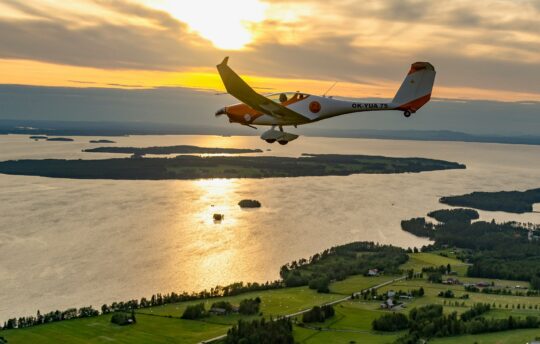 “The 15 meter (49 foot) wingtips give the Phoenix a 32:1 glide ratio, which means a lot of float or ground effect. Begin with the 11 meter (36 foot) wingtips that produce a 20:1 glide, which reduces ground effect and the amount of patience required by a learning pilot.
“When the spoilers are fully deployed after touchdown with the short tips, the plane remains planted on the ground with less chance of a bounce even if the plane touches down with extra energy.
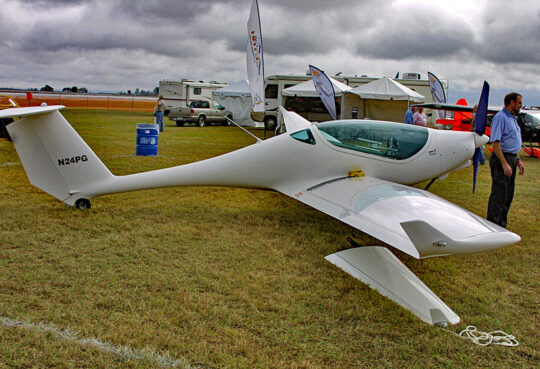
“Landings involve the same techniques with long or short tips with one major difference. With the long tips and fully deployed spoilers, there is still enough wing producing lift to be able to enter ground effect and make a normal landing. However, there is not enough lift produced with the short tips with full spoilers, so we never enter ground effect with full spoilers with the short tips. We initially teach using a half-spoiler landing technique for both 15 meter and 11 meter spans.”
If not satisfied with the landing aproach, Phoenix experts say to go around. “Close the spoilers and add full power. Phoenix climbs fast and gets you out of the danger zone in a hurry. A balked landing and go-around is a tool every pilot should have and be ready to use.”
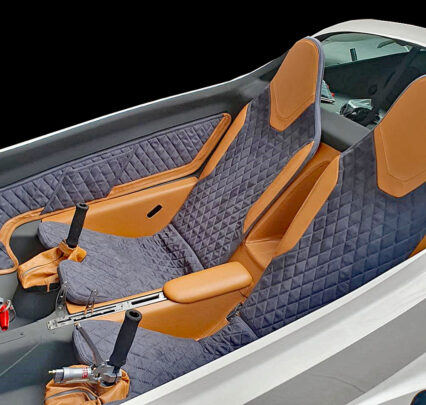 Once on the ground, they say to “keep about one pound of force on each rudder pedal to keep them aligned in the neutral position. Apply very light pressure to one side or the other for directional control. It only takes very small adjustments on the rudder pedals when the plane is rolling at 40 knots. Keep the spoilers full open until clear of the runway. When doing touch and goes, don’t be too quick to close the spoilers on the go or you may get airborne unexpectedly or lose control directionally as the tailwheel comes back off the ground. Slow way down to 20 knots or so before closing the spoilers and adding power for another take-off,” finished the experts.
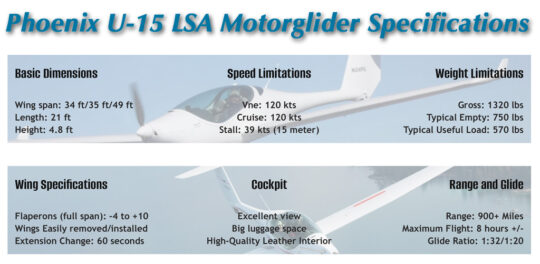
Once you feel entirely comfortable with landing one of these flat-gliding aircraft, you’re ready to go up aloft and use that magic to your benefit. Think of it this way: A 15 meter (49 foot) wingspan Phoenix generates a 32-to-1 glide. That means if you are up only 2,000 feet above the surface, you can still glide more than 10 miles before you’re on the ground.
 That’s a safety margin every pilot can appreciate, even if you have to train a little bit to use it effectively.
ARTICLE LINKS:
- Phoenix Air USA, contact info and all content on this website
- Article on ePhoenix with electric motor propulsion, on this website
- Watch here for new info… shortly

With more 200,000 views, this 2011 video was and remains a hit. Please note this is a 13-year-old video in every way. I trust you understand technology was not then the quality we take for granted today.
A couple years later, we did this update of an electric, retractable Phoenix at Aero Friedrichshafen n Germany.