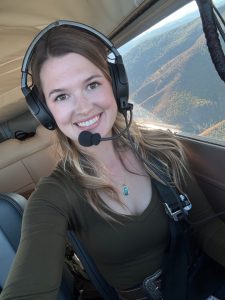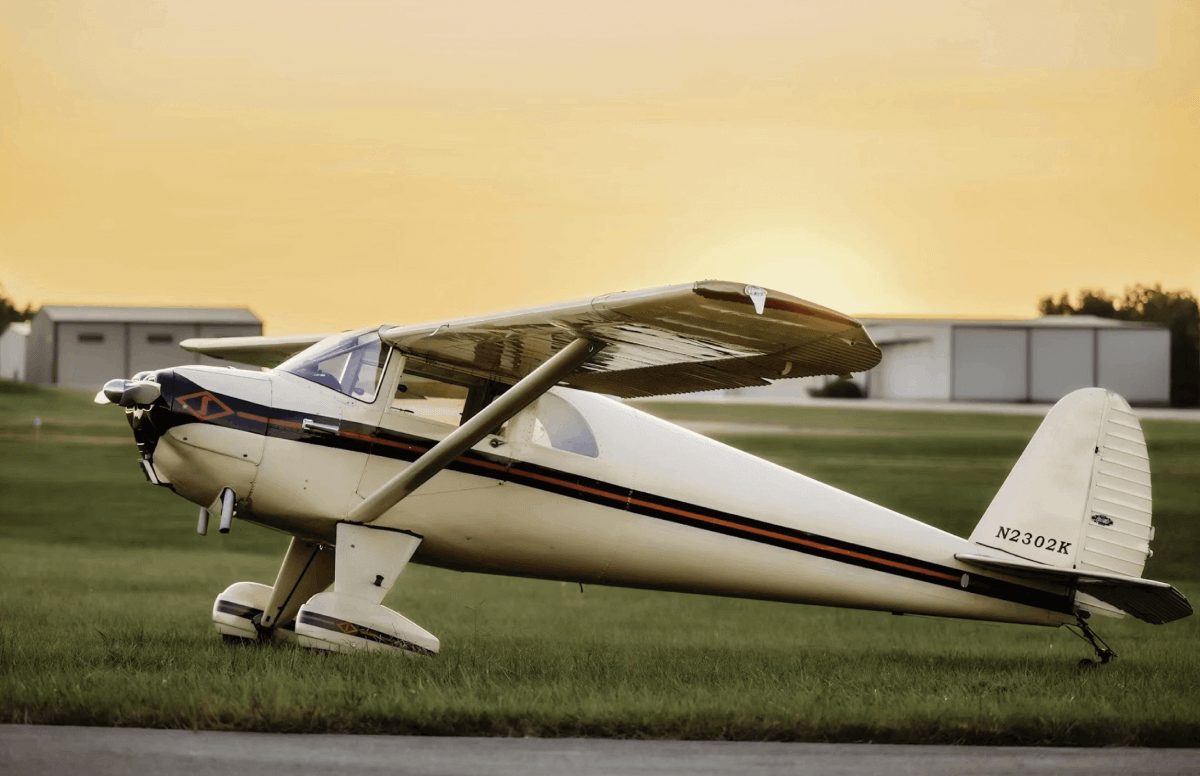










![[Credit: Cayla Mcleod]](https://planeandpilotmag.com/wp-content/uploads/2025/09/IMG_2607-2.jpg)

November will mark the nine-year anniversary of my initial flight instructor’s death. It is a date and memory that will be etched in my memory forever, as he was tragically killed flying a 1917 Curtiss JN-4 Jenny in Georgia.

Witnessing an accident like this as a 17-year-old student pilot, with merely 20 hours in my logbook, stuck with me in a way that only one can imagine.
Although I climbed back in the Champ he taught me to fly the very next day—thanks to the encouragement and support of another CFI mentor—I battled fear and confidence issues in the cockpit for seven years (the equivalent of 600 hours of flight time) following the accident.
How could an aviation legend like Ron Alexander die in an airplane? I couldn’t wrap my brain around it.
Alexander was a Vietnam Caribou pilot, DC-3 owner and instructor, retired Delta Air Lines pilot, airport and aviation business owner, and all-around aviation great. He had thousands of hours of flight time, instructional experience, and skill.
I had nothing close to that. If he could be killed with that level of proficiency and background, where did that leave me?
It left me feeling scared, anxious, and questioning myself every time I climbed in an airplane for a very long time. Still I was hell-bent on finishing my private pilot training to honor him, and to fulfill a personal goal, there were days it took every ounce of courage I had to get in the air—that is, before I earned my certificate and years later.
While the terror wasn’t debilitating, it left me with an upset stomach and nausea before almost every flight. Once airborne, I found myself listening to every single pitch change and sniffing every single smell.
I was paranoid to the point of not being able to enjoy flying in the ways I had before witnessing such a traumatic event.
Whether you’ve dealt with a fear of flying or not, losing people in this industry is, unfortunately, inevitable. But as my late instructor once told me, “You’re going to see sad things in this business, honey. But you just have to keep flying.”
With his own words fueling my purpose and passion to keep his legacy and memory alive, I earned my certificate and kept going. Although there were moments of extreme uncomfort- ableness, coupled with anxiety and self-doubt, I never once thought of hanging it up. I promised him I would keep flying.
With time, experience, and the support of a few key people and opportunities, I was encouraged to keep growing as a pilot, testing my comfort levels every time I pushed the throttle forward.
Even though there were occurrences where I thought I’d never get over my moments of hidden anxiety and fear, I did. But it wasn’t until I pushed myself out of my comfort zone in monumental ways.
If you find yourself struggling with fleeting (or frequent) moments of fear and anxiety before or during a flight, I encourage you to try a few simple things that led me toward a breakthrough:
Fly solo, preferably over long distances. You’ll prove to yourself that you can do it and that the airplane is worthy of your trust.
Be part of the maintenance process. Get to know the ins and outs of your aircraft, and only fly airplanes that have been properly maintained.
Act on opportunities to fly different aircraft. This will add to your confidence.
Take the airplane to the edge of the envelope with a skilled CFI. This will show you the true capabilities of your machine.
Stay out of your head. Think, but don’t think too much. Enjoy the moment.
Although flying fears have been shrouded in secrecy, having doubts and anxiety within aviation is entirely normal. I strongly believe in discussing your thoughts and feelings with other pilots, mentors, family, and friends.
There is no shame in bringing up concerns, as it is a risky business—but so is driving a car. We owe it to ourselves and to our dreams to keep growing as pilots and not allow fear to get in the way. In the words of my late instructor, “You just have to keep flying.”