











As communities in central Texas situated along the Guadalupe River have experienced devastating floods in the region over the past week, the general aviation (GA) community has responded to calls for aid and relief.
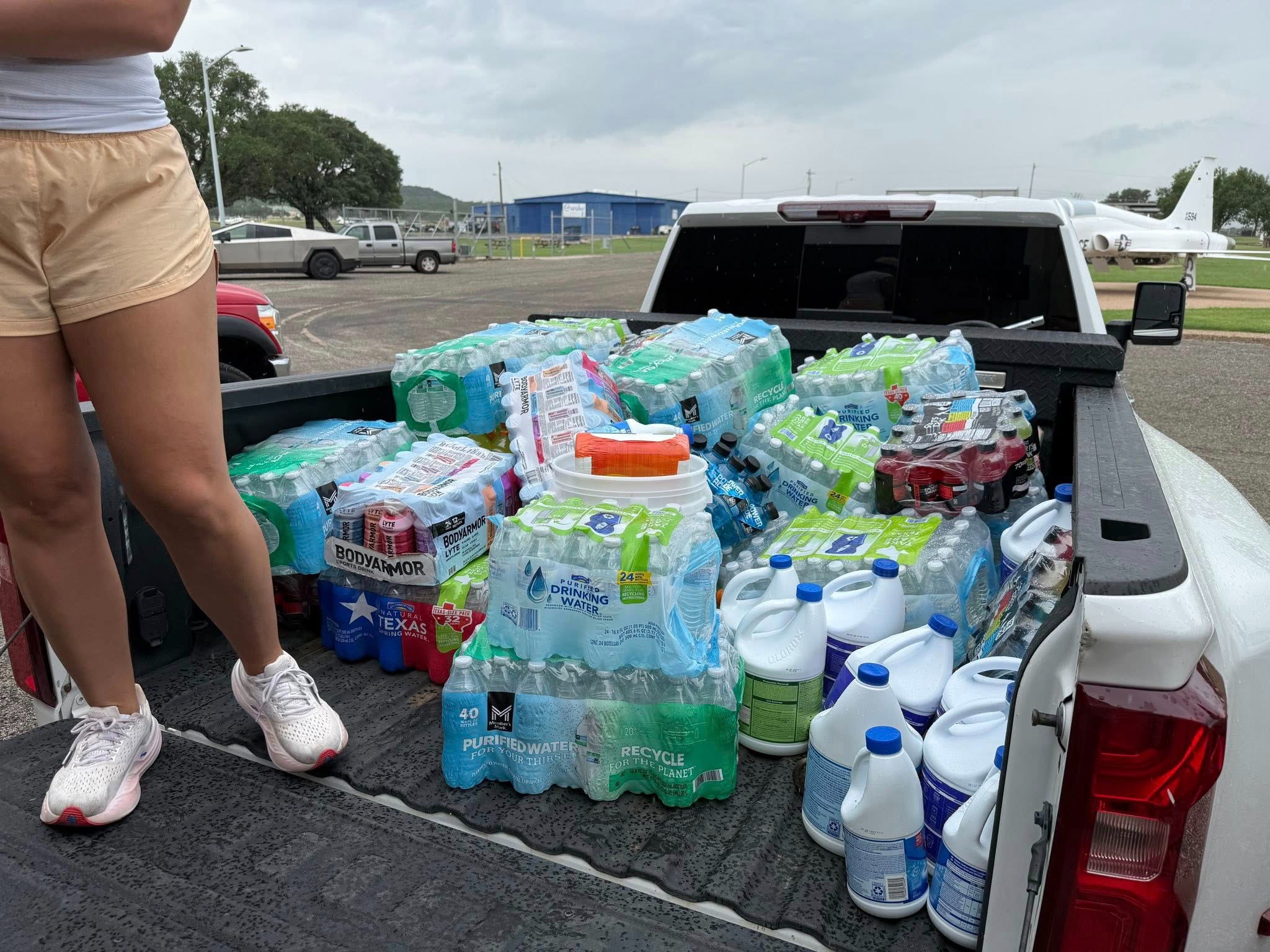
Operation Airdrop, a Texas-based nonprofit organization, has coordinated a widespread humanitarian effort to collect and deliver items in need to areas like Kerr County, which was among the hardest hit. Volunteer pilots gathered chainsaws, shovels, bug spray, water, and other needed essentials and brought them to temporary Operation Airdrop bases at Burnet Municipal Airport (KBMQ), north of Kerr County, and Addison Airport (KADS) in Dallas. Items gathered at KADS were flown to KBMQ and distributed to areas in need.
In an update posted to Facebook on Friday morning, Russ Keith, executive director of Operation Airdrop, said the organization was loading three aircraft, including two Black Hawk helicopters, to deliver supplies. The goal was to get those remaining aircraft off the ground before the presidential temporary flight restriction (TFR) goes into effect on Friday as Donald Trump is set to visit the affected areas.
As of Thursday over 62 airplanes had flown in supplies to KBMQ.
“Our volunteer pilots started contacting the organization immediately after the magnitude of damage became known,” said Tara Winter, communications director for Operation Airdrop. “Our usual response involves planes arriving empty to take supplies to the affected area. However, with Interstate 10 and other roadways in the affected area largely clear, this is kind of the opposite of that.”
Operation Airdrop was created in the aftermath of Hurricane Harvey in 2017, and this marked its first deployment that did not follow a hurricane.
“Normally when we deploy supplies are driven in and flown out,” Keith said. “This time, the supplies were flown in and driven out. We absolutely flipped our model.”
Parts of the Texas Hill Country, where most of the flooding took place, are known as “Flash Flood Alley.” However, despite the regular occurrence of flood warnings in the area, alerts and the estimation of severity were, in many cases, not relayed to the public until it was too late.
Reports indicated that many residents didn’t receive urgent warnings until the early morning hours of July 4 when many people were still asleep. Survivors spoke about being woken by the sound of popping electrical sockets and ankle-deep water.
During the torrential storm, portions of the Guadalupe River rose 26 feet in less than 45 minutes.
In the wake of the devastation, local officials have come under fire over the lack of preventable measures that were in place. Chief among the concerns has been the absence of sirens, similar to those used during tornado warnings, that would have alerted residents of the rapidly rising water levels.
Kerr County Judge Rob Kelly told the Associated Press that Kerrville previously looked at developing an alarm system for flood warnings, but the plan was scrapped due to costs.
“We’ve looked into it before,” Kelly said. “…The public reeled at the cost.”
Colton Miller, a Texas-based pilot, who flew a King Air in Operation Airdrop’s relief efforts, called the operation a “well-oiled machine,” with supplies loaded and unloaded quickly to the disaster areas.
“We’re a tight-knit community in the state,” Miller said. “We’re all Texans. We’re all friends. “We’re willing to help anytime. It felt like helping family.”