












Nine years ago, in 2014, electric aircraft were mostly experiments and the beginning was challenging. Several ill-fated projects attempted to electrically power airplanes that were inappropriate for such a powerplant. Batteries of the day had lousy power-to-weight ratios. Enough juice to lift and fly a two seater, much less a four seater, by an electric motor made for very short duration flights, measured in minutes not hours. An electric Cessna 172 project never succeeded; hardly a wonder.

Similar challenges face more than 350 air taxi start-up businesses. Sure, someday you might zip around big cities using UberAir but I think that remains years in the future. Range anxiety felt in electric cars becomes much more intense in an aircraft.
On the other hand, electric Part 103 aircraft enjoy two enormous advantages: (1) they only need to fly 30 minutes to an hour to deliver all the fun their owners have in mind; and (2) since Part 103 aircraft are the lightest in powered aviation, lifting them by electric power and batteries is far more achievable with today’s technology. In 2023, an hour’s flying on a Part 103 ultralight is quite reasonable. I’ve written about many of these; use Search if interested in exploring.
Enter EMG
Electric Motor Glider
An interview I did with Rainbow’s Brian Carpenter about his EMG project proved very popular, becoming one of our Top 50 over the last 16 years. We recorded that video at EAA AirVenture Oshkosh 2014.

At the time, the project relied on Quicksilver Aircraft, which produced about 25% of the components used on EMG. Rainbow had long represented and knew Quicksilver very well. It was a reasonable cooperative venture. Regretfully, the collaboration went south when Quicksilver’s enterprise dissolved and the supplier ultimately withdrew from the project.
Yet what really put the project on ice for a while was “the break-in robbery we experienced,” said Brian and Carol on a phone interview recently. You can read more of that below in excerpts taken from Brian’s entertaining blog.

Enthusiasm had been high. Customers were lining up. Yet people with bad intentions stole so much gear from the Carpenters’ Hangar 7 operation that the project had to restart almost from scratch. They tried to protect themselves with cameras and security but ultimately, the couple elected to depart California completely. They picked up sticks and moved to Kingsville, Missouri where they continue their very active Light Sport Repairman training courses. They are the nation’s leaders of this activity and have an extremely loyal following that thinks highly of their training techniques.
See more on Rainbow in this article describing their relocation and see a map of where their graduates reside (here’s an updated map). They have graduated 6,000 students from nearly every U.S. state and over 20 countries.

Brian and Carol worked hard building their enterprise. With many years of experience, they weren’t about to release a half-baked project into the market. “We’ve invested nearly $300,000 dollars in the EMG-6 project,” the partners noted. By any measure in light aviation, that’s a substantial chunk of change.
In his own words, here’s Brian’s description from his blog posts…
“The original project started as a collaboration with Quicksilver aircraft utilizing some of their existing tooling and technology to reduce the cost of the initial design. Two years into the project Quicksilver announced their bankruptcy leaving us high and dry with no notice and a design that we could no longer produce without a significant investment in tooling.
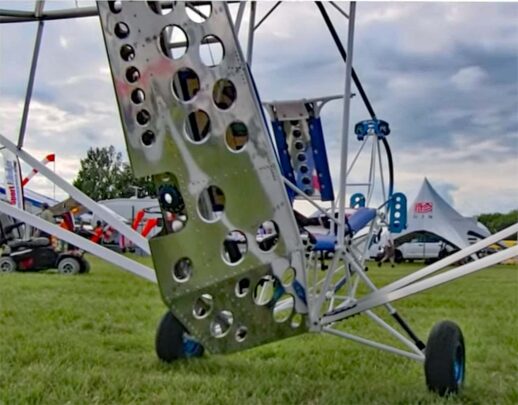 “We did retool and redesign the aircraft and invest in the tooling necessary to be able to produce the majority of the aircraft in-house. This redesign and investment cost more than the original design of the EMG-6. This set the project back by nearly two years.
“Undeterred, we persevered and completed prototype #2. In the bankruptcy of Quicksilver we lost the templates for building the Dacron sailcloth covers.” With little alternative, Brian related, “We started the process of building a new set of templates for the Dacron sailcloth-covered wings and the new aircraft design.”
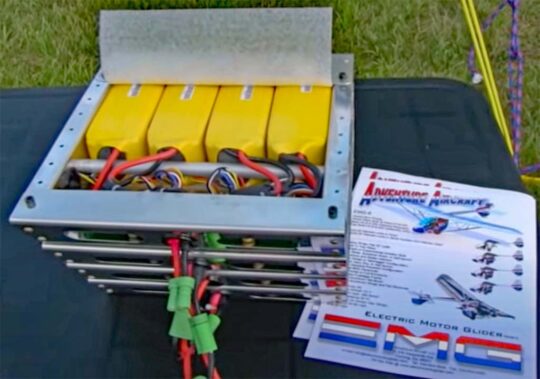 Work also continued with the MGM Compro motor system. This was early in electric aircraft development; motor and controller delays also stymied the EMG project.
Now for the bad news. Brian continued, “In November 2017, we had a break-in and robbery … a lot of stuff was taken, probably close to $60,000 worth. This was devastating on many fronts [and we got] no help from the police department. Our insurance company found a loophole and were absolved from any responsibility. The stress on [our staff] after the break-in was quite high.”
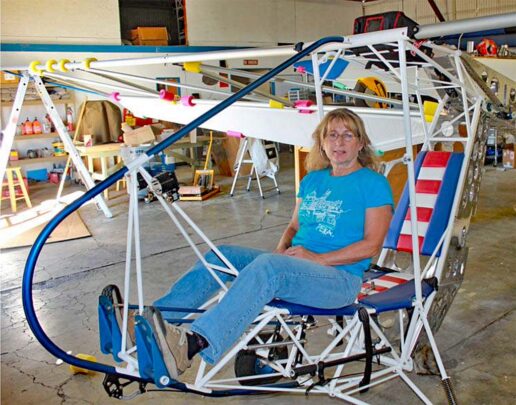
So, where [is EMG] today? “The good news is, we’re not quitters,” Brian emphasized. “Our Adventure Aircraft company, which was a subsidiary of Rainbow Aviation [that we] started primarily to focus directly on the EMG-6, was disbanded and all of the assets were transferred to Rainbow Aviation.”
Here in late summer 2023, the future of EMG is uncertain. However, for those who are truly enamored of this project can access all the plans on Rainbow’s web page. “Plans are free on the website,” said Carol.
As a homebuilder project without support, it may be difficult for most builders. “CNC machines are needed to make some of the components,” Brian said. “Materials we bought from Quicksilver are not available.” (Current Quicksilver models supplier Air-Tech, Inc., may have some of what is needed — the EMG parts were standard Quicksilver items and Air-Tech has full capability for all Quicksilver models except the GT500. Here’s an article about that change of Quicksilver ownership.)
Will the EMG
Project Survive?
At present, Rainbow Aviation is focused on their Repairman training business, a vital element of the light aircraft market. Although interest in the EMG video was high, the industry and owners likely benefit most if the Carpenters pay sharp attention to their main enterprise, at least while Mosaic is going through its final stages.
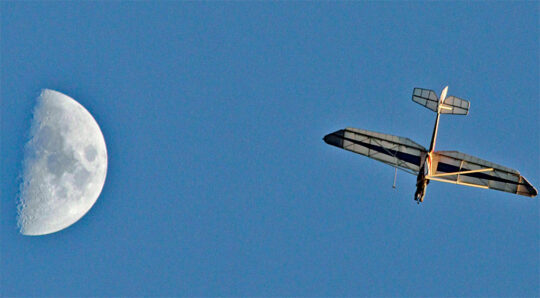 Brian yearned at the end of our phone call, “I’m dying to get back on it. I have three in the rafters and I have motors [and many other components].” The tooling did travel from California to Missouri, he noted.
Yet with Mosaic throwing curveballs at their essential Repairman training courses, Brian and Carol are keeping a tight focus on providing comments and solutions to FAA.
One day EMG might reemerge, but yes or no, this project fascinated hundreds of thousands — literally, as nearly 400,000 have viewed the 2014 interview produced by Dave Loveman’s YouTube channel.
ARTICLE LINKS:
- Original EMG interview from 2014, via direct link to YouTube’s “Light Sport and Ultralight Flyer” channel
- Rainbow information, full contact info plus articles on this website
- Article on Rainbow’s move away from California, with info on what you can do after completing one of their courses
- Rainbow’s EMG project page, company website
- Find a mechanic trained by Rainbow using this map
One More Thing
Now that Mosaic’s NPRM has been released…
 Rainbow is mounting an active campaign to assist Light Sport Repairman mechanics and SLSA owners who want to do some work on their own airplane. The Carpenters want these individual mechanics or owners to realize what Mosaic attempts to do that may be detrimental to their goals.
Use the link to reach Rainbow Aviation on YouTube where you can learn more. Do it soon — the clock is ticking!