









FAA proposed regulation has powerfully captured the attention of many pilots. Pilots have tons of questions. We have some answers. Everyone has a lot to read.
 But… uggghhh! Who wants to read this stuff? If it doesn’t put you to sleep, it might infuriate you.
Overall, FAA’s proposal has been warmly received as it opens the door to more capable aircraft that a Sport Pilot can fly. That’s good but the document has problems, too. Following are four examples…
This article is a longer, more challenging read than one about an aircraft.
If you prefer to listen or watch, I recommend the podcast and a video below.
Mosaic’s language invigorated many readers when the NPRM expressed support for a Sport Pilot (certificate holder) to fly at night — with proper training and a logbook endorsement. Yet then the proposal refers to other FAA regulations that require BasicMed or an AvMed. If you must have a medical, you are not exercising the central privilege of Sport Pilot. Why suggest that a Sport Pilot can do things that are blocked by other regulation? This conflict should be resolved.

Another opportunity gap involves aerial work. We’re pleased LAMA’s request was included but it requires a Commercial certificate to fly for compensation and this requirement eliminates powered parachutes and weight shift trikes, for which no Commercial certificate is available. This is discriminatory and should be fixed.
Maintenance experts have lots of questions; see the video at bottom.
ASTM standards writers raised questions about the value of noise regulations included for no present gain, “requiring solutions before the problem exists.” This appears to have political motivations.
You may find other aspects of Mosaic that urge you to comment. If so, you will find the following helpful…
Mosaic Study Guide
I can’t imagine anyone genuinely enjoys reading Mosaic. The Notice of Proposed Rule Making (NPRM) encompasses many pages in dense language; it’s tedious to review.
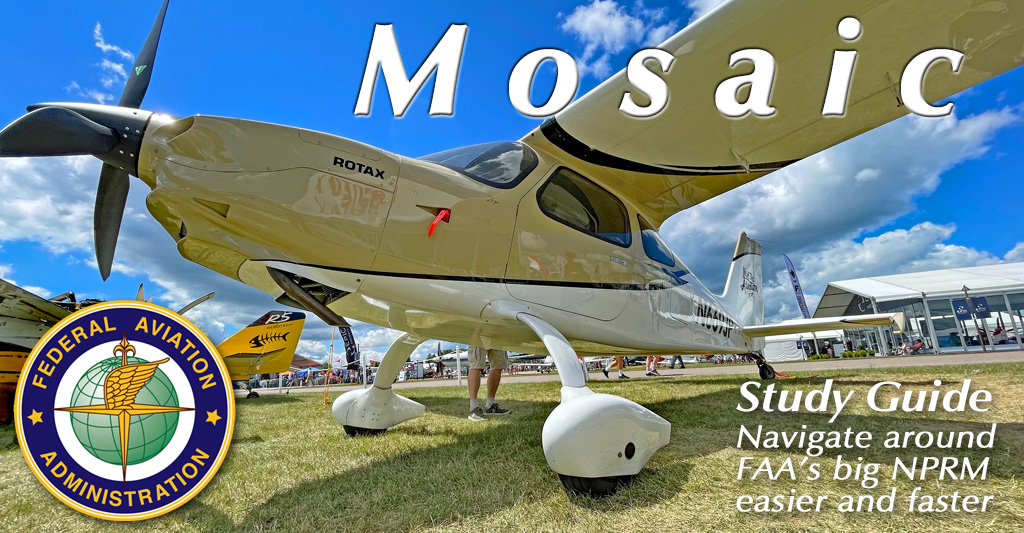
 It just got a lot easier, thanks to Roy Beisswenger.
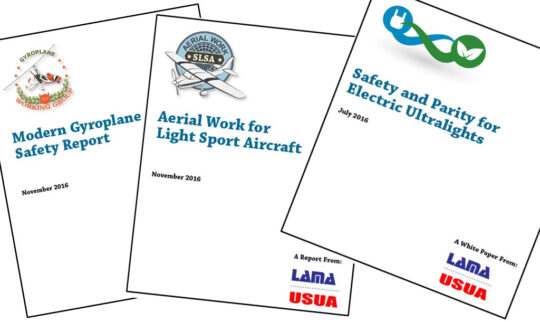
Beginning in 2014 — well before Mosaic existed — Roy and I spent years advocating FAA on behalf of the LSA industry and the pilots that fly those light aircraft. Roy was the lead author on several white papers LAMA submitted to support each of its requests. They went over so well with FAA that they are mentioned in the footnotes.
As you will see in the attached PDF Study Guide, Roy has done a monster amount of work in reformatting the documents so that you can walk through it and find what you want much easier.
GET THE STUDY GUIDE HERE (then download to use a reader with Bookmarks)
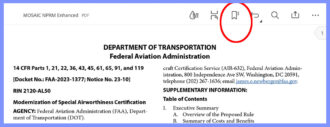
Roy also addressed specific comments I had, whereupon reading one section, FAA refers to another, and then to another. Before long, you forgot where you started and struggle to retrace your steps. You also need Internet access to study FARs published outside the NPRM. The continuous back-and-forth makes studying the document significantly harder and slower yet the clock is ticking on public comments. At this writing we have just over 60 days left.
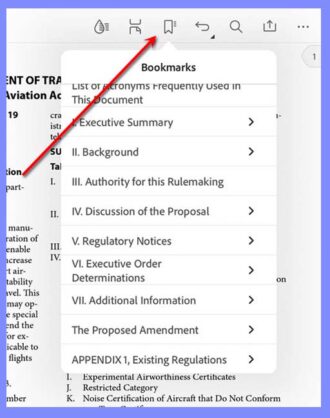
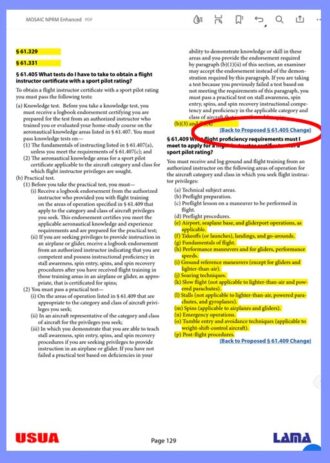
Reviewing the NPRM is far easier with this PDF Study Guide because of the bookmarks, links, and back-links, plus already-yellow-highlighted text which (which shows what current FARs will be changed plus some lightly-colored text that illustrates where FAA will insert new language. These all represent major time-savers.
Mosaic will still take a significant effort to review carefully, but Roy made the task much easier and faster.
Magic of Bookmarks
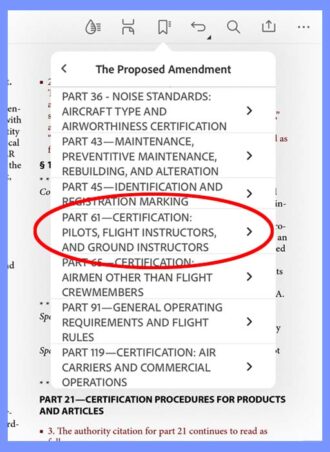
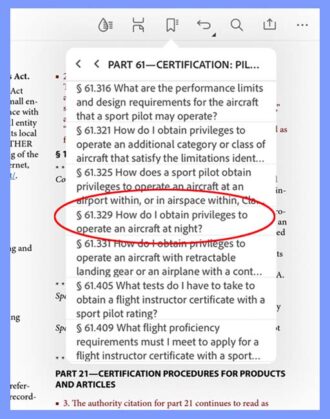
If you open the Study Guide with Adobe Acrobat on almost any device or computer (the Reader version is free) — or if you use Preview on Apple laptops/desktops — you will gain access to the bookmarks (look for a small icon in the upper right of a tablet or a smart phone; in Preview, show the Table of Contents. On both, use the triangles to drop down further and further). Bookmarks are your navigation friend, helping you jump to places of interest or study.
Roy even embedded “go-back” buttons on some pages when reviewing the FARs. This helps readers not get lost in their investigations.
Of course, within Acrobat (or Preview), you can Search for any text.
I observe for you that such ease of review was not possible when the SP/LSA regulation was released in 2004 (three years before the iPhone was introduced and before Facebook or Twitter). The World Wide Web was only nine years old at the time.
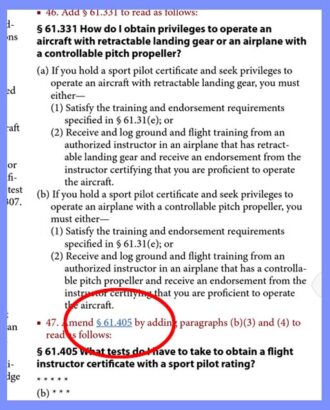
When reviewing Mosaic I recommend you follow aspects of particular interest to you rather than try to absorb the whole thing.
However deep you go, Roy made it incredibly easier. Thanks, Roy!
When you are ready to comment to FAA, use this link. We’ll have more advice on commenting as soon as possible but here’s some basic tips:
- Keep your remarks to a purpose; ask for something.
- Make specific requests.
- Reference language when changes are needed.
- Be constructive; no ranting.
- Be original; use your own words.
To see Mosaic comments already made, use this link.
More-More-More
M O S A I C
More about Mosaic? — John Zimmerman, president of Sporty’s, thought our conversation in this edition of the “Pilot’s Discretion” podcast conveyed a lot of good information (audio—42 minutes). John was an excellent interviewer. Click the image below to go directly to the podcast.

Many readers are keen to learn more about the maintenance aspects of Mosaic. Experts Carol and Brian Carpenter give you their view in this video. The team notes several points deserving more attention. (Length: 59 minutes)