










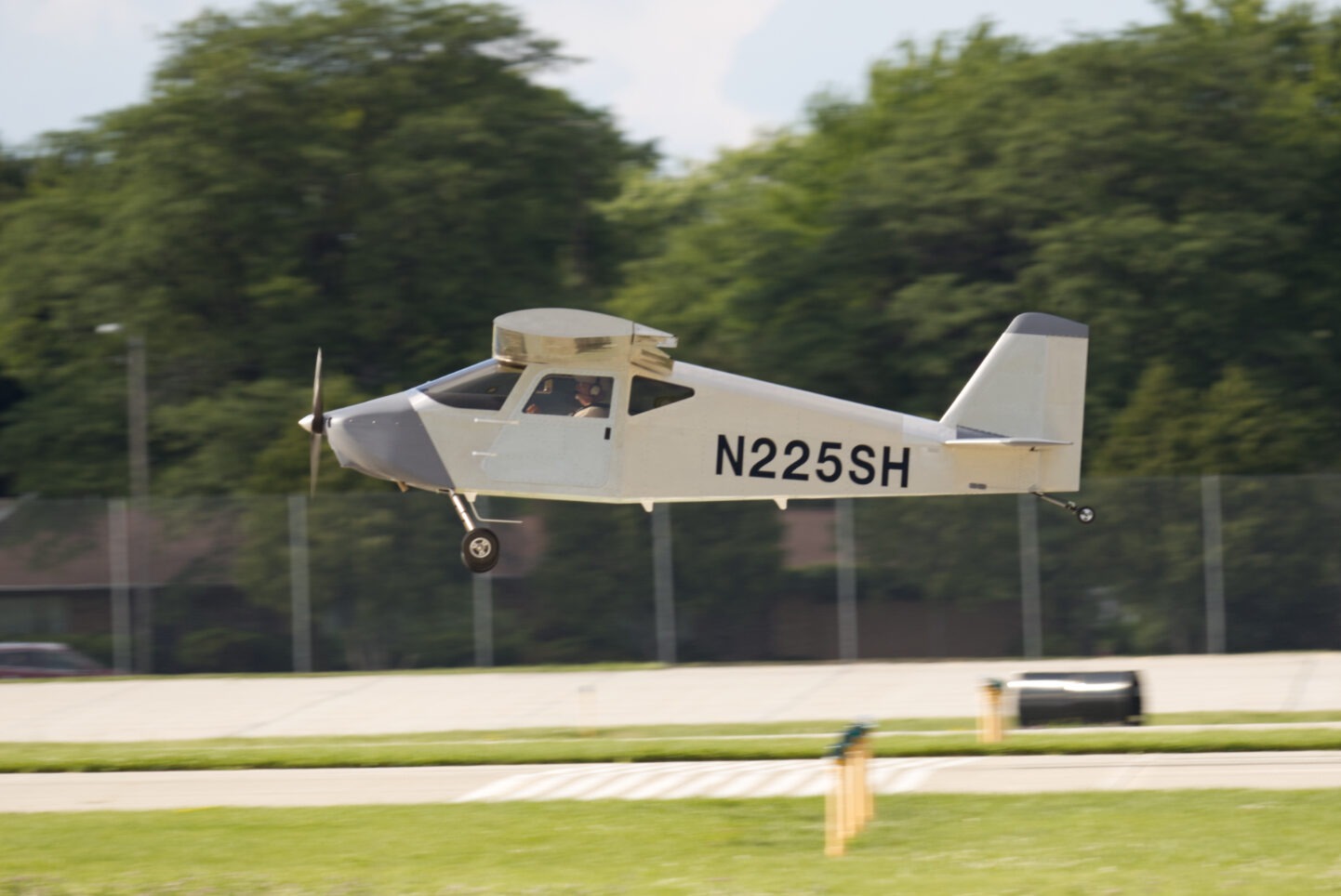

On June 30, Sonex announced that the inaugural flight for its Highwing prototype was a success.
Piloted by Sonex advisory board member Joe Norris, the flight was conducted in the evening and kept short due to an issue with the passenger-side door latch. Despite that trouble, Sonex reported that all engine temperatures looked good and that the aircraft handled as expected.
More test flights are expected soon, along with the accompanying data from them.
Earlier in June, the Oshkosh, Wisconsin-based company ran the prototype’s engine for the first time and said its hope was to achieve first flight before EAA AirVenture 2025 at the end of July.
Originally announced in 2021, the Sonex Highwing marks a departure from its typical low-wing aircraft, making this the company’s first high-wing development.
“While many kit manufacturers today offer high-wing aircraft with a backcountry mission in mind, we are making our cantilevered wing aircraft in the Sonex tradition of sleek, efficient aerobatic and cross-country performance,” the company said in a statement.
Sonex first displayed a version of the aircraft at last year’s EAA AirVenture. Even without the wings or engine affixed to the airplane, potential customers were still able to sit in it and try it on for size while improvements were being made.
According to Sonex, the Highwing prototype is designed to take advantage of the proposed new FAA Modernization of Special Airworthiness Certification (MOSAIC) rules. MOSAIC, first proposed in 2023, makes significant changes to the light sport aircraft (LSA) classification.
The new rule pivots LSA restrictions to a performance-based approach, moving away from conventionally fixed requirements.
One of the most rigid restrictions currently is that LSAs cannot weigh more than 1,320 pounds. With the max gross weight of the Sonex Highwing coming in at 1,500 pounds, the new regulations will bring it under the LSA umbrella, making it widely available for a greater range of pilots.
