












Flying The V1.0.
The interior of the V.1.0 (we know not what the presumed V.1.1 has to offer or when) is a study in contrasts.
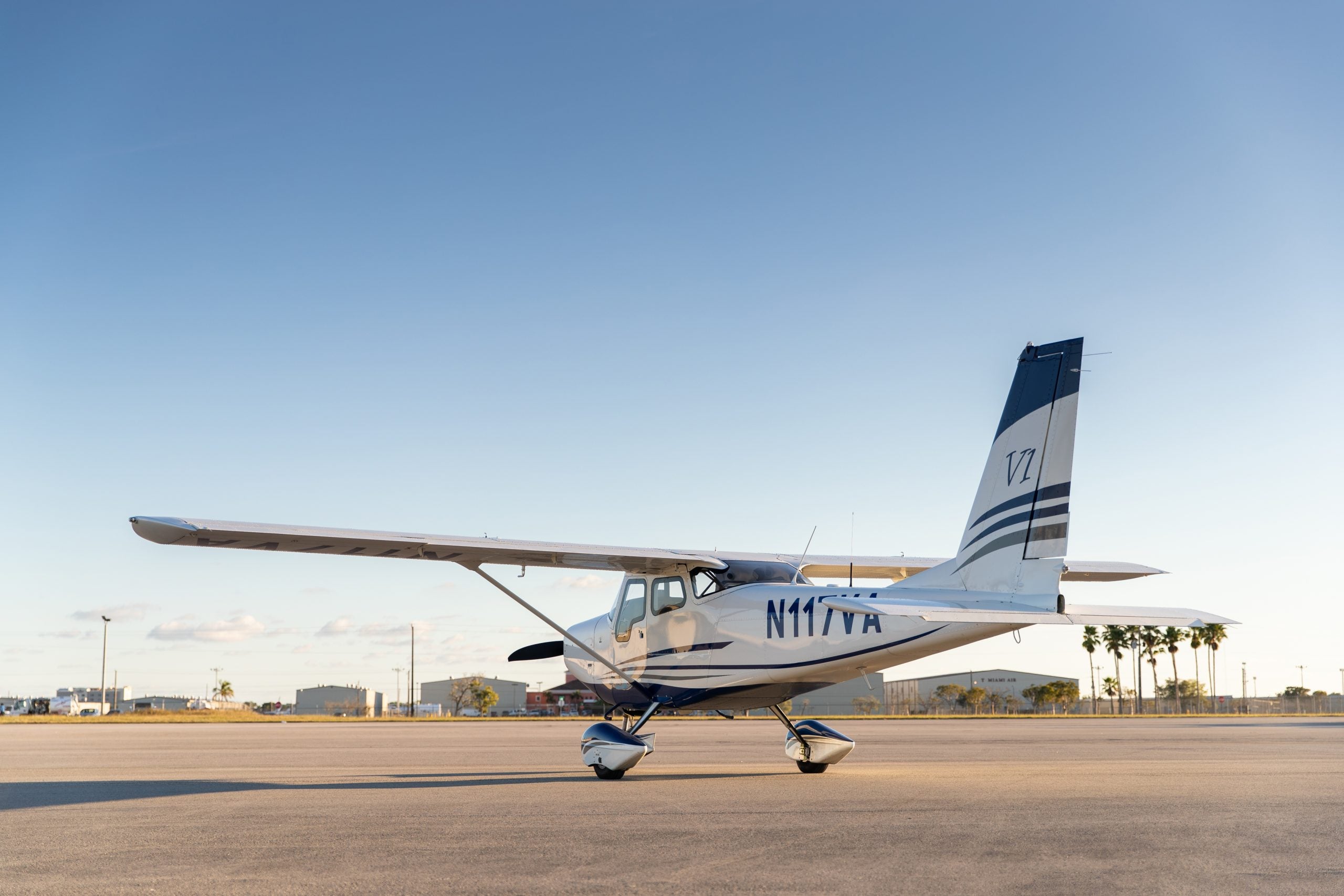
If you’ve been reading my flight reports for long, you know that I’m a fan of great door design, and the V.1.0’s doors are among the best I’ve ever used. They are light, they are incredibly precisely made and they close with a barely audible click. All of those doors you’ve slammed and wedged and shimmied into place should look at these doors with awe. Respect.
As I said, the construction is mostly sheet metal, so the interior aesthetics won’t remind you of any model of Tesla, but Vulcanair has done a nice job of upgrading the seats, which are comfy and supportive, and of incorporating new avionics into the panel. One downside of the V.1.0 is its lack of an integrated avionics package. It does have the Garmin G500 all-in-one PFD/MFD, which works in concert with a Garmin GTN 650 navigator—in time, the larger, more capable GTN 750 might wind up as the standard navigator, though. There’s a second nav/comm and a separate audio panel as well. The excellent all-in-one Midcontinent standby instrument is installed at top center, so either the right seater or left seater can easily switch their scan over to it in a pinch. And while a G1000 NXi panel is great, the G500 covers a lot of the same territory and does it surprisingly well, too. And the plan for coming aircraft is to update them the G500 NXi instrument, like every other NXi version of a Garmin product will be faster, brighter, smoother and more intutive to use.
The engine instruments are displayed on the bright and colorful JPI 930 digital engine instrument display, of which, again, I’m a fan, with its easy-to-read and interpret fields for manifold pressure and rpm, engine temps, oil temp and pressure, EGT, cylinder head temperatures, and fuel quantity and fuel flow, as well.
The seats in the flight test plane were covered with seat covers to prevent them from getting marked up before a customer brings it home, but the leather interior underneath, as you can see in the accompanying photographs, is beautiful. The seat belts are automotive style, so you can fasten the shoulder and lap belt with a single click.
There are so many good things about the V1.0, and one of the best is the visibility for the front seaters. While the windows alongside the pilot and right-seat position are somewhat high, they have an ingenious cut out toward the front that allows for great downward visibility forward of the wing strut while also accommodating a generous, Piper-style holler hole, one on each side. The rear seaters have a generous bench seat with smaller windows to their sides, though the rear window is huge and somehow transforms the feeling of the cabin into a really spacious place.
But best of all—well, at least if you regularly carry more than a single passenger—is the third, rear door, on the co-pilot’s side of the plane. It’s a big, fully functional door that makes one wonder, why doesn’t every high-wing plane have one of these?