










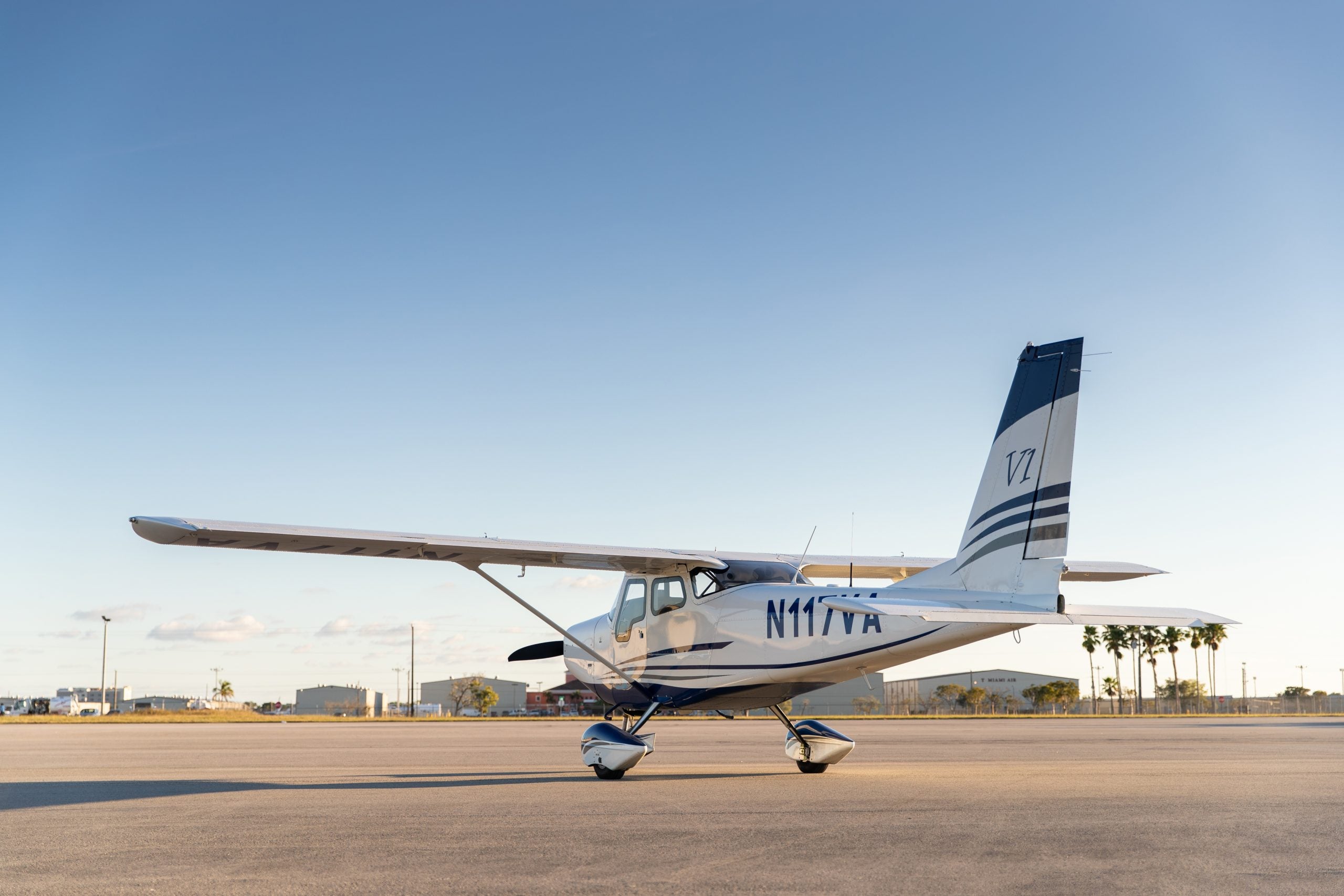

If you’ve been around aviation as long as I have, and if you pored over aviation magazines beginning in the ’60s, as I did as an aviation-smitten kid, you might recognize this plane, which has gone by many names over the past half-century (60 years, if you want to trace its roots a bit). The company that originated the V1.0 is Partenavia, an Italian aircraft manufacturer that got its start after WWII when brothers Luigi and Giovanni Pascale started building airplanes—their first effort was the Astore, which is the much prettier Italian word for “Goshawk.” The brothers, who much later founded Tecnam Aircraft, a successful maker of LSA models and more, early on in their aviation careers built a four-seat trainer/light-use high-wing model. That plane, which with its high wing and nose wheel design resembles the Cessna 172, has been known as the Oscar or Charlie primarily. Over this time, it’s also had numerous engine interior and systems upgrades, which probably isn’t surprising. And like many aircraft manufacturers, Partenavia went through a number of ownership changes and reversals of fortune. In the mid ’90s, the company went out of business, and its assets were purchased a few years later by a former supplier, Vulcanair, which today makes the V1.0, the airplane we were going flying in shortly.
The plane is impressive, though it’s not impressive in the ways you might think. It’s not classically beautiful, at least not in my opinion, but beautiful in a different kind of way. There’s something solid and respectable about its lines. And it’s not modern looking, either. Its lines, like those of so many of Pascale’s airplanes, are squared off as if the plane is standing at attention at the “line up and wait” command. The effect is whatever the opposite of the Cessna Cardinal is. It’s like Cessna designers had taken the 172 and instead of going with sleek, windswept lines, they went in the other direction to create a plane that was blue collar and ready to work. That’s the style of the V1.0.
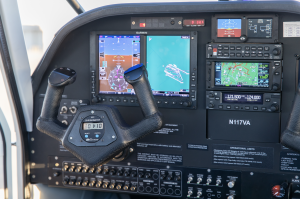
And it’s not just the outside, either. The interior details are very businesslike, like the military-grade fuel selector switch located on the floor just aft of the sheet metal control pod, which, again, looks like it might be more at home in a warbird than a light four-seater. That all said, the weights and loads on the V1.0 are all very much in keeping with comparable four-seaters. It’s just that the way it arrives there is with a very different sense of style and without the use of much plastic, which is something that speaks highly for the design, in my book.