











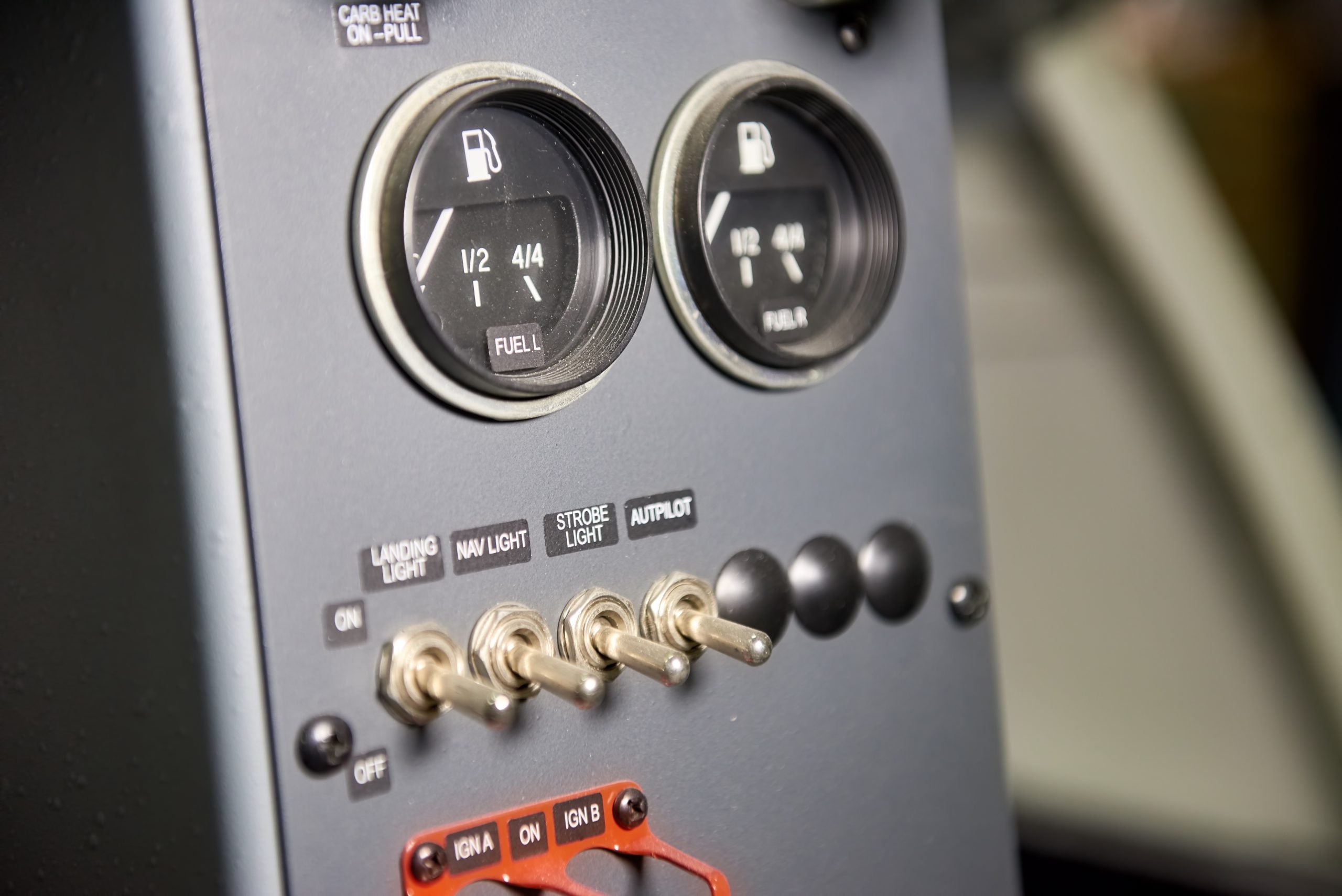

Question: I have heard that the regulation regarding the accuracy of fuel gauges in airplanes states they are only required to read accurately when the fuel tank is empty. This doesn’t make much sense to me, and I couldn’t find it in the FARs. Is it true?
Answer: You won’t find a reference in the federal aviation regulations (FARs) that says fuel gauges are only required to read accurately when the tank is empty. That statement “only when empty” is a myth that has been handed down through the decades.
What you will find in Part 23 (which covers the certification of aircraft) under FAR 23.1337(b) powerplant instrument installation is “Fuel quantity indication. There must be a means to indicate to the flight crew members the quantity of usable fuel in each tank during flight.” The reg continues: “Each fuel quantity indicator must be calibrated to read zero during level flight when the quantity of fuel remaining in the tank is equal to the unusable fuel supply.”
Unusable fuel is what’s left in the bottom of the tank or the fuel lines that can’t reach the engine for operation. It is like the mustard in the bottom of a jar that you can’t get to. This unusable fuel is not going to help you keep the engine running anymore than the mustard you cannot reach can go on the sandwich.
One could surmise that if the tank has run down to “unusable fuel,” the pilot will figure it out when the engine sputters then quits due to fuel exhaustion. So perhaps that is where the fuel gauge myth began.