









![There are ways to ensure your first visit to a frozen lake in the Midwest is safe and enjoyable. [Credit: Jim Stevenson]](https://planeandpilotmag.com/wp-content/uploads/2026/07/DSC07113.jpg)

In my experience, every airplane owner develops a bucket list of flying adventures. For some, this might include a cross-country journey to EAA AirVenture in Oshkosh, Wisconsin. Others might set their sights on completing their first aerobatic competition or a sightseeing flight along the Hudson River in New York City.
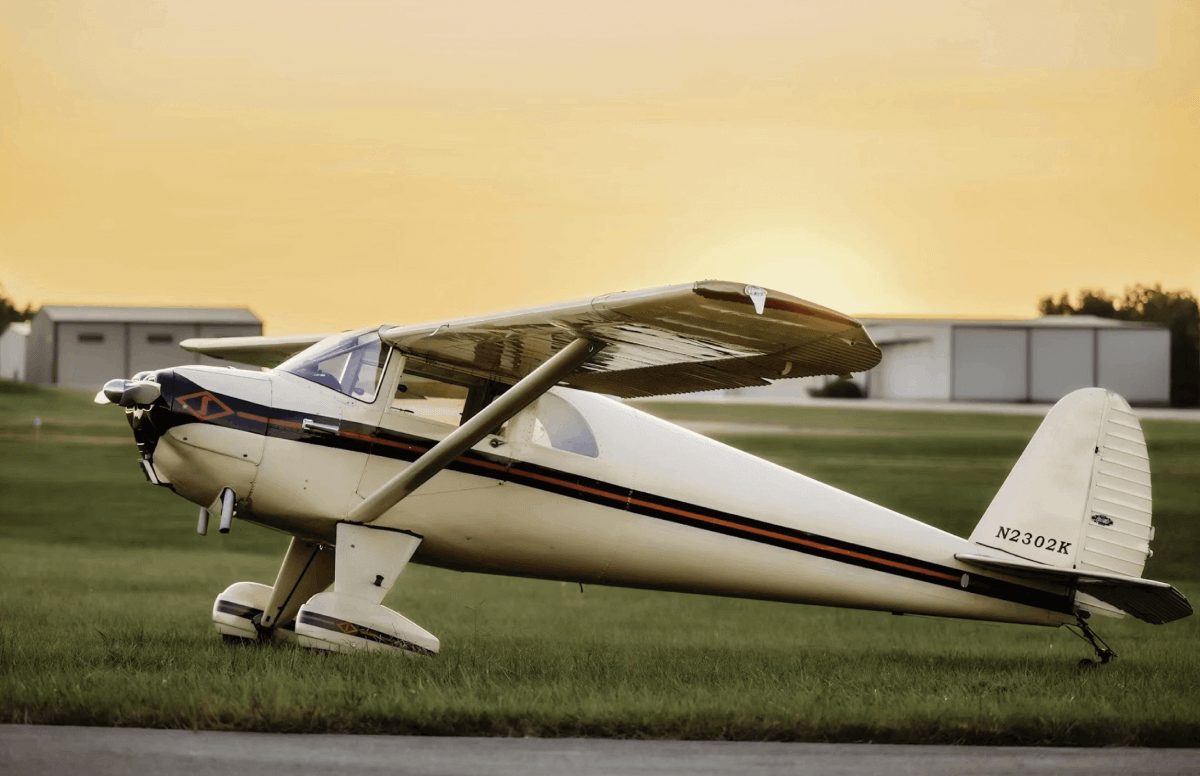
From day one, I’ve always wanted to land my Cessna 170B on a frozen lake.
I blame my friend Jim. He has owned his own 170B for decades, and flying as a passenger with him in and around the Wisconsin countryside served as my gateway drug. From landing on uncharted farm strips to challenging one-way-in, one-way-out spots nestled among wooded bluffs, it was stunning to observe such a mastery of aircraft and environment.
Among all those trips, the ice landings stood out. Bundling up on a crisp day marked by blinding sunlight and striking blue skies, we’d set off, join another friend or two in flight, and explore some of the many frozen lakes dotting the area around Madison. We’d land, take in the sights and sounds, marvel at the experience, and leave with satisfaction that the day had been properly seized.
These jaunts would ultimately serve a more important purpose. They made me aware of some of the critical, sometimes less obvious hazards and concerns of landing on frozen lakes. After buying an airplane of my own, I kept that wisdom in mind as I closely monitored the weather and ice conditions. This year, all the factors finally aligned, ultimately allowing me to achieve my goal.
So, what should you consider when landing on a frozen lake? The most significant concerns involve the surface itself and the surrounding environment, but the airplane and equipment also factor in. Here’s the rundown:
Initial Planning
Among the factors that most affect safety on frozen lakes, ice thickness and quality rank first. Browse the Department of Natural Resources (DNR) websites for Minnesota and Wisconsin, and one thing quickly becomes apparent—caution is not simply warranted, it’s embraced. Time and time again, the same warning appears in different forms. “Consider all ice unpredictable,” one section recommends. “ICE IS NEVER 100% SAFE!” another loudly proclaims – note it is in all caps.
The various DNRs elaborate, noting that ice thickness can vary widely, even within small areas. The websites describe how factors such as snow cover, currents, springs, and “rough fish” all affect ice safety. The term “rough fish,” I came to learn, is not based upon a fish’s individual criminal history. Instead, these are breeds that spend their time agitating the water and stirring up organic matter, thereby releasing methane and weakening the ice. Not something I would have considered prior to this research.
I was already aware of some concerns about our local lakes. Several are fed or drained by streams, the mouths of which weaken and break up ice. One nearby lake has a power plant on one section of its shoreline. The plant apparently dumps warm, cooling water into the lake, because it always seems to be surrounded by open water.
The bottom line is that extreme caution is prudent for a wide variety of reasons. Fortunately, the Wisconsin DNR provides some useful guidelines concerning the most critical factor—ice thickness. The guidelines recommend an ice thickness of 7-8 inches for side-by-side UTVs, which generally weigh between 1,500-2,500 pounds. For small cars and SUVs, the recommended thickness increases to 9-10 inches.
A survey of experienced general aviation pilots generally reflects the same guidance, with most considering 8 inches to be a good minimum thickness. Jim agreed, adding that his 170 once left dimples in 6-inch-thick ice after being parked for a bit. This did not provide him with a sense of comfort.
![Many pilots don’t seem to mind the cold after landing on a frozen lake in Wisconsin. [Credit: Jim Stevenson]](https://planeandpilotmag.com/wp-content/uploads/2026/07/DSC07688.jpg?w=1024)
Alton Bay Ice Runway and Seaplane Base (B18), a state-owned, public-use airport in New Hampshire, operates as a seaplane base in the summer and an ice runway in the winter. The ice runway is plowed to 100 feet wide and measures 2,600-3,000 feet long. As it sees hundreds of operations over the winter months, including some heavier, complex type aircraft, the required ice thickness is 12-14 inches along its entire length.
The best way to evaluate ice thickness? Obtain a small auger, head out the day before your flight, and sample the thickness in several spots yourself. In some areas, the local fishing community publishes ice reports that can provide valuable knowledge. Finally, some pilots simply subscribe to the theory that, if they look down and see big diesel trucks peppering the lakes, the ice will likely support their wispy Super Cub without a problem.
So It’s Safe…But Is It Legal?
With the safety of the ice itself confirmed, it’s wise to explore some legal concerns. An email to your insurance broker can provide documented confirmation that your policy covers off-airport landings in general and ice landings in particular. If such coverage requires an increase to your premium, it’s probably less painful to pay that than to contend with denied claims for a submerged airplane down the road.
Operating upon local lakes also subjects you to legal concerns among lower levels of government, ranging from tiny townships to small towns to larger cities and counties. As all of the trails and waterways in my county fall under the jurisdiction of our sheriff’s office, I emailed the sergeant in charge of marine and trail enforcement. I asked about the legality of landing on the county’s frozen lakes, specifically those within the city limits of our largest city. He replied promptly, assuring me that no current statutes or ordinances prohibit this, and I made sure to save his email in case I ever needed to defend my actions.
Having worked as a first responder for nearly a decade, I discovered firsthand that the nonflying general public often panics at the sight of an airplane descending below treetop level away from known airports. Every year, when the crop dusters emerge from their hangars to tend to the fields, the 911 communications center inevitably receives calls that bright yellow airplanes have just crashed in farm fields.
Accordingly, if I ever decide to land on a lake right downtown or in an otherwise populated area visible to the general public, I’ll make a point of calling the nonemergency line to explain my plans ahead of time, providing them with my contact info and a description of my airplane. After all, even if citizens see that I landed safely, some will inevitably call 911 to report an aircraft in distress. With my advance notice, law enforcement and emergency crews will have context and won’t immediately pull all available resources for a priority response.
Airplane Prep and Personal Safety Gear
One of my most vivid memories of my first ice landings as a passenger with Jim was the eerie feeling of shutting down the airplane in the middle of a lake. Instantly, the familiar, comforting hum of the engine was replaced by the sound of wind and bizarre, otherworldly echoes beneath us. Known as “ice fracture propagation,” the underwater sounds are commonly described as “laser beam” or “pew-pew” sounds, almost as though they were stolen from a low-budget, sci-fi flick.
Unnerving as it was to hear, these sounds are usually a good thing. They’re most often an indication that the ice is in a building phase as it expands and thickens. Nevertheless, I found myself hoping Jim had been maintaining his battery well so we could get the engine started again. Not long before my own first trip to the ice, my battery needed to be replaced. Thinking back to that trip with Jim, I quickly opted for the upgraded battery with more amp-hours, just in case.
Another takeaway from those early scouting missions was just how variable the ice’s surface could be. If the lake freezes and no snow falls upon it, you’re rewarded with a beautifully smooth, glassy, translucent surface. Coincidentally, it can become so reflective that a seaplane-style, glassy-water landing might be prudent.
At the other end of the spectrum, a lake could receive massive amounts of snow after freezing. In this case, you might not even know you’re landing on ice. It might simply become an expansive field of snow, in which all of the usual snow landing precautions related to its depth and consistency must be taken. It’s all of the various conditions in between that can present a real hazard.
On one scouting trip, we discovered a surface unlike anything I’d ever seen. The ice, while quite thick and solid, had apparently frozen gradually in high winds, and its surface had formed into patterns of random, sharp ridges. Each ridge was perhaps 3-5 inches tall and would certainly present a hazard to aircraft with small, higher-pressure tires.
Fortunately, Jim’s 170 was shod with 29-inch Alaskan Bushwheels. The icy, ridged surface was a perfect example of how tire size alone isn’t what sets these tires apart. Unlike standard tires, they’re tubular and can be run at pressures as low as 4-5 psi without any risk of shearing a valve stem or rolling off the wheel. Additionally, the rubber is, by comparison to standard tires, pillowy soft.
The Bushwheels were, therefore, perfect for the ridged surface and floated over it without a care in the world. Had we been flying something with standard, high-pressure tires any smaller than 8.50, I’d have been concerned about incurring actual damage to the airplane.
Other than tires, there aren’t many aircraft parts or modifications that would provide a significant benefit to ice landings. An insulated engine blanket, like those manufactured by Bruce’s Custom Covers, would help keep the engine warm for those who plan to shut down for extended periods. This would ease the subsequent engine start in sub-zero temperatures.
In terms of personal gear, a few items come to mind. Drinking water and some energy bars to keep your blood sugar up are always good to have handy, and doubly so when your destination has neither available for purchase. Some very warm clothes are prudent in the event you become stuck out on the ice for any length of time.
One lesson I learned the hard way was how critical it is to have a pair of Yaktrax or comparable ice cleats that can easily slip over your footwear. When I hopped out of Jim’s plane during my first ice landing trip, I quickly discovered just how slick the surface can become, and I only just prevented myself from crashing down onto the ice. On subsequent trips, wearing the Yaktrax made walking on ice as uneventful as walking across a living room, and repositioning the airplane on the ice took almost no effort.
![The Cessna 170B, turned toward the sunset, rests on the frozen lake after a successful ice landing. [Credit: Jim Stevenson]](https://planeandpilotmag.com/wp-content/uploads/2026/07/DSC07156.jpg?w=1024)
successful ice landing. [Credit: Jim Stevenson]
Some further reflection underscores the importance of foot traction. If you were to suffer a bad fall and break bones out on the ice, climbing back up into the airplane to call for help might not be an option. For this reason, I also make sure my Garmin inReach satellite communicator is not just with me, but on my person, so I’ll always be able to call for help.
Even if help is readily available, you really don’t want to become injured when your airplane is parked out on a frozen lake. Pilots at Alton Bay have suffered various injuries, rendering them unable to fly. Without a backup pilot both proficient in their type and covered by their insurance policy, some were forced to leave their airplane out on the lake for days while arrangements were made.
Setting Out
It was mid-February when the stars finally aligned. Winds were light, and it was unseasonably warm, at nearly 45 degrees Fahrenheit. Taking off from the snow-covered grass strip where I’m based, I turned north and enjoyed taking in the brilliant, cloudless, blue sky.
Jim had gotten a bit of a head start and was about 30 minutes ahead of me. This suited me fine, as I had fully intended to embrace my cowardice and use him as my guinea pig to assess the ice conditions. While I have yet to confirm the theory, I suspect the duty of first landing is automatically assigned to the person in the group with the most ice experience.
I needn’t have worried. He had just landed there and tested the ice the previous day, and this day he reported that the ice fishing crowd had returned with its big, heavy trucks. When I arrived, I spotted him parked smack-dab in the middle. After a couple of low passes to examine the surface, I set up for my first landing.
People routinely ask about how one handles crosswinds on the ice. My reply is that, so long as the lake’s size permits, you simply choose your runway direction to align with the wind, thereby avoiding crosswinds altogether. This technique proved to work well as I rolled out on final and detected no crosswind at all.
I did make note of one potential hazard, however. Because lakes naturally lie in the lowest parts of the land, they’re inherently surrounded by higher terrain. While this wasn’t a concern for me on this particular day, it’s something to consider on smaller lakes that require sprightly takeoff and specific climb performance to depart.
The next potential hazard was all of the various people out on the lake. If it’s nice enough to fly, it’s nice enough to ice fish, snowmobile, iceboat, and generally frolic upon the lake. If ever there were hazards even less predictable than deer, it was amped-up snowmobile riders blissfully buzzing around at triple-digit speeds.
Fortunately, Jim had chosen a nice spot well away from the revelers. I nevertheless kept a sharp eye out for any errant snowmobiles or iceboats as I approached. I also watched for any vacant ice fishing holes that could swallow a tire. The landing was completely unremarkable, barely discernible from any other upon a smooth surface.
The concern, I knew, came after landing, in the region between taxi speed and takeoff/landing speed. Here, the flight controls lose their effectiveness, yet you still have energy and momentum that can become problematic. This is of particular concern if directional control is lost.
If I had allowed the airplane to begin to yaw and slide sideways, it wouldn’t have been a problem. The ice was, after all, quite smooth and clear. But on other days dry and/or snowy patches exist. If an airplane’s tire were to catch such a grippy spot while sliding sideways, this could result in a ground loop and, potentially, a wingtip strike.
Testing the brake just for fun confirmed that braking action was truly nil. There wasn’t even an initial grab to indicate the tire was locked. I could detect no indication whatsoever that a tire was rolling versus locked up.
All was good on this particular day, however. Noting that the light wind had shifted since our arrival, we assigned ourselves a new runway heading and took off. We then made a few more landings just for fun before saying goodbye and departing for home.
With that, the goal was achieved and the adventure complete.
Such grand times only invite more. Before I even arrived back home, I was already thinking of next winter. Might just have to do a quick weight-and-balance before heading out.
This feature first appeared in the May/June 2026 Issue of Plane + Pilot magazine.