









![Fulcher Field, a gravel strip in Terlingua, is visible below the Luscombe’s right wing. [Credit: Hannah Gentiles]](https://planeandpilotmag.com/wp-content/uploads/2026/03/MG_2142.jpg)

Cruising at 7,500 feet, I gaze below at the Chisos Mountain Range of Big Bend National Park in West Texas. Its twists and turns, dry rivers, and crispy vegetation make me wonder how any form of life can survive in such a desolate and unforgiving landscape. I’m also thankful to have a Garmin inReach and Spot within arms reach. But the hum of the Cirrus SR20’s Lycoming IO-390 puts me at ease.
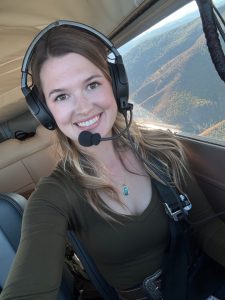
With a magazine deadline rapidly approaching, I am taking the precious two hours of flight time back from the Lajitas International Airport to begin telling this story, allowing my friend to have her first official flight lesson with my CFII, as I eagerly type away on my laptop in the back seat.
Feeling inspired by the muted desert tones below and 7,800-foot Emory Peak off in the distance, I am feeling thankful to have made the extra effort to explore one of the most desolate regions in the Lone Star State.
Although planning a backcountry flying trip to Idaho is undoubtedly more cumbersome, the thought of a trip to Big Bend began to feel oddly similar. From few transportation options—including the lack of a courtesy car at the airport—to few and far between and often overpriced lodging options, it took several phone calls and a post in the Austin Pilots Facebook group to figure out the best way to achieve this weekend trip.
With the trek inconveniently falling at the same time of one of Texas’ rare winter storms, this adventure almost didn’t come to fruition. But when the oil pads of the Permian Basin traded space for the mountains of Alpine, Marfa, and Terlingua, I felt thankful to have rescheduled this long-awaited flight.
![A Cirrus SR20 flies over Big Bend National Park in far West Texas. [Credit: Hannah Gentiles]](https://planeandpilotmag.com/wp-content/uploads/2026/04/PLANE-PILOT-MAGAZINE-6173.jpg?w=1024)
Lajitas (T89) served as our home base for this far West Texas adventure. With the departure end of Runway 25 a mere 4.5 nm from the Mexican border, it’s the only major airport serving the area. Although it might be classified as an international airport, the only thing “international” about it is its ability to pump jet-A and its proximity to Mexico.
With an old runway serving as the parallel taxiway, a second glance after turning base to final was definitely warranted. As the big yellow Xs at the end of the old runway came into view, I began my final descent toward Runway 7.
Although I was in the middle of my before-landing check, I couldn’t help but look directly ahead at the beauty of the Chisos directly off the end of the runway. Oh, how I have missed the mountains I thought, as I added my second notch of flaps.
Pushing forward on the side stick, to counteract the impending balloon of the flaps, I pointed the Cirrus’ nose toward the runway and landed abeam the 1,000-foot markers.
Although I was prepared to float, the SR20 was heavy, and density altitude was not on our side. As we rolled out on the rougher than expected runway, a voice came over frequency, “Cirrus, you can just back taxi from there,” said the lineman.
As I turned off the runway, I soon discovered why the old parallel runway is now the taxiway. Dodging potholes, bumps, and chunks of old asphalt, I headed toward the marshal directing us to our parking spot on the ramp in front of the FBO.
After pulling the mixture back, and turning off the mags, I pulled up on the handle to open the Cirrus’ butterfly door.
“Welcome to Lajitas. Thanks for calling ahead,” said the lineman as he chocked the nosewheel.
Although I did call ahead with a landing reservation, I looked up from my seat belt’s metal clasp to make note that we were indeed the only ones on the ramp.
“Thanks, we’re just staying a few nights,” I said with a smile. “But we will need a top off on Sunday.”
“Great. It’ll just be $25 when you go inside,” he replied.
“$25 for three nights?” I asked.
With an affirmative nod of the lineman’s head, I looked to my friend who also seemed surprised by the lack of a more outrageous fee.
“They just dropped that Jeep off for y’all,” said the lineman, pointing toward the fuel farm on the north side of the field.
Although it might sound luxurious, a plane-side Jeep Wrangler Rubicon is the norm for pilots flying into the area. With the nearest traditional rental car counter in Del Rio, Texas, 145 nm to the east, renting from Big Bend Jeep is one of the only options to get around.
After unloading bags and paying our $25 landing fee, we hopped in the Jeep and drove eight minutes to Terlingua for a much-needed meal at Taqueria El Milagro. Hoping for a celebratory, postflight margarita, I was disappointed to see the sign at the entrance remarking it was a BYOB establishment. Settling for a refreshing, tall bottle of Mexican Coca-Cola instead, my friends and I elected to sample a few different offerings on the menu, including a Sonoran hot dog, birria, el pastor and asada tacos.
If you’re expecting a bustling downtown with high-end shopping and fine dining, prepare to be disappointed, as Terlingua is the exact opposite of glitz and glam. Built on its own terms as a remote outpost for creative personalities, it offers rugged peace paired with trendy dynamics. However, what it lacks in polish, it more than makes up for in desert character, genuine hospitality, and a food scene with unmatched flavor.
After our meal, we cruised through town to see what else Terlingua had to offer. With my pilot’s one-track mindset kicking in, I caught a brief glimpse of what looked like the roofs of hangars just off FM 170. A quick check of ForeFlight confirmed my hunch: It was indeed an airport—and a gravel strip at that.
![A new Rubicon from Big Bend Jeep was parked at the FBO prior to arrival. Big Bend offers a variety of views. [Credit: Hannah Gentiles]](https://planeandpilotmag.com/wp-content/uploads/2026/04/PLANE-PILOT-MAGAZINE-4223.jpg?w=1024)
Fulcher Field
The C. Fulcher Ranch Airport (3TE8) features a gravel runway approximately 3,000 feet long, with a width ranging from 75 to 100 feet. Framed by palm trees to the northwest and mountains in every direction, the unassuming strip blends naturally into the surrounding desert landscape.
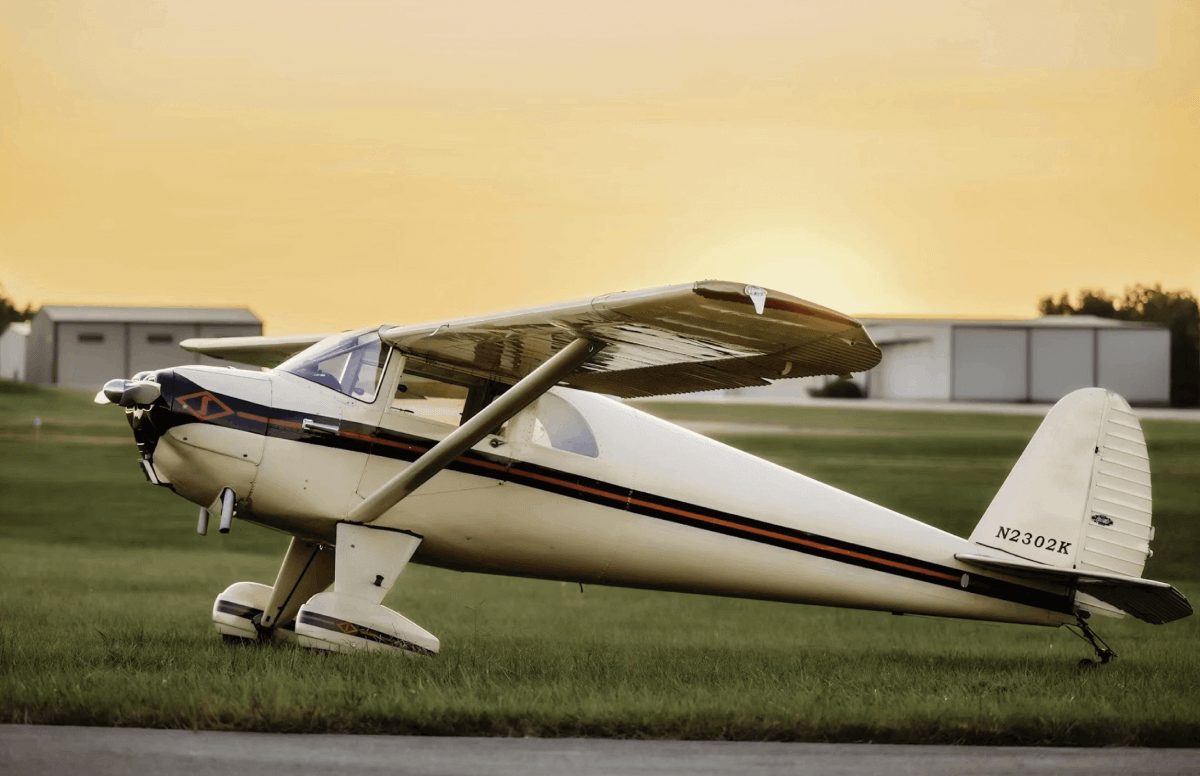
On the western side of the runway, open-air box hangars house a variety of old taildraggers ranging from a polished blue Luscombe to a tan-and-red Piper Clipper, and even a yellow Van’s RV-9.
Stepping out of the Jeep, we were greeted by a tall and slender older man sporting a McFarlane Aviation ball cap and a Grassroots Fly-In graphic T-shirt from 2006.
Ah, we’re in good company, I thought.
“It’s nice to meet you,” said Alex Whitmore, extending his hand for a handshake. “Should we go do some flying?”
Not surprised by his immediate invitation to fly within a few seconds of our meeting, I turned to my friend and CFII, Abby Rodriguez, who has yet to truly experience vintage aviation in its most organic of forms.
Noticing the immediate smile on Rodriguez’s face, hardly a word was uttered between us before I turned back to Whitmore, standing beside his Luscombe.
“Well, you can’t pull the airplane out and not go fly it,” I said. “Can you take my friend, Abby? She doesn’t really ever get to fly like this.”
“Well, yeah, let’s go,” Whitmore replied.
After Rodriguez climbed in the left seat, Whitmore walked her through a brief hand-propping lesson. With her heels planted firmly on the brakes, he gave the Luscombe’s propeller a quick flip, and the engine hummed to life.
Although I had never set foot, or tire, on this remote gravel strip, it began to feel remarkably familiar. From Whitmore’s generous spirit to the vintage taildraggers eagerly awaiting their next flight, the field stands as a living testament to my GA roots, only with a wild West Texas ambiance and aesthetic.
After a thorough run-up, Rodriguez coaxed the Luscombe to the runway’s invisible centerline. Once her tailwheel was straight, and full power was applied, she danced on the rudders to keep the airplane tracking straight. With bits of gravel flying and a trail of dust following closely behind, Rodriguez rotated in a three-point attitude and climbed toward a beautiful, blue sky.
Watching this lovely takeoff had me wishing I would have taken the extra flight time and fuel stops to fly a Cub from the Austin area rather than the SR20.
Luckily, I’ll have the time to come back, as Whitmore and Fulcher Field aren’t going anywhere any time soon. The field has been around for well over 100 years.
According to local folklore, Fulcher Field was founded in the 1910s out of pure necessity.
“They figured if someone needed to be flown out for medical reasons, they better be able to do it,” said Whitmore, noting the nearest hospital is nearly 100 miles away.
A courtesy call in advance is highly recommended for pilots interested in landing at this private field. Although the runway is in great shape, Whitmore prefers giving pilots a heads-up on a few of the basics.
“It’s a one-way strip because of this mountain here,” said Whitmore,.
While Whitmore doesn’t grant “formal” permission, his policy is straightforward: “If you don’t screw up, we won’t run you off.”
For pilots who are just passing through or lack the time to explore the beauty of the surrounding area and the parks, staying at Fulcher Field is a viable option, thanks to Airstream camper rentals at Casa de Aero.
Here in this remote part of Texas, the Wild West and its flying cowboys are far more than a metaphor. They are a not-so-forgotten way of life.
![The Luscombe is one of the couple’s many vintage taildraggers. The Rio Bravo Ranch serves as an excellent option for pilots looking for a West Texas retreat. [Credit: Hannah Gentiles]](https://planeandpilotmag.com/wp-content/uploads/2026/04/PLANE-PILOT-MAGAZINE-1346.jpg?w=1024)
Rio Bravo Ranch
After a full day of flying and exploring Terlingua, we headed west toward our stay at Rio Bravo Ranch in Presidio, Texas. The one-hour drive from Lajitas might seem like a haul, but the trek along FM 170, better known as “The River Road,” is an experience in itself.
Clinging to the banks of the Rio Grande, the road marks the jagged edge of the Mexican border. While the region is often shrouded in political controversy, our time spent along this stretch of borderland was a sharp departure from the national headlines. What we found wasn’t a place of tension but a landscape of profound beauty, proud heritage, and an unshakable sense of peace.
Frequently cited as one of the most scenic drives in the Lone Star State, it’s a route that demands a pilot’s level of attention. Falling rocks, cross-border cattle, and wandering javelinas (wild pigs) are far more common than one may expect.
After 42 miles of breathtaking vistas, a right-hand turn through the gates of Rio Bravo Ranch offers a welcome reprieve. The ranch features a striking, butter-colored pueblo overlooking the Rio Grande. As one of only two houses open to the public on the river between Presidio and Terlingua, it stands as a solitary sentinel overlooking the border, with a history rooted deeply in GA.
Serving as a stunning and expansive Southwestern style, two-bedroom, two-bathroom Airbnb, the desert chic home offers all the modern comforts and amenities of home, with views that can only be enjoyed and experienced after a flight to West Texas.
Just north of the house lies a dormant 900-foot dirt airstrip, once a practical tool and lifeline for the grandfather of the current owner, Charlie Cecil.
“When I was a kid, I was living between grandparents,” Cecil said. “One day, the authorities were going to take me, but my grandparents caught wind. They flew up in the Skylane, picked me up, and we came back here.”
Today, Cecil, a physician in San Angelo, Texas, and his wife, Lauren, work to convey the magic of this secluded outpost to those seeking an authentic West Texas adventure.
“It’s our responsibility to share this place,” Lauren said. “That’s what gives me purpose.”
While modern power lines and border-restricted airspace make landing at the ranch impossible, the Cecils have ensured the rugged region remains accessible. Whether booking the Southwestern pueblo or pitching a tent on the ranch’s northern edge, the property serves as a premier base camp for those looking to venture beyond the typical tourist stops of Lajitas and Terlingua.
Big Bend
Although staying at the Rio Bravo Ranch provided expansive river views, there was one vista that demanded a field trip away from our peaceful, riverside sentinel. Santa Elena Canyon was calling.
As a must-see on my bucket list, I’d spent the previous evening debating if flying alongside the canyon would offer the same effect as the long drive through the park. After all, the outing would be an all-day affair, and with magazine stories left to write, I could feel the deadline pressure building.
Fortunately, I trusted my gut. With alarms set for 6:30 a.m., we began the winding journey back along River Road toward Lajitas and Terlingua. We plotted our day over a necessary pit stop for breakfast tacos and coffee at Espresso Y Poco Mas, where the homemade tortillas and caffeine finally jump-started my brain for the day ahead.
As we neared the park entrance, the iconic Big Bend sign flickered into view, and the scenery shifted into a dramatic display of jagged peaks. Yet, even with the beauty, a low-level stress hummed in the background as the clock seemed to be ticking faster than the Jeep was moving. I found myself second-guessing the decision, wondering if I should have traded the windy road for the view from above, as we raced at 130 mph in the Cirrus back to Burnet, Texas.
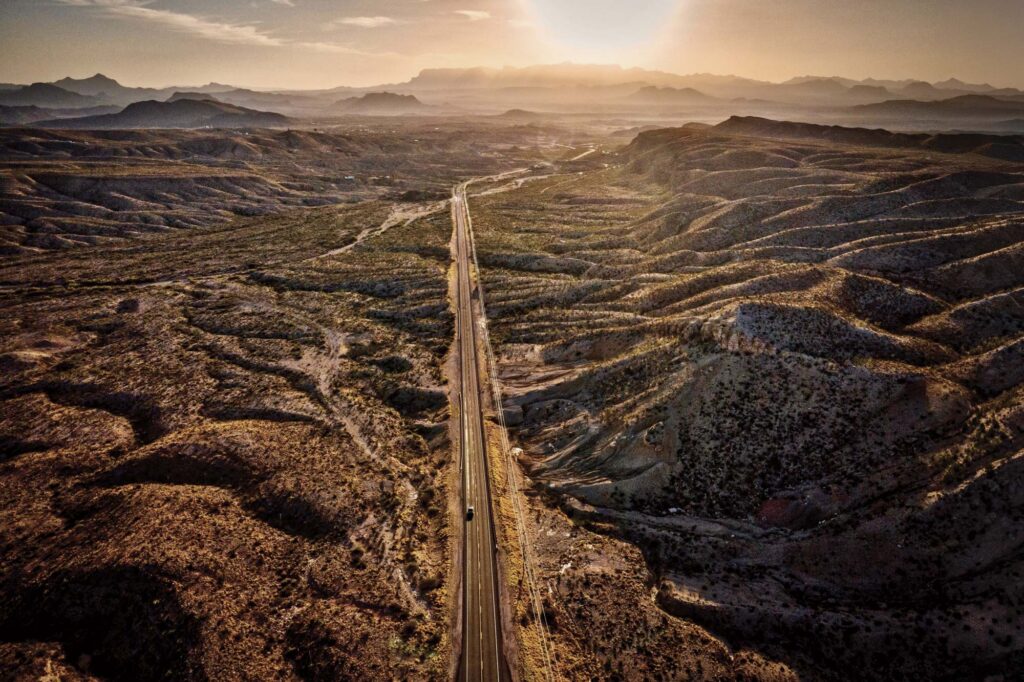
Luckily, that doubt evaporated the moment I climbed out of the Jeep. Standing beneath those 1,500-foot limestone walls, I was hit by a sudden, immense sense of insignificance, a weight that simply can’t be felt from the confines of the Cirrus.
While a flight above Big Bend offers a stunning topographical view of the park’s limestone walls and jagged peaks, it cannot capture the true magnitude of the landscape.
The following day, as we flew past the canyon on our journey home, my attention was diverted to airspace restrictions and terrain notifications.
Looking down from the Cirrus, I found it impossible to tap into the same peace I had felt on the canyon floor. It was a solid reminder that while GA is an incredible tool for making these adventures possible, some wonders are meant to be looked up at, rather than down upon.
This article first appeared in the March/April 2026 issue of Plane + Pilot magazine.