











“I think a lot of pilots eventually realize that what they love most isn’t the airplane. It’s who they become when they fly it. The greatest journey is becoming the person you were meant to be.”—Stef Goza, the Alaskan Aviatrix
Stef nailed it. This is the truth. This is the essence of why we endure the challenges that come with wilderness travel in general aviation aircraft.
The journey is often difficult, filled with uncertainty and, at times, lonely. It requires perseverance, commitment, and investment, both financial and emotional. But there are lessons to learn from these experiences.
- READ MORE: The Town That Built Valdez STOL
As I reflected on my own Alaska adventures, I found several examples that you may find useful.
Lesson No. 1: Everything Is Wonderful…Until It’s Not
Our gaggle of three Super Cubs and a lone Cessna Skyhawk cruised along the beach of the Gulf of Alaska between Yakutat and Cordova, enjoying the unexpected sunshine and calm winds.
Remote doesn’t begin to describe this area, with no roads tracing the coast, no towns interrupting the wilderness. Instead, only an occasional fishing boat and miles of wind-scoured sand washed smooth by centuries of wind and tide. Huge driftwood logs, silvered by salt and sun, lie scattered across the shore like ancient monuments left behind by sea and storm.
Beyond the beach, boreal forests of spruce and hemlock sweep upward to the peaks of the Wrangell-St. Elias mountains, still snow covered on this July afternoon.
We soon spotted the rusting construction barge that had broken loose in a winter storm years ago and ended up abandoned on the shore. We circled and decided to stop and explore, landing on the hard-packed sand strip near the water’s edge.
Once parked, like a bunch of kids at recess, we scrambled to climb up and through the old wreck. As is often the case when you are having a great adventure, it is easy to lose track of time.
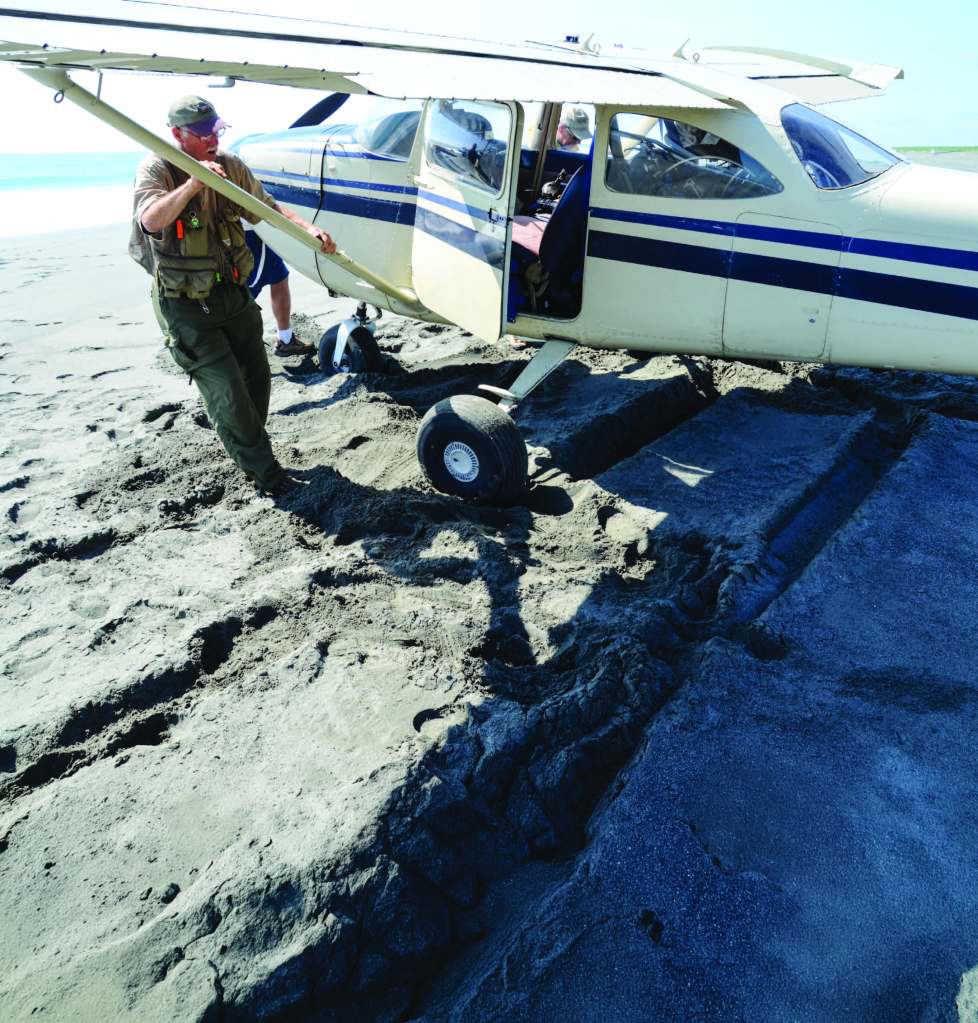
After about an hour, Mike Mitchell suddenly called out, “Hey, we need to get out of here!” It took a few minutes to figure out what he was worried about, but soon enough, it became clear that we had forgotten one important lesson—Alaska has tides…really big tides.
Looking at the water, it was now obvious that the incoming tide had erased the hard-pack “runway” we needed and, worse, Mike’s Skyhawk was sitting in a few inches of salt water. Dawson Simmons and I scrambled to get two of the Super Cubs off the sand with help from the tundra tires, while Lou Furlong remained behind to help Mike.
Circling overhead, Lou let us know that he and Mike were struggling to free the Cessna by placing driftwood under the tires. I headed back down the beach looking for any possible assistance, thinking the whole time that Mike was really in trouble, and things were only going to get worse.
Dawson and I discussed attempting a landing on the pillow-soft sand above the hard pack to try to help but quickly dismissed that as a good way to get another airplane stuck. About this time, Dawson let us know that he had spotted a brown bear ambling along the beach headed toward the stranded airplane. It was still a ways off, so we decided that our best option was to make some low passes to encourage it to change direction.
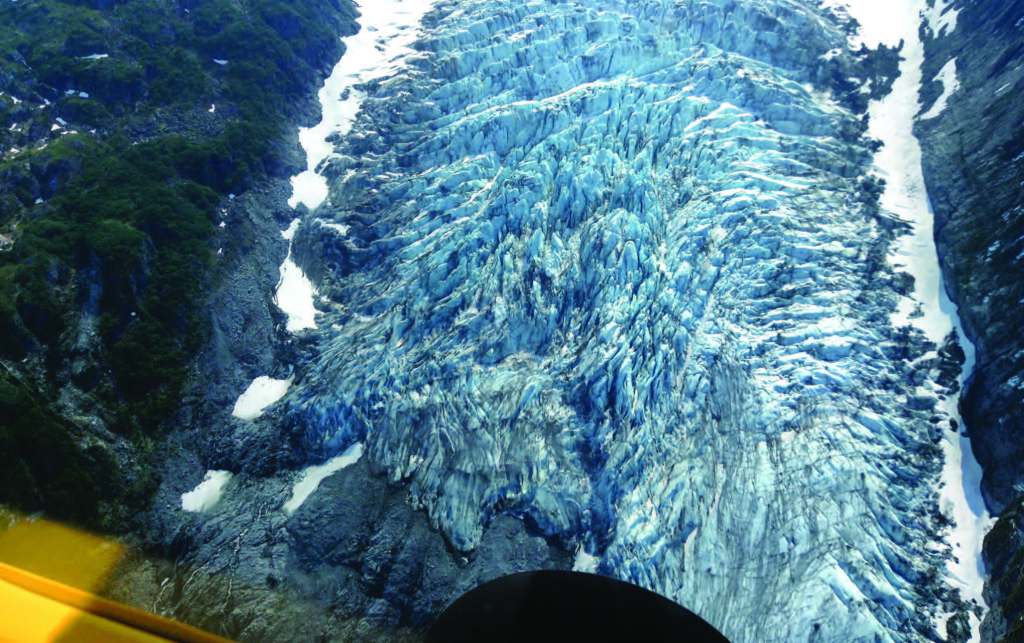
At first, the bear seemed simply annoyed at the big yellow machines making all that noise, but it finally decided to hightail it across the lagoon behind the beach toward the distant forest.
With this resolved, we turned back to the west trying to figure out what to do next, when we heard Mike and Lou on the radio. Turns out they had finally gathered enough driftwood to get the Cessna moving, and Mike was able to horse it off the beach into the air, but it was close.
As I flew along toward Cordova, I thought about how a lack of awareness and an overdose of exuberance by all of us had almost lost Mike’s airplane to the Pacific. Even today, years later, I still send him a copy of the tide tables as a reminder.
Lesson No. 2: Little Things Matter
On a subsequent trip from Texas to Alaska in a Skylane on amphibious floats, I spent the night in Medford, Oregon. I rose early, checked out of the hotel across from the FBO, preflighted the big amphib, fueled up, and loaded my gear.
Upon start-up, the engine ran roughly for a few minutes, which was unusual. I thought about shutting down, but instead I taxied out and performed an extended mag check that seemed normal. The engine was now running smoothly, so I called for my taxi clearance and departed Runway 32, headed northwest.
It was a beautiful, calm morning, and I settled into a comfortable position as we followed Interstate 5 through the hills. About 15 minutes later, climbing through 5,000 feet, there was a loud bang from the front of the airplane. Startled, I immediately looked for the cause, while noticing that we were no longer climbing but instead barely maintaining altitude despite the full throttle setting.
A quick check of the engine monitor revealed that the No. 5 cylinder had called in sick and was no longer contributing to the effort. Since the underlying terrain was not offering much in the way of possible forced landing options, I began a 180-degree turn back toward Rogue Valley International-Medford Airport (KMFR) and gave ATC a call.
“November 9681 Foxtrot is returning to Medford with an engine problem.” The controller quickly responded, “November 81 Fox, are you declaring an emergency?”
Well, I had always taught my students that the usual answer to the “E” question is “yes,” so I followed my own advice.
“81 Fox is declaring an emergency. We have a loss of power and can maintain altitude for now. We want to proceed directly back to Medford.”
The controller quickly cleared us direct and notified the tower. In a few minutes, with the airport in view and light winds, the tower gave us a downwind entry for Runway 32, which was the active. In an abundance of caution, I requested Runway 14, which was closer based on our flight path. The controller quickly cleared us as requested, and I proceeded to make a normal landing despite the fire trucks stationed along the taxiway.
As I cleared the active runway and switched to ground, I requested to taxi to the FBO, where I quickly shut down the big Lycoming. A couple of linemen had noticed all the excitement and came over to check it out. I took a few minutes to be sure everything was shut down and gather my gear. As I prepared to exit, I noticed the two guys pointing up at the underside of the engine cowling.
Once out of the airplane, they showed me the coating of 20W-50 oil along the belly, on the float struts, and dripping from the cowling. Once the airplane was towed to Medford Jet Center, the mechanics determined the exhaust valve had stuck, bending the connecting rod, displacing the pushrod tube and releasing all but 2 quarts of engine oil.
Turns out, this is a common problem with these engines and is often preceded by “morning sickness” in the form of significant roughness on the first start-up. If I had been more aware of this, I would have figured out that I likely had a sticking valve and would not have departed.
I received an expensive repair bill after a few extra days in Medford before continuing the journey, and another lesson in paying attention to details.
Lesson No. 3: Luck Always Earns a Vote
As you might have figured out, luck plays a role in all adventures. Had I been farther away from an airport when the valve stuck, the outcome probably would have been catastrophic.
One thing about flying over remote areas or open water is you quickly realize there are times when the engine simply must run. The first few times this happened I struggled to wrap my mind around the concept.
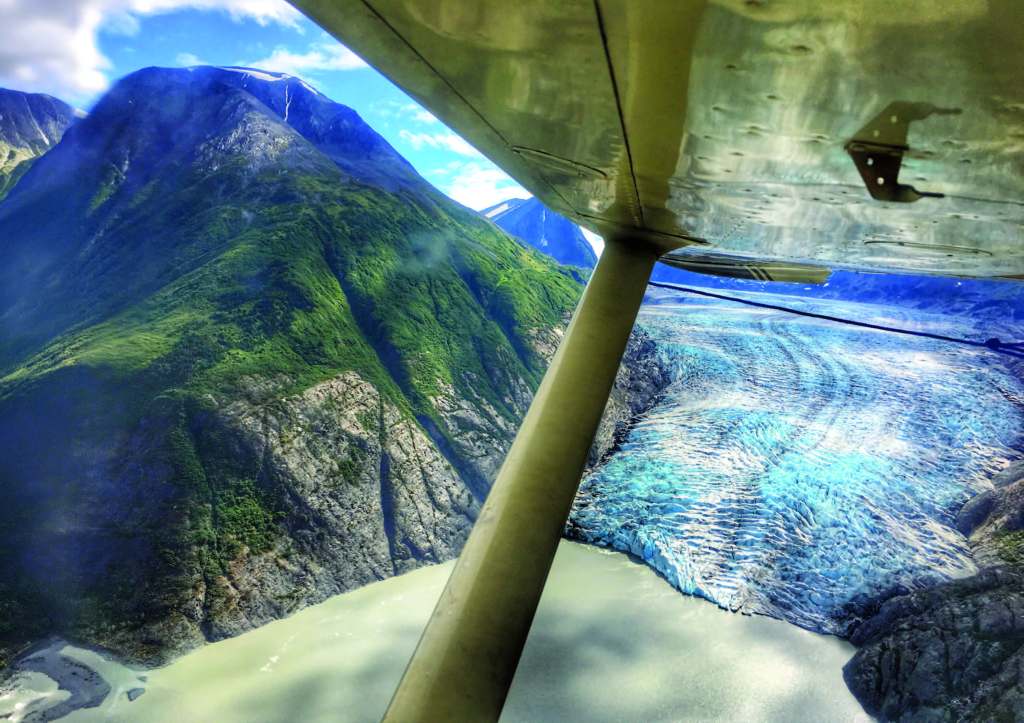
Like most pilots, I had been taught to scan the terrain below for a suitable forced landing location in the event of engine failure. But there are so many places where there simply is no viable option. When the choice is either cold water or steep mountainsides, altitude really does not change the risk equation much, so you might as well descend and enjoy the view.
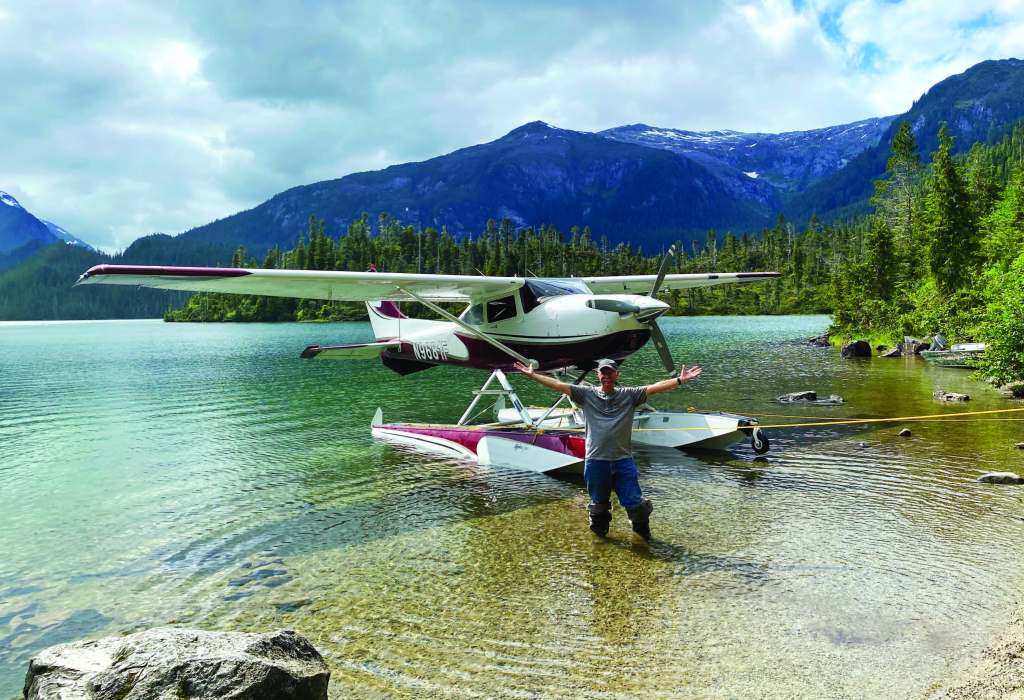
You are working without a net. After a while, you either come to terms with this and quit worrying about it, or you stop doing this stuff.
In every serious adventure, there are instances where luck tipped the scales toward success or failure. Recognizing this doesn’t diminish the importance of proper skill, knowledge, and preparation, but it does remind us that you can do everything right and still have a really bad day, or you can get away with egregious misbehavior and survive through blind luck when you really should have perished.
By definition, an adventure means you do not know how the story ends until it ends.
Flying in the wilderness is not a vacation. It is serious business, as evidenced by the collection of accident reports that continue to remind me that pilots far more experienced and capable than I managed to draw a losing hand on their worst day.
But while ruminating on such somber statistics, I remind myself that the rewards that come from these adventures are immense.
I can still picture that July afternoon along the Pacific coast, watching the sun casting spangles on the waves breaking on a shoreline little changed for hundreds of years. There are still places like this, but they are becoming harder to find unless you are willing to make the effort.
Beyond the incredible scenery, abundant wildlife, glaciers, and forest, and the staggering realization of just how insignificant you are in all of this, there is a mental and emotional focus that wilderness adventures require. This singular, attention-grabbing effort means you do not have room for petty problems because the demands of decision making, weather and terrain, coupled with fatigue and stress take all the brain bandwidth available.
Inevitably, if you do this for a while, it will demand much from you. But to me it is the need to bring the best version of yourself that provides the challenge and reward, and that leads to the changes that Goza describes in the quote leading off this article.
Alaska is simply a metaphor and backdrop for anyone willing to cast off from their personal safe harbor and embark on a journey of discovery that requires solid skills, deep knowledge, and willingness to accept the attendant risks.
So the message is that the same set of requirements exists for many adventures.
Maybe it is moving to a new city, starting a family, or learning to fly. Adventures come in all forms. Whether it is the new student pilot struggling to learn to land, an instrument pilot alone for the first time in real weather, or a new hire overwhelmed by the world of Part 121 operations, the risks and rewards incumbent in the effort are a universal part of human experience.
But, as Goza says, the journey is what matters. This is when you realize that you are, in fact, changed and becoming the person you were meant to be.
This article first appeared in the September/October 2026 Issue of Plane + Pilot magazine.