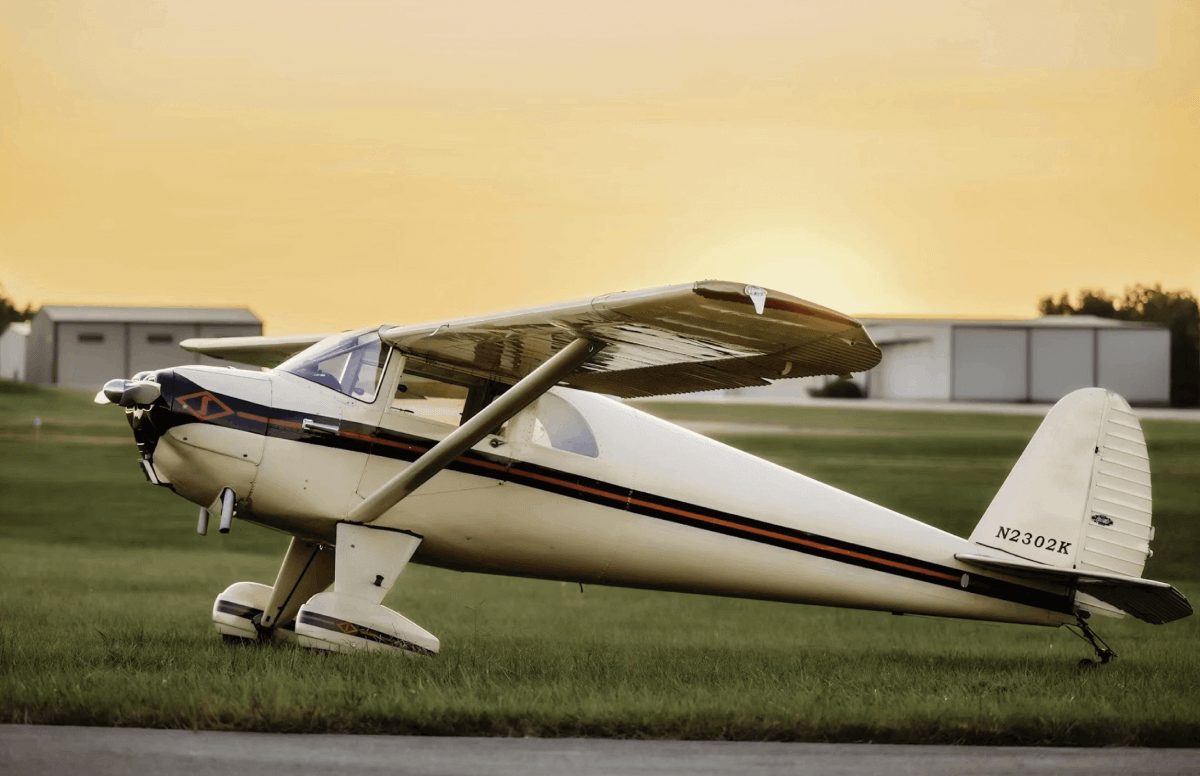










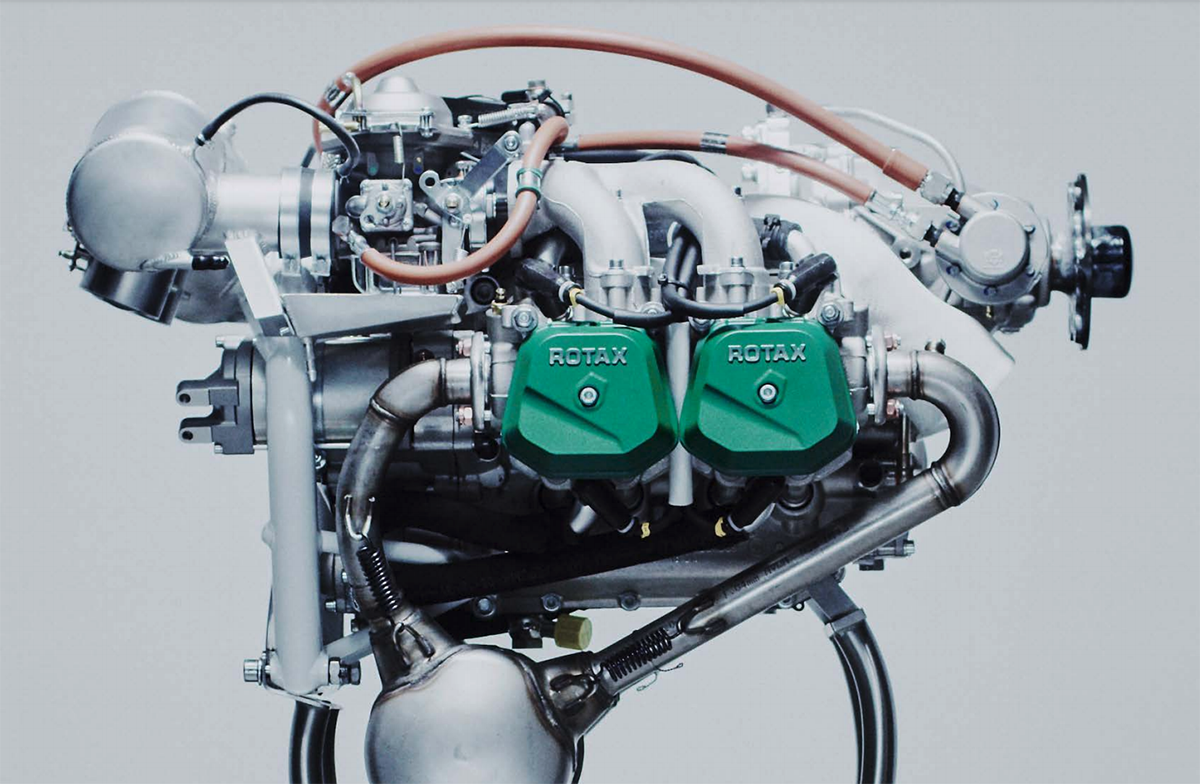

One of the most revolutionary engines in light aircraft history, the Rotax 912 has gone into hundreds of different models of certificated and sport aircraft. A four-cylinder, hybrid cooling (air and liquid) engine, the first 912, introduced in 1989, boasted 80 horsepower of smooth, efficient power that helped catapult sport aviation to another level. Previously, two-stroke engines, many of them manufactured by Rotax, ruled the segment. The company has manufactured an estimated 75,000 aircraft engines, many of them derived from their popular engines for snowmobiles.
The 912 was launched the same year, 1989, as a new, advanced two-stroke design, the 582, which is still in production. It was the pinnacle of Rotax’s line of two-stroke engines designed for ultralight and very light sport aircraft. It has been standard equipment on more than 225 different ultralight and very light aircraft.
Producing 65 horsepower, the engine is a tidy fit for two-seat ultralights (most of which are simply small Experimental aircraft and not technically “ultralights” at all). For those who don’t want to mix oil and fuel, the 582 features optional oil injection. The liquid-cooled engine has an integral reduction drive because its normal rpm range of power—max power is delivered at 6,500 rmp—is far too fast for prop efficiency.
The introduction of the 582 gave developers of very light aircraft a low-maintenance, more reliable and more powerful alternative to existing small engines, and in so doing, it helped launch the Light Sport Aircraft segment and regulations.
But it was the 912 that helped deliver on the promise of sport aviation. Since 1989, the company has developed follow-on models, including more powerful naturally aspirated and turbocharged models that today with the 915 iS go up to around 150-hp.
The 912 is around 33% more efficient than conventional gas piston engines, and it can run on auto fuel, as well as 100LL.