












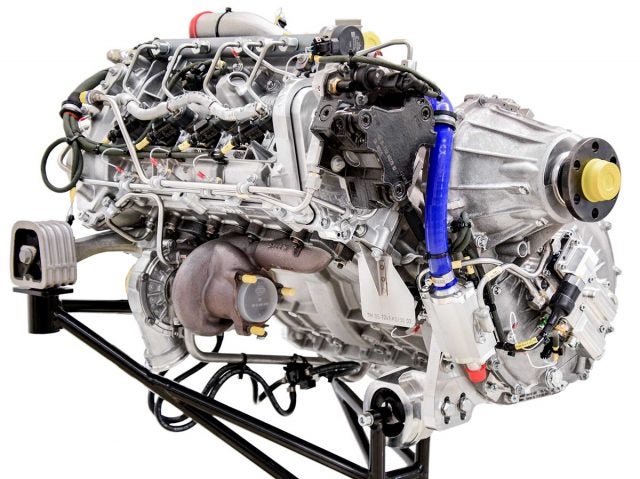
The latest update to light GA aircraft that has had much impact was the Thielert Centurion 1.7, introduced by Diamond aircraft in its DA42 (then called the Twin Star) in the early 2000s. The engine is an extensive conversion of a Mercedes automobile engine. It was the first successful diesel aero engine, though in this case, “success” is a word to be used with numerous qualifications.
The four-cylinder, 135-hp, turbocharged, Jet-A-burning engine has numerous advantages, but its most compelling is its great fuel efficiency, in many applications up to 40% more efficient than gas piston engines of similar power rating. It also, as you just read, uses Jet-A fuel, which is widely available around the world and in many places far cheaper than avgas, not to mention that Jet-A is naturally unleaded. And because it’s turbocharged, the engine maintains its rated power to far higher altitudes than its gas piston competitors can.
But the introduction of the engine was a disaster, with low time-before-overhaul times for critical components, poor reliability on top of that and spotty support, at least initially, from the airframe maker. Thielert itself declared insolvency, and Diamond took the extraordinary step of creating its own engine manufacturing subsidiary, Austro Engines. Thielert engines, now much improved, are produced in the United States by Continental Aerospace Technologies, though they have not had a strong uptake rate in the retrofit market, at least not yet. But given the aero diesel engine’s promise and demonstrated advantages over gas piston engines, many still believe its day will come at last.