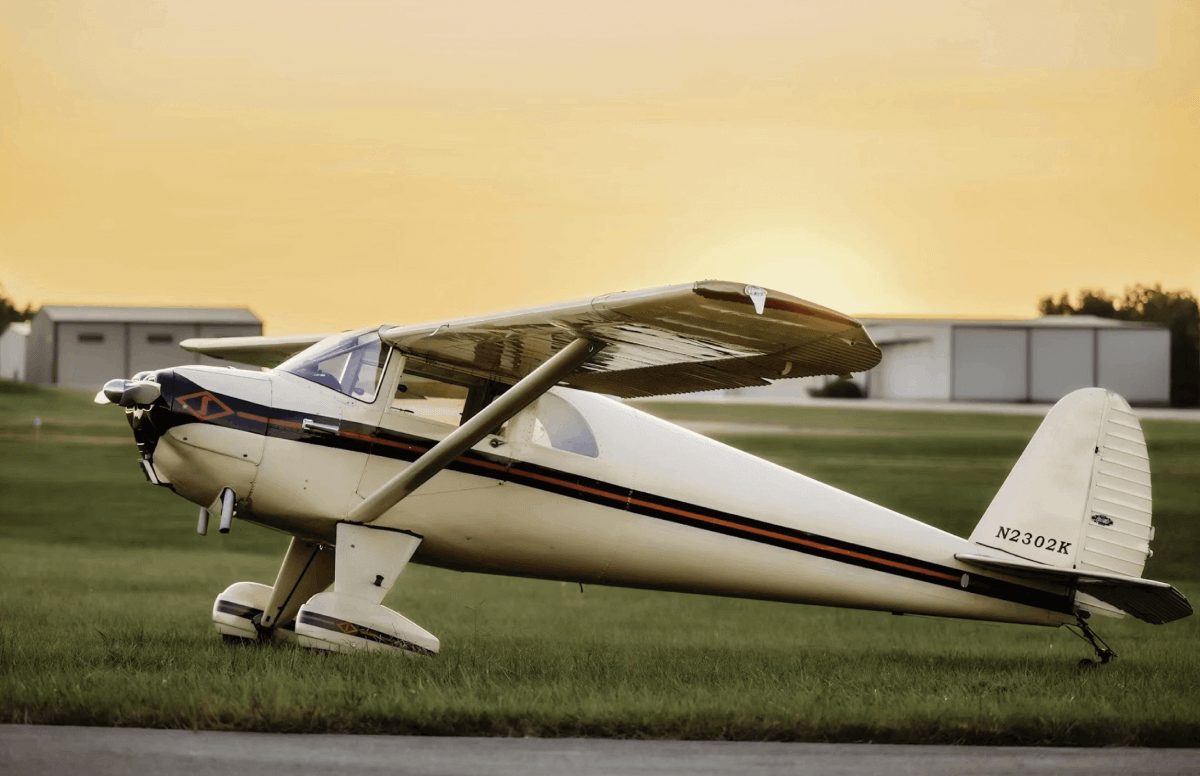










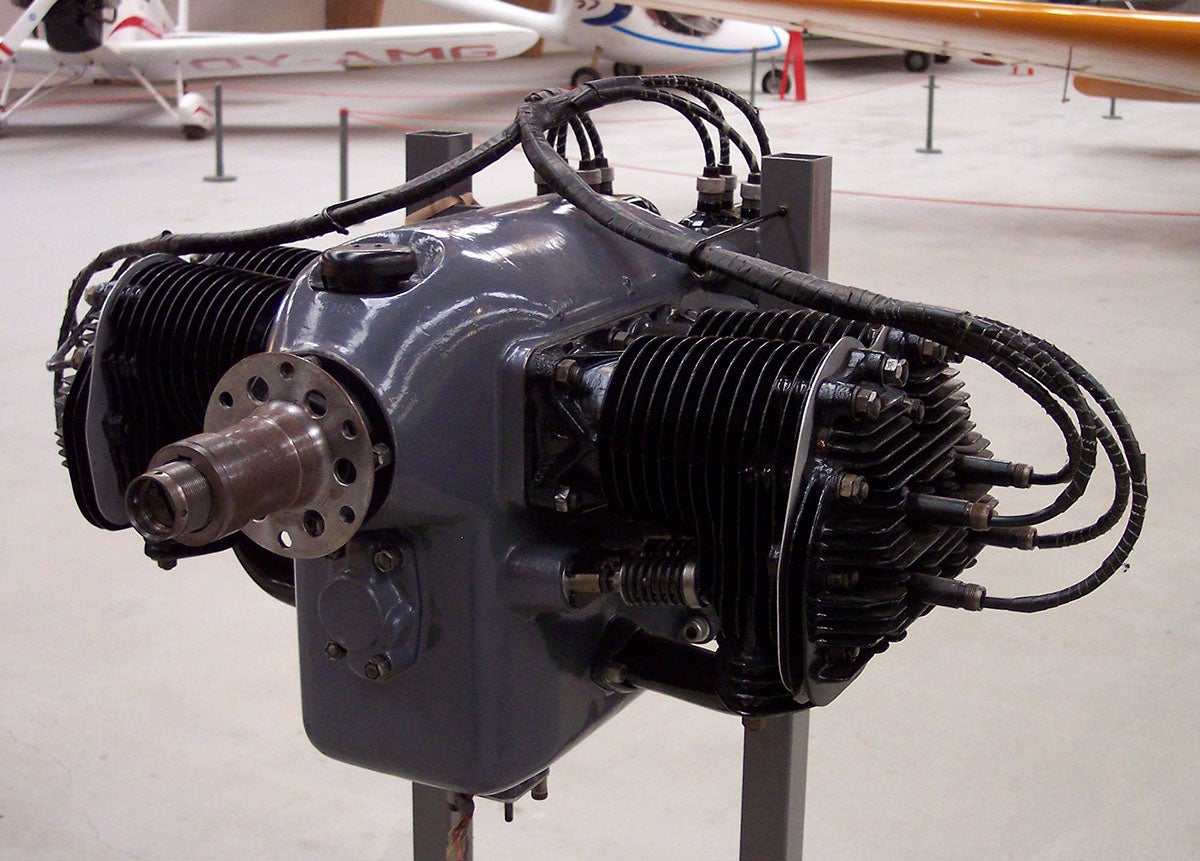

The increasingly urgent need for greater speed and payload demanded that commercial and military applications go with large radial engines or, less frequently, inline or V-configuration designs. But for light aircraft, those layouts didn’t translate well, as they were relatively heavy, complex and expensive to produce. The engines that caught on were the series of four-cylinder opposed, air-cooled models built by Continental Motors and based on the Piper (nee Taylor) Cub. The 40-hp, magneto-spark engine weighed around 155 pounds, and its compact shape made it the perfect small engine to power what would be known within a few years as a groundbreaking design, C.G. Taylor’s E2 Cub, which morphed into the much-beloved Piper J-3 Cub.
It was clear from early on that 40-hp was passable but not ideal, so the A40 grew into ever-increasingly powerful and only slightly heavier versions, the ultimate expression of which were the 90-100-hp C-90 and A-200 models, which produced an additional 50-60 horsepower for only an additional 15-25 pounds of dry weight.
A very similar engine, the Lycoming O-145, emerged shortly thereafter, and it, like its Continental competitors, was perfectly suited for the light planes of the day, including the Piper Cub, into which the Lycoming was also fitted. It’s hard to find details on how many of these engines were produced during their heyday, but the numbers likely are far greater than 100,000, perhaps, apiece.
Together, the two companies dominated the light plane engine marketplace for decades, and they still provide most of the engines for new-manufacture light aircraft today, all of which are based on these original designs.