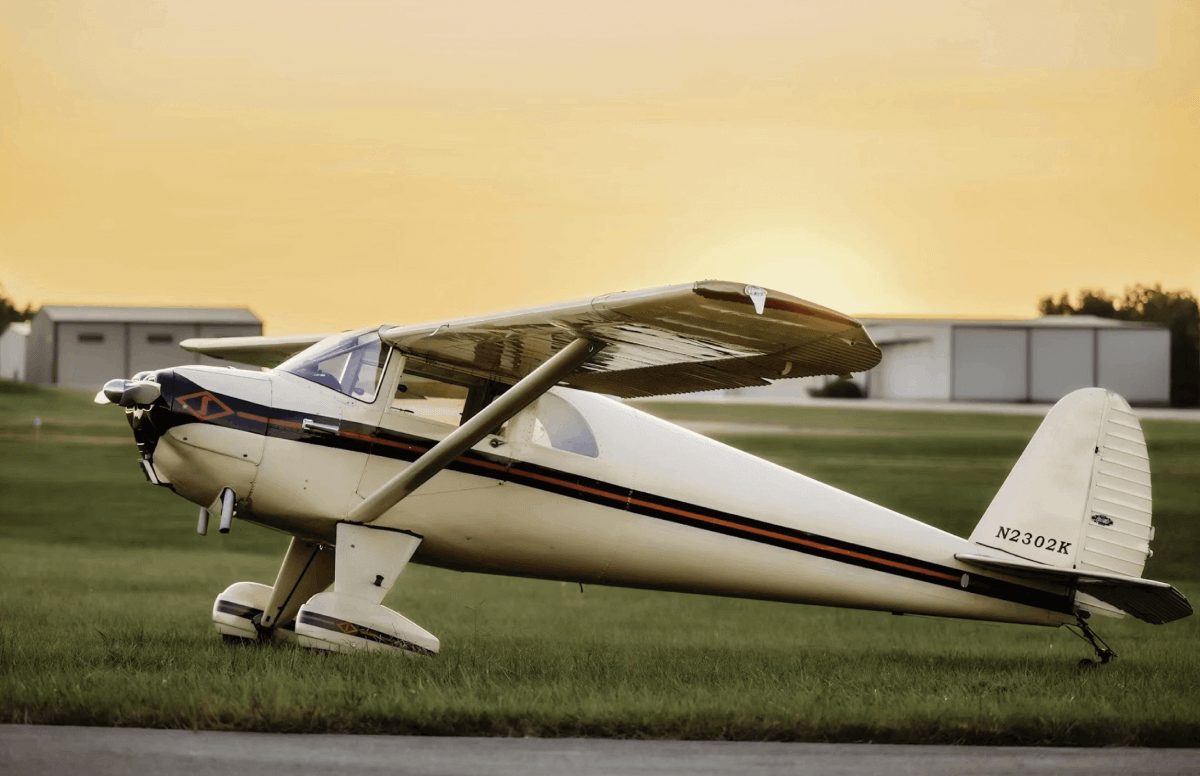










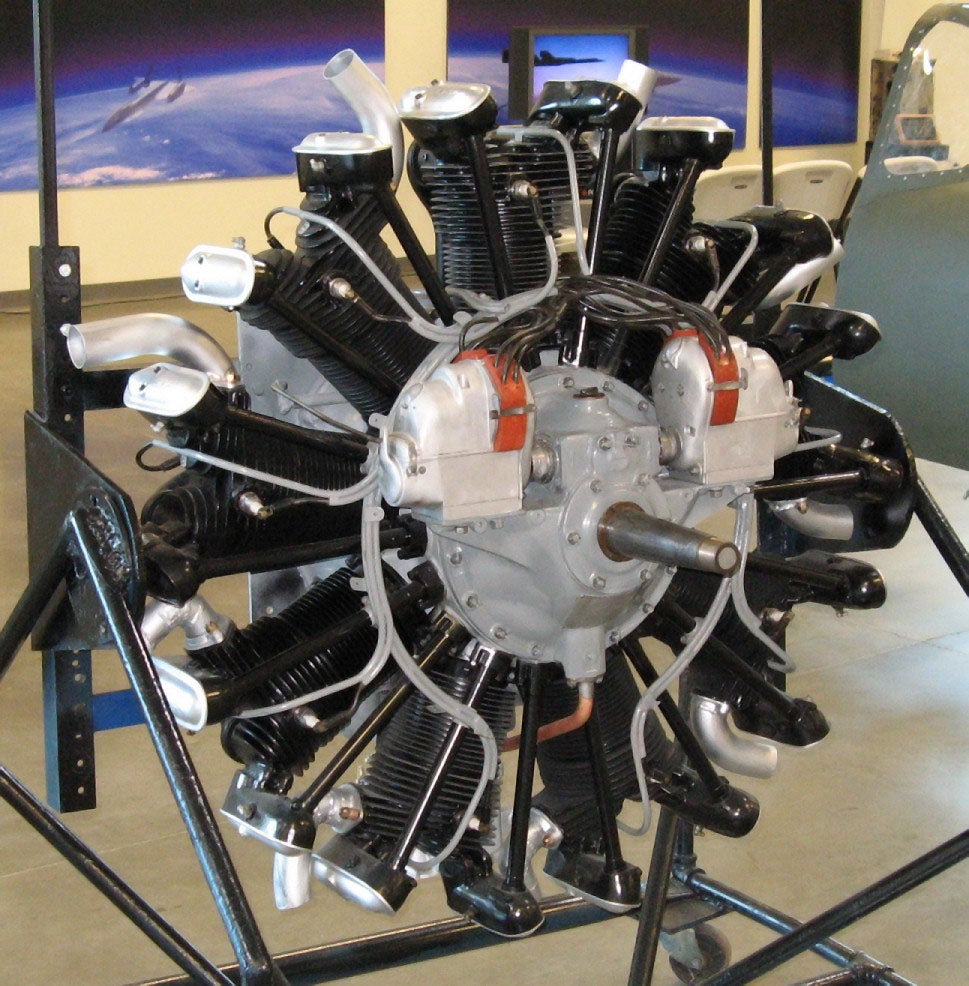

In light aviation before the era of the air-cooled opposed aero engine, the radial engine was the dominant engine type. This is in part because United States military planners voted strongly for the type, and their hunch paid off handsomely, as a number of radial engines from relatively compact to staggeringly powerful were installed in aircraft from trainers and personal travelers to the biggest bombers. If you want to understand the difference between the potential of the engine types, just picture a radial-engine-powered Beech Staggerwing of 1945 next to an opposed four-cylinder Beech Bonanza of 1945.
The radial engine that started a flurry of development of this still-much-beloved-but-now-largely obsolete engine type, the Wright Whirlwind was a radial engine whose development dates back to the early 1920s, when the Navy forced Wright’s hand into developing this type. It started as a nine-cylinder radial, but the company soon started building lower-power, lower-weight models of five and seven cylinders, too, for lighter aircraft.
The advantage of the radial engine was that it was air-cooled, and with the cylinders right out there in the open, they naturally got plenty of air, which eliminated a dangerous failure mode, the loss of liquid cooling, whereas air cooling had no such risk factor; as long as you were flying, the airflow was there.
There were disadvantages, too. Radial engines have a big footprint, so they are inherently more draggy than inline or V-configuration engines, and as they got larger and more powerful, they were forced toward larger applications, too.
Radials by Pratt & Whitney (the Wasp Junior), Continental, Jacobs and Wright itself, with its Cyclone series, were all mass produced for aircraft between the wars and, at a lesser rate, beyond, being outfitted into some of the most beautiful and prized light aircraft ever built before giving way to opposed engines and a new, more modern world of light personal flying.