











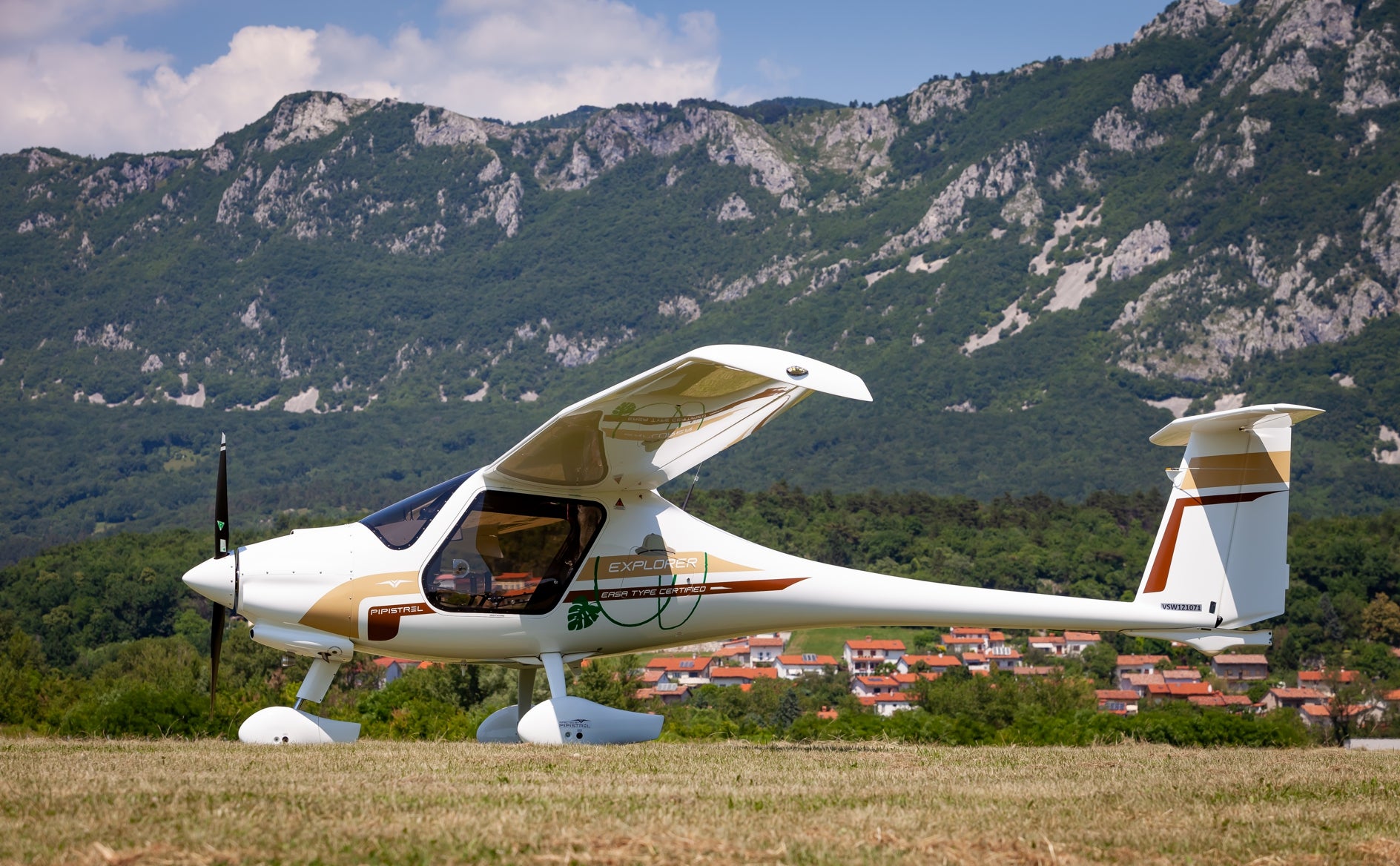

Slovenian aircraft maker Pipistrel announced its latest aircraft model, which it is calling the Explorer. The model, which boasts a high-end panel, among other advanced features, got the nod from EASA this week.
If the Explorer looks familiar, good eye. The plane is the latest of several models of the family of planes Pipistrel referred to as the SW line of side-by-side light planes, all of which feature long, sailplane-like cantilever wings and excellent visibility. The latest SW model, the SW121, had been nicknamed the Virus, which would lead one to guess the follow-up aircraft might be called Omicron. To deflect such childish jokes, Pipistrel has renamed the Virus, the Legacy.
The Explorer’s certification is impressive. EASA awarded type certification to the plane in the Normal category; possible because it uses a type-certified engine, the Rotax 912, which, the company points out, can run auto gas. Under the type certificate, the Explorer is approved for day and night VFR, and it can be used as a glider tug, a popular use in Europe, especially. Perhaps the most interesting approval, though, is EASA’s thumbs up for “intentional spins.” A phrasing we find curious; is it not approved for unintentional spins?
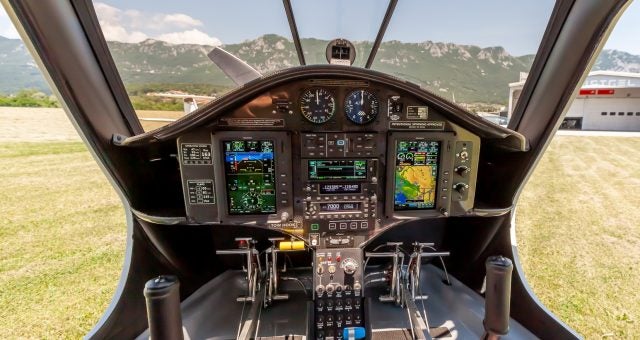
Although Pipistrel calls the plane’s instrumentation “unique,” the avionics are not uncommon these days, though they are quite capable. The federated (as opposed to integrated) systems features dual screen (one on each side of the flight deck) Garmin displays and a navigator, digital ADS-B transponder, nav/comm and what looks to be a Garmin G 500 autopilot.
It also boasts haptic stall-warning (a feature that sounds like a stick shaker to us; we are inquiring for more details), a whole-airplane ballistic parachute recovery system, a hydraulically actuated constant-speed prop and! airbrakes. Under its EASA cert, the Explorer can be operated for commercial uses, and Pipistrel calls it the “ideal solution for pilot training.”