









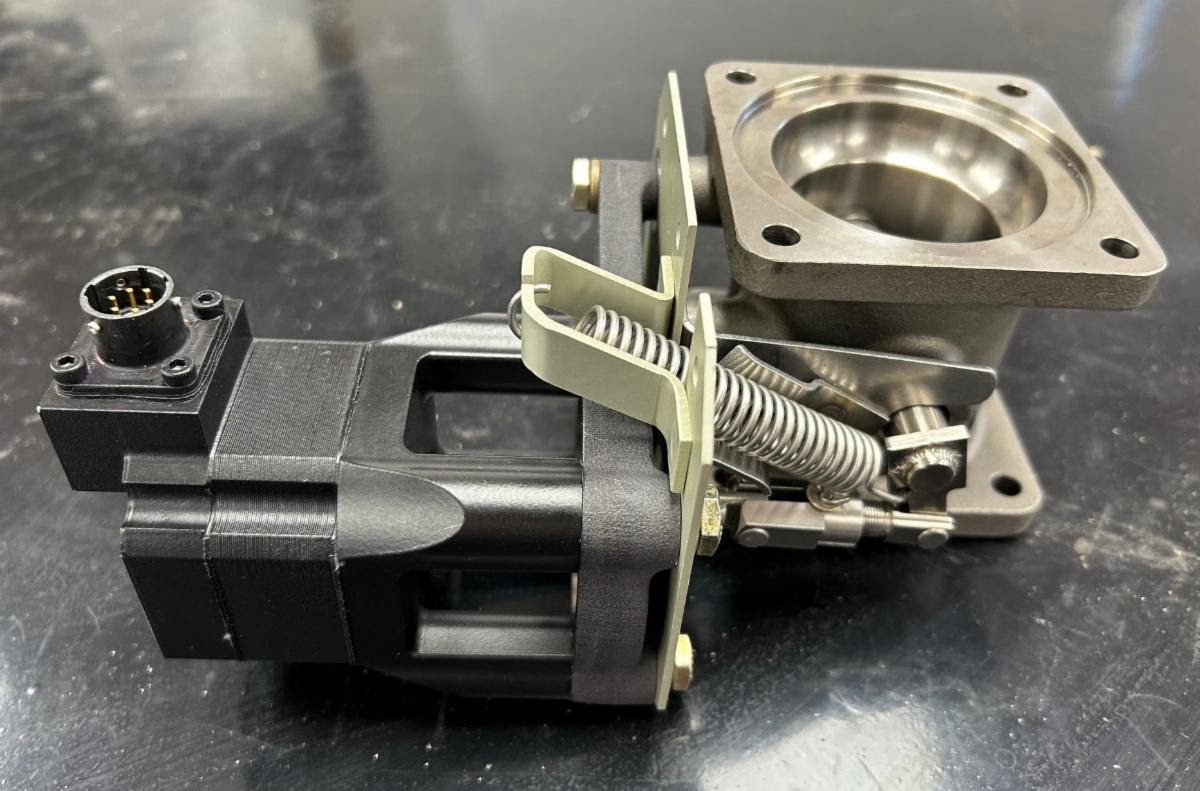

Hartzell Aviation’s engine manufacturing and development division has delivered the first units of its electronic wastegate prototype to third-party aircraft engine manufacturers for further testing.
The prototype was developed by AeroForce, one of the six manufacturing brands under the Hartzell Engine Tech umbrella.
Typically known for its hydro-pneumatic wastegates, Hartzell has recently invested in advancing wastegate technology for the future. The new electronic valve serves as a plug-and-play replacement for traditional hydro-pneumatic wastegates on aircraft engines equipped with FADEC systems.
Wastegates are critical valves in turbocharged aircraft piston engines. Essentially, turbochargers increase a piston engine’s critical altitude by piping in engine exhaust directly into the turbocharger. The turbocharger then uses this engine exhaust to spin up a connected turbine and compressor, which forces more air into the engine’s cylinders than is typically possible with non-turbocharged engines. The increased air allows for more fuel to be burned, resulting in a large power boost.
The wastegate regulates how much exhaust is allowed into the turbocharged engine. Once the desired boost is reached, the wastegate allows the exhaust bypass the turbine and go directly into the exhaust system. The main function that the wastegate provides is to prevent overboosting, which can significantly damage the engine.
Most wastegates are automatic, where they automatically sense when the engine’s turbo is creating too much pressure and open a valve to bleed off that excess energy, protecting the engine.
One of the main differences between Harzell’s electric wastegate and a more traditional one is the electric valve plugs into FADECs—computerized systems that manage an aircraft’s engine performance. So, rather than having to react to pressure created by the turbocharged engine, an electric wastegate can be predictive, constantly monitoring the powerplant’s performance and when it may need to take action.
Hartzell also said it is developing an electronic wastegate for legacy engines not equipped with FADEC technology.
According to Harzell, a transition to the electric valve can result in lower maintenance costs, enhanced reliability, decreased engine oil heat load, and streamlined on-engine setup.
The company did not name the other developers involved in the latest testing phase for the product.