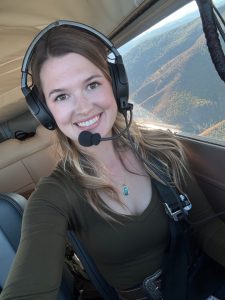










![Shelly Lesikar deZevallos gives her father credit for teaching her to fly and instilling the values of work ethic and goal setting. [Credit: Shelly Lesikar deZevallos]](https://planeandpilotmag.com/wp-content/uploads/2026/03/D80_1073rr-2-Firefly-Upscaler-2x-scale.jpg)

For third-generation commercial pilot Shelly Lesikar deZevallos, aviation is simply a part of her multifaceted life story. Drawn to the desire to protect general aviation for generations to come, deZevallos is taking her West Houston roots to a playing field much larger than that of southeast Texas—she’s running for Congress.
“I realized we have the power to change rules and regulations to protect our general aviation industry,” said deZevallos. “We need someone in Congress that understands what goes on in the airspace, has used it, and has been active with it.”
But running for the U.S. Congress in Texas’ 38th Congressional District in this year’s midterm election and becoming a pilot aren’t decisions or dreams that happened overnight.
“When I was about 14 years old, my dad [Woody Lesikar] came to me and he said, ‘You know what Shelly? I’m going to teach you to fly, and that way you’ve got a backup plan in case you can’t graduate college. You’ll always have the opportunity to work,’” said deZevallos, a Republican.
While her father’s advice was sound, deZevallos charted a new course by navigating the challenges of higher education to become the Leiskar family’s first college graduate.
DeZevallos credits her father for not only teaching her how to fly but also instilling the values of work ethic, goal setting, and “standing tall” through the training needed to become a pilot. She didn’t have much of a choice when it came to carrying on her family’s aviation gene, but deZevallos avoided joining the family business at the West Houston Airport (KIWS) until she carved a path of her own, beginning with the Cessna Aircraft Co. (now Textron Aviation) in 1997.
“I applied as a regional sales manager, and after an intense application process and several interviews, I was offered one of the coolest jobs—flying, selling, and demoing the single-engine piston line,” said deZevallos.
Unfortunately, after only five years at Cessna, the results of the 9/11 terrorist attacks took their toll on deZevallos’ sales career. Although her time at Cessna was cut short, she said her time with the company was one of many well-learned life lessons, reinforcing her father’s mantra of having a backup plan.
“The entire sales cycle and working with the dealers on inventory, logistics, and manufacturing challenges as well, gave me incredible insight on how major manufacturers work,” said deZevallos. “And how world events can change an entire business.”
Luckily, DeZevallos’ fallback plan, an executive MBA program at Texas A&M University, had just kicked off. Feeling inspired by her upbringing at the West Houston Airport, she was already full steam ahead toward a future filled with general aviation advocacy.
“I used my MBA thesis to evaluate the economic impact of West Houston Airport and promptly gave it to my congressman,” said deZevallos. “Thus, beginning a trusted relationship with our elected officials.”
Feeling inspired to further make a difference in her local aviation community and beyond, deZevallos joined forces with the Aircraft Owners and Pilots Association (AOPA) in 2004 as a regional manager.
“I was responsible for following and tracking legislation policy initiatives and challenges that would affect airports and aviators in Texas, Louisiana, Kansas, Oklahoma, New Mexico, and sometimes Mississippi,” said deZevallos.
Whether it was common issues like fuel storage tanks to more complicated matters like runway re-surfacing and working with elected representatives, deZevallos said she was always enamored with how the industry could be changed for the better.
“I realized we [pilots] could make a difference in almost every way,” said deZevallos.
As life progressed, deZevallos came around to the idea of joining the family business after succession plans were being discussed for her father and the West Houston Airport.
“I had some great careers,” said deZevallos. “I worked for a major manufacturer and sold and demoed airplanes. I worked for AOPA and then ended up having a family and expanding that family into twin girls. It was then that Dad said, ‘Hey, would you be interested in coming on board?’”
Although deZevallos describes her father as the “Energizer Bunny” with no plans of slowing down at age 79, she loved nothing more than the idea of carrying on the family legacy as the president of the West Houston Airport.
“In 1967 my dad came here and opened up a flight school, and then in the early ’70s he bought the airport,” she said. “It’s been in the family ever since.”
Featuring a 4,000-foot runway with dual taxiways, KIWS serves as home to over 350 airplanes and employs 30 people, half of which have turned an airport job into careers, averaging 15-20 years of time with the Lesikar/deZevallos family.
“We love to promote [line staff, flight instructors, and customer service representatives] from within,” said deZevallos. “Whenever they learn everything they need to know, they go to other places like the Houston Airport System or become pilots that fly all around the world for airlines and businesses across the country.”
Through the years, deZevallos has enjoyed seeing young line service technicians grow past marshaling and fueling aircraft to owning airplanes and operating fleets of their own.
“It’s so much fun to see what my dad has created in terms of economic output and job creation,” she said. “I love being a part of it.”
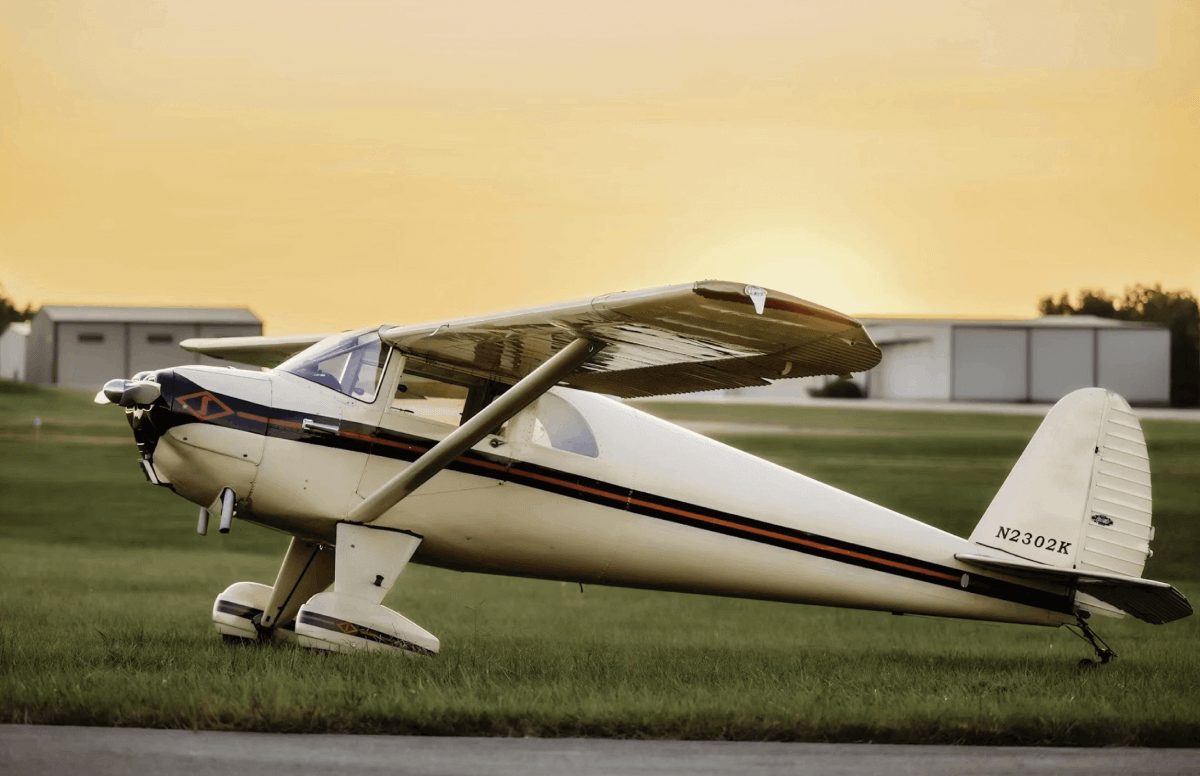
When she’s not helping to carry on her family’s legacy at the West Houston Airport, advocating for our freedom to fly, or campaigning for Congress, deZevallos can be found enjoying general aviation to the fullest by owning and operating a 1997 Beechcraft B58 Baron. But like most, aircraft ownership didn’t start out with the comfort and convenience of an iconic multiengine, family cruiser.
“When I met my husband, he had a [Cessna] Skyhawk, but I talked him into an A36 Bonanza a few years later,” said deZevallos. “It was the perfect plane for us for 10 years. [We had] cargo doors to pack and unpack our bikes when we went to our honeymoon in west Texas and Utah, and our raft and supplies when we flew to the Bahamas three years later.”
However, a growing family meant more space and hauling capacity was required.
“We wanted the safety of a twin and a bit more useful load,” said deZevallos. “[The Baron] is the perfect plane for us. [We can go] nonstop anywhere across our great state of Texas.”
With so many opportunities for adventure across the Lone Star State, deZevallos said her favorite excuses to stretch the Baron’s legs are trips to far west Texas, Fort Worth, College Station (home to her alma mater A&M), and “all the barbecue places across the state, including Stephenville…and Longview has a great place for burgers and breakfast. There’s so many fun spots.”
Although deZevallos has spent more time outside the cockpit than inside recently due to the political campaign process, she hopes to put her extensive flight experience to work in ways that can resonate on the national level as a member of the U.S. House of Representatives.
“Whether it’s a 6-pound drone, a supersonic aircraft, or space travel, we’ve got a lot of entrants coming into the market and into our airspace,” said deZevallos. “We need someone who can help protect that.”
As complicated as it may sound, deZevallos believes individual pilots have the ability to enact and effect change on a grand level.
“Each pilot can make a difference by voting and connecting with their congressional representatives,” she said. “Aviators have the expertise. Most members of Congress don’t fly and don’t fully understand the complexity of aviation and transportation infrastructure.”
As she works to bridge the gap between general aviation and public policy, deZevallos also makes time to share her love of flight through offering advice to those who walk through the door at her family’s flight school at the West Houston Airport and beyond.
“There’s going to be hiccups, but just keep going,” she said. “We want [people] to fly. That first solo is just a tremendous accomplishment. And then you get to realize how small this country, and Texas, really is with a private pilot certificate.”
This article first appeared in the March/April 2026 issue of Plane + Pilot magazine.