









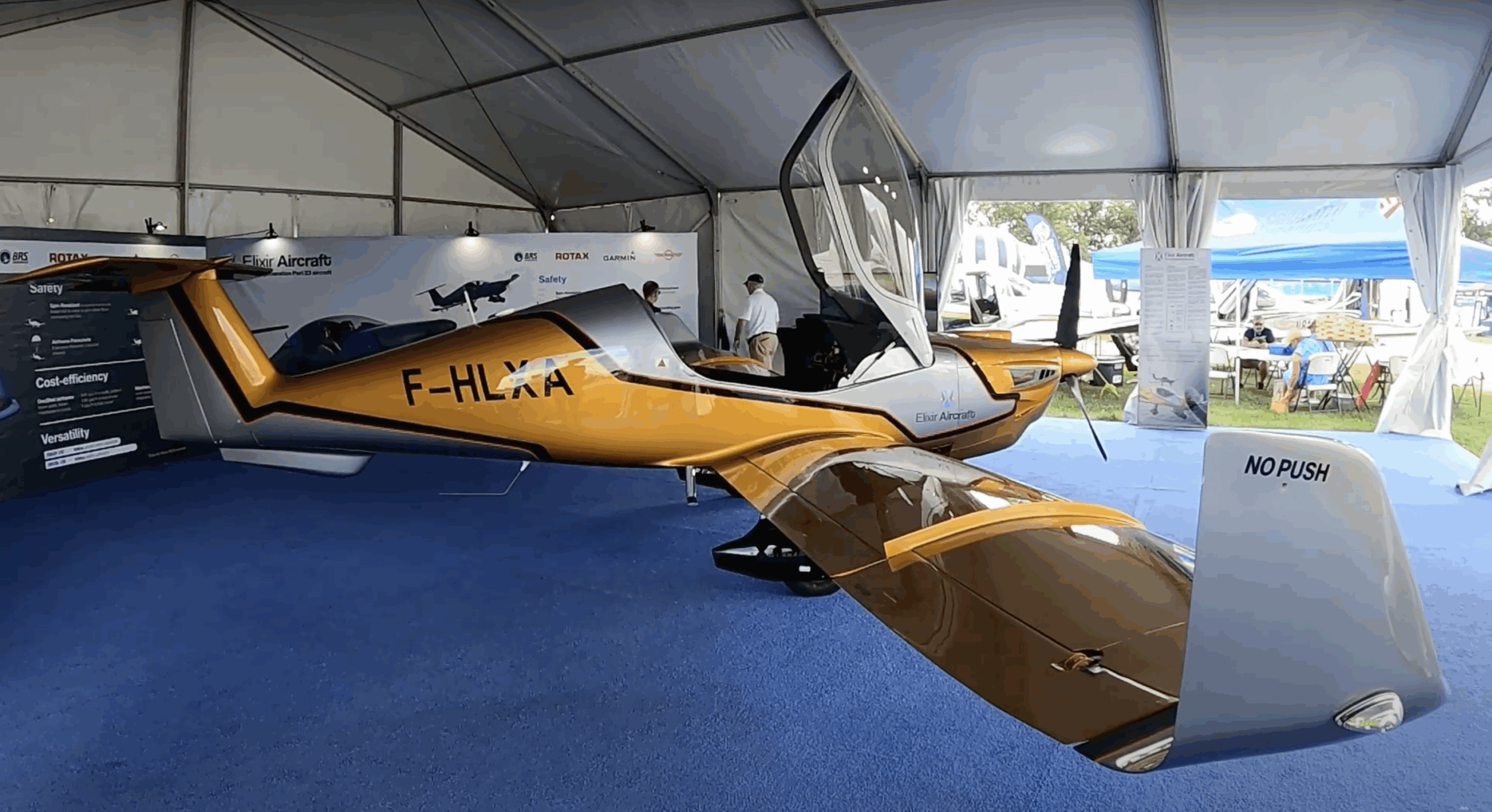

France-based Elixir Aircraft received Part 23 certification from the FAA during EAA AirVenture in July for its carbon-fiber, low-wing training aircraft, marking its entry into the American market.
The company reported it has already received over 300 preorders, including from training schools like Cirrus Aviation in Sarasota, Florida, and Sierra Charlie Aviation in Scottsdale, Arizona.
Certified CS-23 by the European Aviation Safety Agency (EASA) in 2020, the Elixir is positioned as an environment-friendly option for flight schools and trainers. According to the company, the aircraft reduces carbon dioxide emissions by around 70 percent when compared to conventional trainers.
The aircraft uses a unique technology that the company calls “Carbon OneShot.” Inspired by the same designs used in competitive sailing, the Elixir uses a single piece of carbon fiber for each major structure on the aircraft.
This reduces the amount of glue and rivets that would typically be used in traditional aircraft manufacturing, making the airframe less susceptible to cracking and simplifying maintenance processes. The new technology results in an airframe that consists of just nine pieces.
“We ended up with an aircraft that is only made of nine parts for the entire airframe from the tens of thousands of pieces you can imagine with rivets and screws,” Elixir chief marketing officer Cyril Champenois said. “So this is a big deal because in operating costs, this is a game-changer… [and] for safety as well because it relates to failure because [with] less parts, it’s like a puzzle. Less parts, [so] it’s easier to maintain.”
As part of the company’s integration into the U.S. market, Elixir has named Florida as its hub for all U.S.-based operations. In 2024, the company took control of a 12,500-square-foot hangar at Sarasota Bradenton International Airport (KSRQ) and is in the process of acquiring a 6,000-square-foot building adjacent to the first.
The goal is for the assembly and deliveries of Elixir’s North American orders to take place at the location, as well as house its inventory of spare parts. Elixir plans to add around 200 employees at the Sarasota site by 2027.
Elixir is the second aviation company out of France in recent years to begin its U.S. operations in the Sunshine State.
Earlier this year, Aura Aero began a partnership with Embry-Riddle University to open sites at the college’s research park in Daytona Beach, where it will begin similar production on its electric training aircraft. Aura’s Integral family of aircraft is designed for more advanced training and those interested in aerobatic capabilities.
Both companies are looking to cash in on the fertile American training community. Home to nearly 600 FAA-certified flight schools and over 75,000 pilots, the U.S. is the world’s largest aviation training hub.
Elixir also cited the ongoing pilot shortage as a motivator of marketing its aircraft to a broader audience.
“There is a huge need at the moment because of the pilot shortage,” Champenois said. “If you talk to the airlines, this is a major issue. At the moment, there [are] between 500,000 to 600,000 pilots looking for a job in the next 20 years. So one of the reasons why we are missing some pilots is because of the training aircraft, because they are old, getting obsolete, expensive to operate, so we need to make a move.”
Canadian technology company CAE released a report in June estimating that 300,000 new pilots will be needed over the next 10 years.