











Most aircraft accidents are caused by common occurrences. With light planes, it’s mostly pilot error or bad weather. With commercial aircraft, accidents are rare, and pilot error-caused accidents are almost unheard of. In fact, certain types of pilot error-induced crashes or collisions have been all but eliminated.
But what about the least-expected kinds of accidents? What about ones that we can only classify as extreme events? Earthquakes, floods or tsunamis? These phenomena are seldom associated with aircraft accidents or incidents. But how common are they, and what are a pilot or flight crew’s chances of surviving such an event? Answers to these questions are largely speculative, though we do know that some extreme meteorological or seismic events have, indeed, caused aircraft accidents, though they are seldom spoken of in safety training for pilots, probably because they are so rare and their effects in most cases so difficult to predict that training for them would be time that could have been better spent on more common accident causes.
Still, extreme events that affect aircraft operations aren’t as uncommon as you might think.
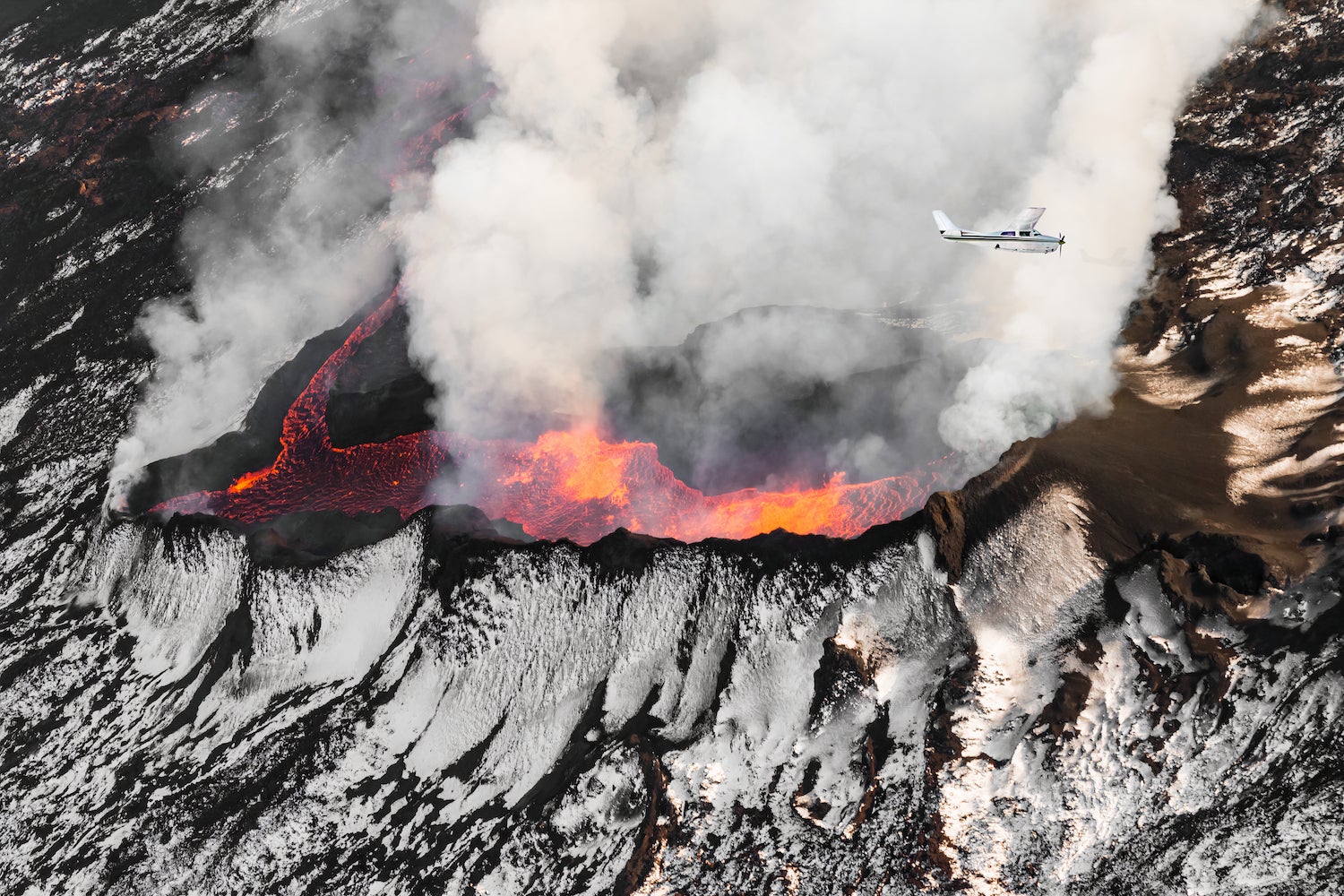
Airports Within 60 Miles Of An Active Volcano: 500
Average Eruptions Per Year Worldwide: 60 Documented Aircraft Incidents Involving
Eruptions: 129 Resulting In Airframe
Damage: 79
Engine Failure: 9
Eruption Causing Greatest Impact To Airline Industry: Eyjafjallajokull Volcano, 2010
Location: Iceland
Flights Canceled: 107,000 Financial Impact To Airlines: $2.6 billion
Eruption Hazards To Airports: Slippery runways/taxiways, compromised communication and electrical facilities, maintenance vehicles and parked aircraft
To Airborne Planes: Ash ingestion
Engine Impacts: Blocked fuel nozzles, clogged air filters,
temperature sensor failure, oil contamination
Other Impacts: Garbled radio transmission, airspeed indicator failure, damaged lights and windows, navigation interference, cabin infiltration and pressure failure
Distance Ash Spread Presents Risks: 6,000 miles
Furthest Distance An Engine Failure Resulted: 600 miles
Safest Exit Strategy: 180-degree descending turn
Volcanoes Blamed For More Than Five Aviation Incidents: 8 Located In U.S.: Augustine, Mount St. Helens and Redoubt Aircraft Incidents Caused By Earthquakes: Unknown
Earthquakes/Year: 20,000
Greater Than Magnitude 7.0: 12
Distance Ground Can Shift During Event: 20 inches
Theorized Impacts To Airborne Planes: Loss of ATC communication, airport blackouts, antenna light blackouts, runway debris and cracks
Theory Basis: Vapors create strong thermal currents generating convection
Scientific Consensus: Unsubstantiated and not a factor in any known accidents or incidents
Average Tsunamis Generated By Earthquakes Each Year: 2
Airport Destroyed By Tsunami: Sendai Airport, Japan (2011)
Size Of Earthquake: 8.9 magnitude
Tsunami Wave Height: 133 feet Speed: 435 mph
Distance Traveled Inland: 6 miles
Height Flooding Reached In Airport: 2nd Floor
People Stranded Inside: 1,300
Days Before Rescue: 2
Air Traffic Controller Who Died During 2018 Indonesian Earthquake: Anthonius Agung
Age: 21
Reason: Refused to abandon post due to departing passenger jet
Size Of Earthquake: 7.5 magnitude
Height Of Tsunami Wave That Followed: 36 feet
How He Died: Jumped from tower
Last Words: “Batik 6231, runway 33, clear for takeoff.”