










It may seem hard to believe, but only days after we shared video of a turboprop-converted DC-3 wiping out in Colombia alongside a dirt strip, we’ve got an eerily similar video of a Basler DC-3 getting crunched at Colombia’s LaVanguardia Airport in Villavicencio. There were twelve injuries, but thankfully no fatalities among the 26 occupants.
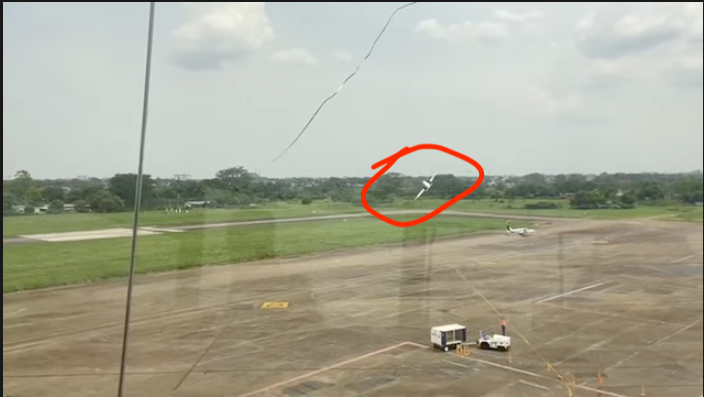
We can’t be sure whether we are watching the initial takeoff or a botched go-around, but we see the PT6-powered DC-3 leave the paved runway to its left and start bouncing through the terrain. Could be a good moment to stop and taxi back for a second attempt, right? Well, for whatever reason, the video from the airport’s control tower shows the turbo Gooney Bird accelerating slowly through the grass and briefly taking off from a 3-point attitude, which makes the DC-3 notoriously hard to control. A stall of the left wing immediately occurs and the entire aircraft pancakes into the trees and grass. Notably, a fire truck enters the frame—rolling to the scene—only seven seconds after the Gooney’s left wingtip first struck the ground. Now that’s a rapid response!
The video’s start reveals an active windsock (circled in red in our screenshot), which clearly shifts from indicating a gusty crosswind to a tailwind around the moment the DC-3 makes its lurch toward the paved runway’s edge. It’s interesting to note that the Basler DC-3’s powerful PT6A-65 engines turn clockwise from the pilot’s view, so the left-turning tendencies you studied in Multi Engine training could be at their greatest when combined with the apparent winds and the tail-low attitude of the aircraft, which it held throughout the roll.