











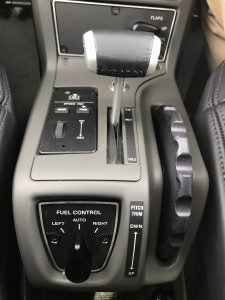
The autothrottle is controlled a few ways. There’s a small control pad to the left of the throttle itself where you can choose one of two modes, manual or FMS. In manual mode you manually control the autothrottle settings. In FMS mode, the autothrottle’s profile is set in, obviously enough, the flight management system, or FMS, where the flight is programmed. I won’t go into great detail, but as one example, say you’re going to be descending, which we all have to do at some point in a flight. You can set the descent schedule to fly the descent at a given indicated airspeed and a 3 degree descent rate with, among other options, a reduction to 250 knots below 10,000 feet and reducing to 185 knots in the terminal area. The autothrottle keeps the plane from overspeeding, so no more annoying chirping from the “Barber Pole” (as the red-and-white-striped warning on the airspeed tape is called) if you get caught up in communications or FMS programming and lose track of airspeed momentarily. I know only from second-hand reports.
On arrival, the beauty of the autothrottle makes itself clear, as the armed autothrottle will automatically slow the jet to appropriate speeds for flap and gear extension and final approach. We flew a missed approach into San Angelo, in West Texas. The missed approach with autothrottle is nearly fully automated. As you go missed, you hit the TOGA button and milk out flaps and put the gear up as the plane flies the selected missed approach procedure and the autothrottle handles the power.
Other new features of the G2 Vision Jet include the Perspective Touch Plus panel, which is an updated version of the already-excellent Cirrus branded and customized Garmin G3000 panel. Other new options include Garmin FlightStream connected cockpit, so you can load your Garmin Pilot flight plan into the FMS quick and easy, as well as 3D synthetic vision and a new satellite communications interface you can use to text folks using your own phone. Nice.
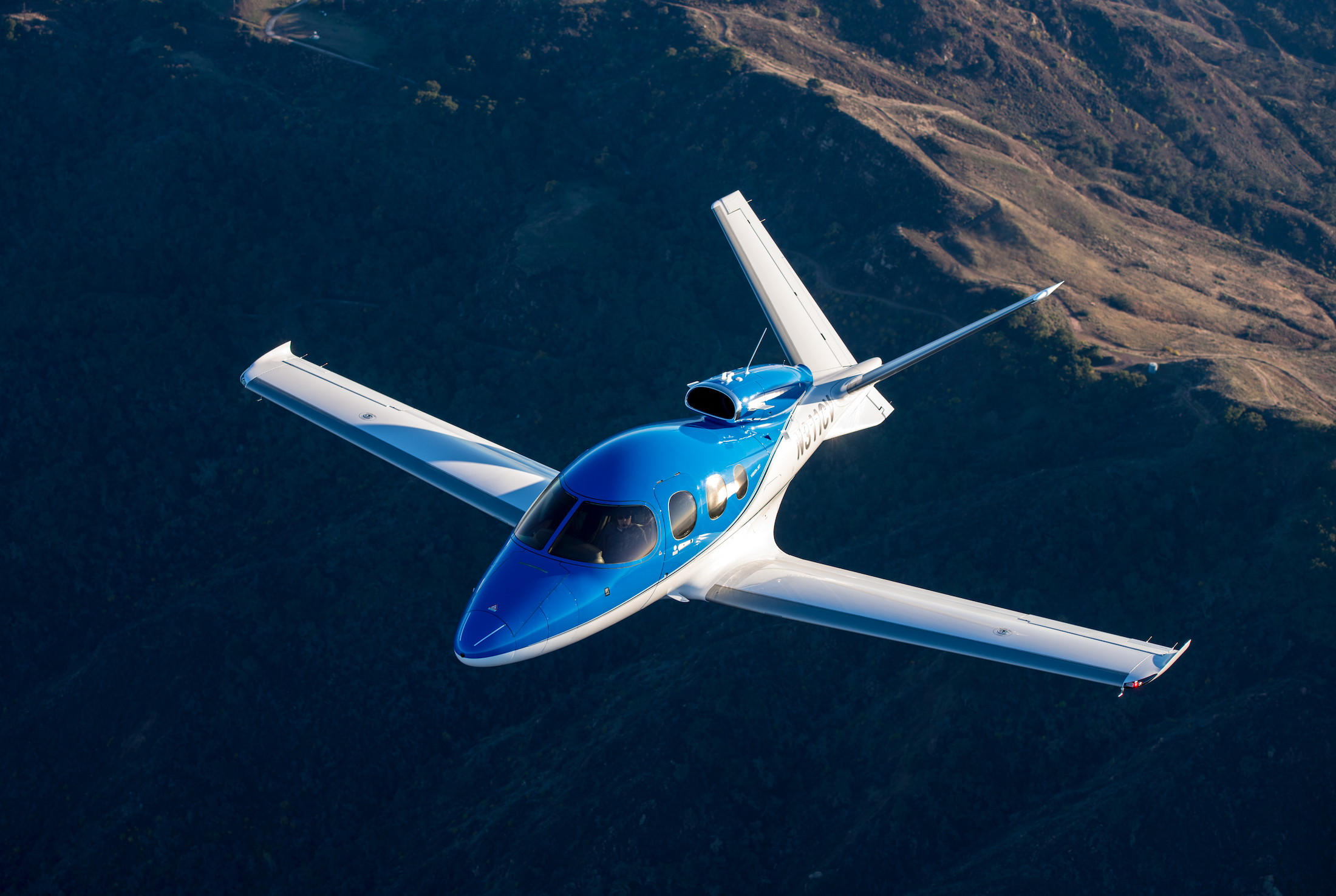
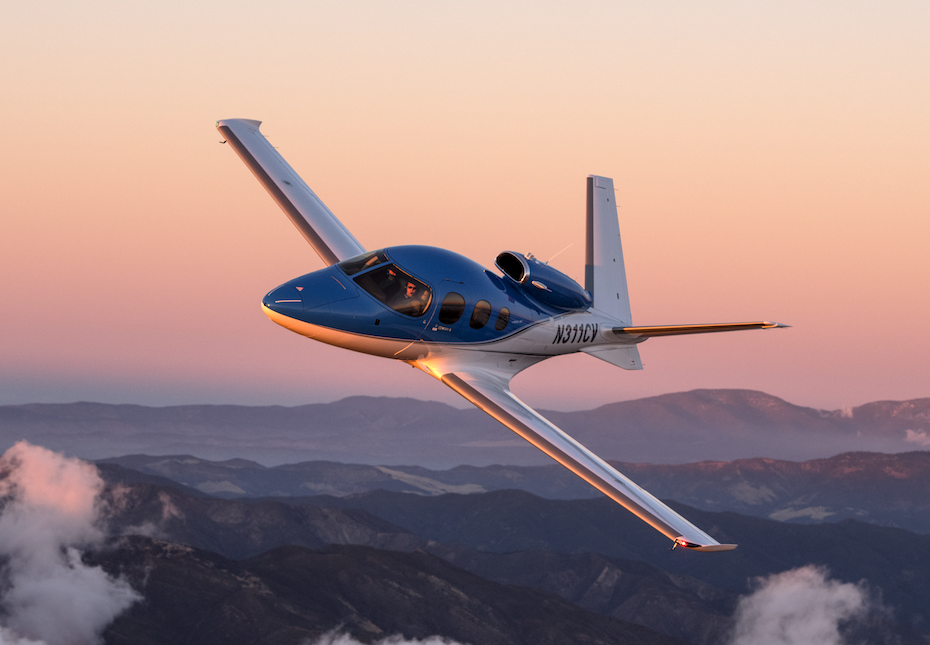
The G2 Vision Jet is shipping. The plane’s price is a healthy upgrade from the just-under-$2 million sticker of the G1 model. At around $2.7 million, the G2 comes with just about every option North American owners will ask for, including autothrottle, updated seating, paint scheme, interior, new tech batteries and more.
Competing in a niche that is getting a little crowded, the SF50 offers features that its competitors don’t or can’t match. While it burns a bit more fuel than some of its closest near competitors, the allure of flying a jet, the quiet of the cabin, the size and the comfort, not to mention the technological sophistication, all give the SF50 a list of compelling features that is keeping Cirrus busy building jets and delivering them to delighted customers.