












Inner Spaces
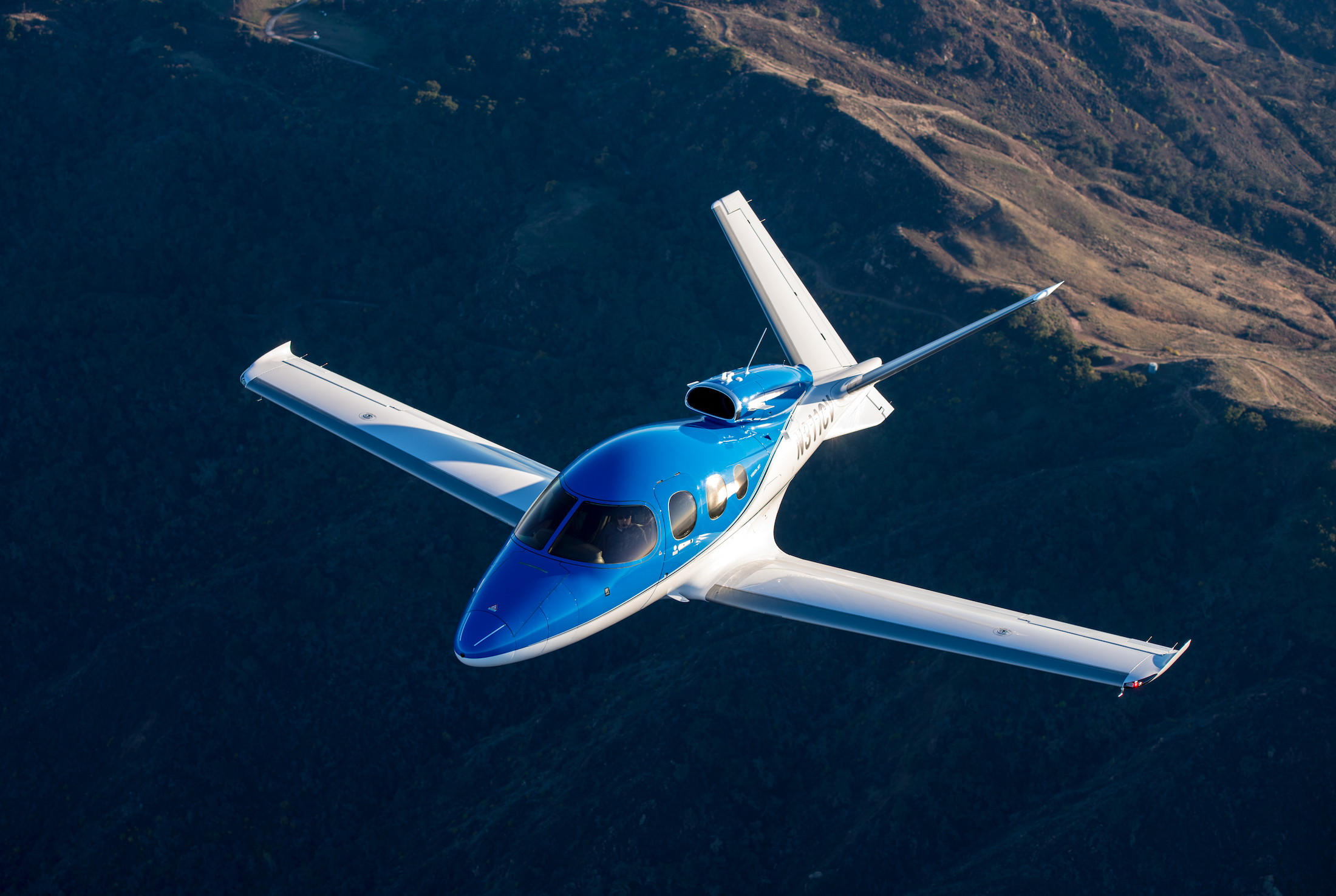
One of the marquee features of the tightly wound jet is its great cabin altitude, which is the altitude the airplane’s pressurized cabin maintains at its ceiling, 8,000 feet in the G1 model, which was an impressive achievement for Cirrus; remember that it’s a single-engine jet so has only one engine to share its bleed air goodness. On the G2, Cirrus kept that same max cabin altitude, 8,000 feet, but in order to do so at the 3,000-foot-higher altitude, it had to turn up the pressure, from 6.4 psi to 7.1, not an insignificant amount. It proudly points to this achievement, and rightly so.
Passengers will enjoy the numerous interior upgrades, too, the most noteworthy of which is the addition of more comfortable, more fully padded second-row chairs (there are three rows of seats in the seven-seat jet). If you haven’t had the chance to get inside an SF50, you’re missing out. It’s a remarkably open and comfortable seating experience. As a pilot, I revel in the sense of for once not wearing the airplane but instead just simply being inside it, and for passengers, it’s got to be the most nap-friendly plane imaginable. Or work. The open spaces and abundant USB options make laptopping or iPadding a dream.
Cirrus also added a removable console (which I did not get a chance to see) between the two second-row seats. The console gives passengers a place to store their stuff and set their drinks and tablets and quarterly reports. The way the cabin works, the rear passengers, as many as three smaller people, get to their seats by entering through the big main door and then moving to their seats by going through the gap between the two middle seats. With a console in place, that would have required acrobatics that are not FAA-approved, so the console can be fitted only when the rear seats are not. The good news is that, according to Matt Bergwall, the Cirrus pilot with whom I flew, the console and seats come out very easily. I asked, “What, like 15 minutes?” And Matt replied, “No, like 30 seconds!” So while I didn’t get the chance to test their removal, we did check out the hardware mounting system for the seats, and it’s impressively simple and robust, so it’s easy to believe it’s a simple task. I’m guessing that most owners will keep the rear-seating row in the hangar and keep the console in place, using the rearmost area as a large, pressurized baggage space.