









![[Credit: Dylan Phelps]](https://planeandpilotmag.com/wp-content/uploads/2025/09/CAF_WASPAT6Nella_May23_DylanPhelps-12.jpg)

In our fast-paced world,constantly buzzing with notifications and the relentless pull of the digital, it’s a rare gift to find a place that truly grounds you.
A place where the noise fades, and you’re left with a profound sense of connection—not to a screen but to something deeply human.
As I wrote in my August Plane & Pilot article, “Timeless Connection,” about the soulful experience of flying a WACO UPF-7, it is in these moments that we pilots forge a special bond, a silent conversation between human and machine, transcending the mere act of button pushing.
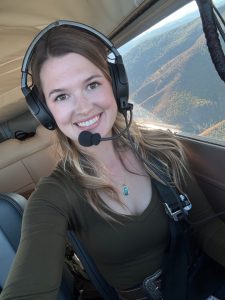
I’ve been fortunate enough to experience this connection many times over my 800 hours in almost 50 different aircraft types. From the spirited aerobatics of the GB1 GameBird to the honest, raw flying of a vintage Cub, and the pure enjoyment of a Cessna 170B, each has left an indelible mark.
But there are places, not just airplanes, that deepen this link, places that whisper stories of courage and shared experiences, places where the past reaches out and touches the present.
The National WASP WWII Museum in Sweetwater, Texas, is one of these special places.
Nestled on the historic flight line of Avenger Field (KSWW), the museum is more than just a collection of artifacts. It’s a living testament to the extraordinary women who answered their nation’s call during World War II. These were the Women Airforce Service Pilots (WASP), pioneers who left their homes and families, and confronted their fears to step into the cockpit and fly for a country at war.
As a fellow pilot, and someone who has navigated my own fair share of anxious moments during training and flight, the WASP stories resonated with me on a profoundly personal level. Reading their experiences, seeing their faces, and walking the very ground they once walked, I felt a timeless connection stretching across generations.
Avenger Field, an unassuming patch of West Texas earth, became the proving ground for these trailblazing women. Here, far from the battlefields of Europe and the Pacific, a quiet revolution in aviation was taking flight. The WASP program, led by legendary aviator Jacqueline Cochran, brought together women from all walks of life—each with a daring spirit and an unwavering desire to serve.
“My reason for organizing the WASP was to give women pilots a chance to serve their country in a war in which they were vitally needed,” said Cochran, who died in 1980. “It was an opportunity for them to show what they could do.”
The WASPs’ mission was clear: Ferry aircraft, tow targets for live-fire practice, test planes, and transport cargo, thereby freeing up men pilots for combat duties. It was dangerous, thankless work, and it carried a heavy toll. Yet, they persevered, driven by a patriotism that soared above the skepticism of that era.
![[Credit: Dylan Phelps]](https://planeandpilotmag.com/wp-content/uploads/2025/09/CAFRiseAbove_Oct23_DylanPhelps-23-1024x682.jpg)
As I wandered through the museum’s exhibits, I was struck by the raw honesty of their journey.
I saw photographs of young women, some barely out of their teens, their faces a mix of determination and apprehension. I read letters filled with the same anxieties and triumphs that every pilot experiences—the frustration of a botched landing, the sheer exhilaration of a perfect flight, the camaraderie forged in shared challenges.
It was an emotional experience, as I left tears of joy and sadness strewn across the museum floor, and mascara stained down my face.
One of the most powerful connections within the museum was supposed to be a North American AT-6 Texan named Nella. I had been eagerly anticipating seeing this particular aircraft, as she is a genuine artifact—an actual T-6 that the WASPs used for training during the war. Sadly, a maintenance issue kept her grounded in Dallas, unable to attend the scheduled reunion.
Yet, even in her absence, the T-6’s legacy was undeniably present. I looked on at the other warbirds in the field, with their radial roar and powerful presence, serving as the critical stepping stone for these women,transitioning them from basic trainers to more complex aircraft.
Before the WASPs climbed into a T-6 or ferried a B-17, these student pilots honed their skills in what the museum affectionately refers to as the “First Ladies” of their training fleet. These were the primary trainers, the very first planes that greeted them at Avenger Field—the Boeing PT-17 Stearman and the Fairchild PT-19. Featuring open cockpits and tandem seats, these taildraggers were not just machines made for instruction. These aircraft turned young women into WASPs.
The museum excels at bringing these 1,100 women to life, moving beyond statistics to individual stories. I found myself drawn to the tales of specific WASP aviators, each a testament to their incredible spirit.
There was Ola Mildred “Millie” Rexroat, the only Native American to serve as a WASP. Rexroat’s story,woven into the fabric of the museum, spoke of overcoming not just gender barriers but racial ones, too.
Hailing from the Oglala Sioux Tribe, Rexroat’s journey to Sweetwater was a powerful demonstration of tenacity. She ferried aircraft across the country, a crucial but often over- looked role. Her quiet determination—as well as the ability to thrive in an environment that wasn’t always welcoming—was inspiring.
Then there was Cornelia Fort, a civilian flight instructor before the war, who witnessed the attack on Pearl Harbor from the air. Fort’s narrative, tragic and heroic, highlighted the very real dangers the WASP faced.
Fort was the first woman pilot to die on active duty in American history, killed in a midair collision while ferrying a Vultee BT-13 Valiant basic trainer in 1943. Her story underscored the ultimate sacrifice many WASPs made, despite not being officially recognized as military personnel during the war—a profound injustice that was later rectified.
Fort’s willingness to put her life on the line, day after day, for her country, is a testament to the purest form of patriotism. As she wrote in her personal memoirs, just before her final flight: “I am a civilian pilot, but my job is a military one…I am just one of the thousands of pilots now being trained…I hope my contribution will be a good one.”
![[Credit: Dylan Phelps]](https://planeandpilotmag.com/wp-content/uploads/2025/09/IMG_0514-1024x682.jpg)
I also read about Dora Dougherty Strother, a WASP who, after the war, went on to become an accomplished engineer and test pilot, even flying the B-29 Superfortress. Dougherty’s life trajectory showcased the ripple effect of the WASP program—how these women, once given the chance, continued to shatter glass ceilings and contribute to aviation and science for decades to come.
“It’s difficult these days to realize the mindset we all had,” said Strother, who died in 2013. “We were all motivated to do whatever we could to further the effort for peace, for our country to win the war.”
Despite their non-combat role, 38 WASPs were killed, ranging from accidents during ferry flights, training, and even on flights to transport aircraft. However, because they were not considered military personnel, their families did not receive the same honors or benefits as those of men pilots who died in service.
Yet, even in the face of such devastating sacrifice, their fellow WASPs carried on.
It wasn’t until 1977, thanks to the tireless efforts of the WASP and its supporters, that these trailblazing pilots were finally granted veteran status. In 2009, they were collectively awarded the Congressional Gold Medal, a long-overdue honor that cemented their place in American history.
“The Women Airforce Service Pilots courageously answered their country’s call in a time of need while blazing a trail for the brave women who have given and continue to give so much in service to this nation since,” said then-President Barack Obama. “Every American should be grateful for their service, and I am honored to sign this bill to finally give them some of the hard-earned recognition they deserve.”
As I left the museum, with the West Texas wind swirling around me, I felt a renewed sense of purpose. The National WASP WWII Museum isn’t just a historical site. It’s a powerful reminder of the boundless potential of the human spirit, especially when fueled by passion and courage. It’s a place where the echoes of past flights inspire future ones, where the stories of the pilots who came before us connect deeply with those who continue to chase the horizon.
Whether you’re a seasoned aviator, budding pilot, or simply someone who believes in the power of extraordinary women, a visit to Sweetwater, Texas, and the National WASP WWII Museum is an essential pilgrimage. It’s a chance to disconnect from the noise of today and reconnect with the profound, soulful history of aviation, finding your own timeless link in the stories of the women who took flight long before us.
It reminds us that courage, determination, and the sheer love of flying are, indeed, timeless.