











First woman to receive a pilot’s license, worldwide: Raymonde de Laroche, March 8, 1910 (France)
Other aviation accomplishments: women’s altitude (12,869 feet, 15,700 feet) and distance (201 miles) records
Death: killed co-piloting a test flight, July 18, 1919
First woman to receive a pilot’s license, U.S.: Harriet Quimby, August 1, 1911
Previous career: Journalist/writer
Quimby’s license number: 37
Other historic accomplishment: First woman to fly across the English Channel, April 16, 1912
Length of flying career: 11 months—killed in plane crash July 1, 1912
First woman to fly solo across the Atlantic: Amelia Earhart
First female airline pilot: Helen Richey (Central Airlines, 1934)
Other aviation accomplishments: 10-day endurance record (with Frances Marsalis – 1933), international altitude record (1936), first female air mail pilot, first CAA-licensed woman flight instructor, commandant of the American wing of the British Air Transport Auxiliary (1942), WASP member (1943-44)
Time flown for endurance record: 237 hours, 42 minutes (estimated 23,700 miles)
Length of airline pilot career: 10 months—quit due to discrimination after she was barred from the pilot’s union and only allowed to fly in fair weather
Richey’s pre-war flight hours: more than 10,000
War service: 300+ hours flown in 27 types of aircraft
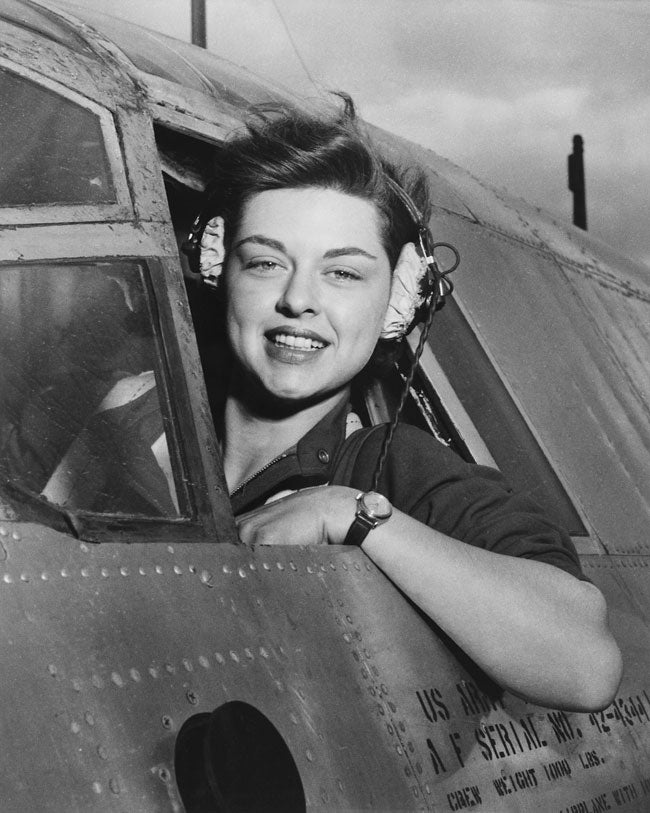
Women Airforce Service Pilots (WASPs): served in WWII ferrying aircraft, transporting military personnel, conducting test flights, towing targets to train gunners, etc.
Requirements before joining: 35 hours flight time
Number of applicants: more than 25,000
Number accepted into training: 1,830
Number of WASPs after training: 1,102
Estimated number of miles flown by WASPs: 60 million
Number of WASPs killed in training or on duty: 38
WASP military status until 1977: civilian—no military benefits or honors given
First woman to break the sound barrier: Jacqueline Cochran (1953)
Early career: Hairdressing
Pilot to hold the most international speed, distance and altitude records, male or female: Jacqueline Cochran
First woman enshrined in the Aviation Hall of Fame: Jacqueline Cochran (1971)
Estimated active FAA pilot certificates held by women, 1960: 9,966 (2.85%)
Estimated active FAA pilot certificates held by women, 1980: 52,902 (6.39%)
Estimated active FAA pilot certificates held by women, 2016: 39,187 (6.71%)
First woman in space (and only woman to make a solo spaceflight): Valentina Tereshkova (1963—Vostok 6)
Age at time of flight: 26 years old
First official U.S. armed forces female pilot (Navy): Barbara Allen Rainey (1974)
Number of female pilots in the U.S. Air Force: 713 (5.66%)
State with the largest number of active female pilots, 2016: California (4,571)
State with the fewest active female pilots, 2016: Rhode Island (76)
State with the largest number of active female ATPs, 2016: Florida (719)
Percentage of female dispatchers, 1960: 0.06%
Percentage of female dispatchers, 2016: 15.47%
Percentage of FAA-certified female mechanics, 1960: 0.09%
Percentage of FAA-certified female mechanics, 2016: 2.28%