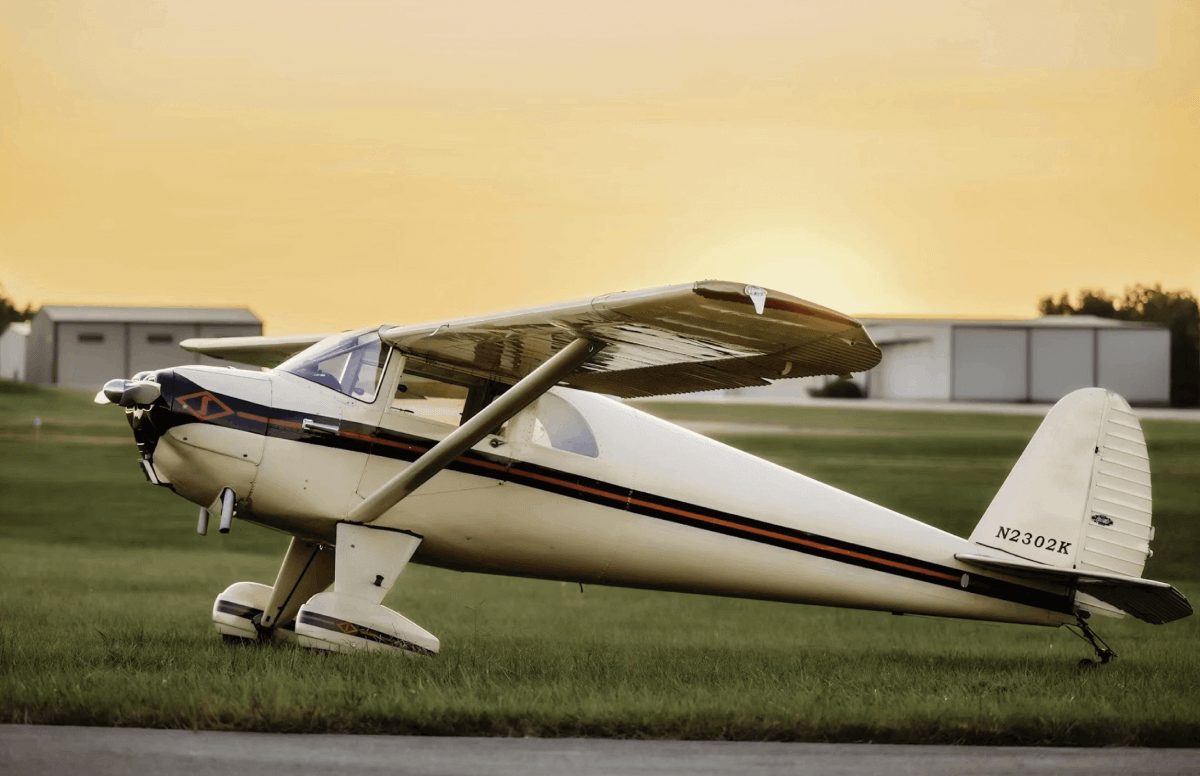












First flying car patent issued:1918, Felix Longobardi, never developed
First flying car built:Curtiss Autoplane, 1917
Designer:Glenn Curtiss
Patent issued:1919
Debut:Pan-American Aeronautic Exposition,NYC, February 1917
Flight:Reported to have madea few straight-ahead hops
Style:Aluminum automobile body with detachable wings and tail
Seats:3
Engine:100 hp Curtiss OXX (water-cooled V8)
Propeller:4-blade, rear-mounted
Dimensions (flight mode):27 ft. x 40 ft. 6 in. x 10 ft.
Useful load:710 lbs.
Reason development stopped:WWI
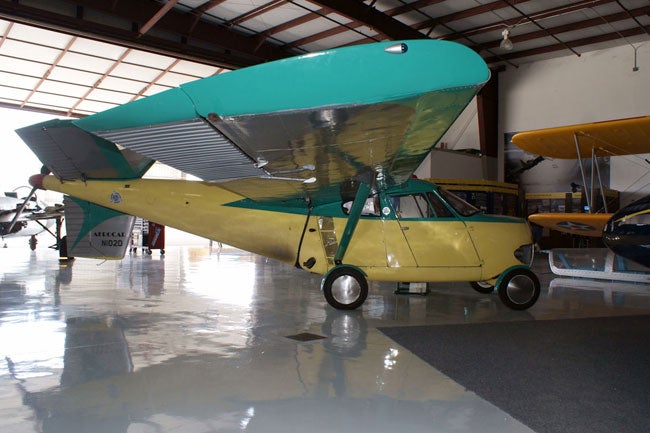
Only CAA (now FAA) certified flying cars:Fulton Airphibian, Taylor Aerocar
Most built:Taylor Aerocar; 6 built
Designer:Moulton Taylor
Models:3 (Specs for Aerocar I)
First flight:December 1949
Style:Fiberglass skin, wings manually fold backalong tail to form towable trailer, detachable prop
Seats:2
Engine:143 hp Lycoming O-320 (4-cylinder)
Max speed road/air:67 mph/110 mph
Time to change from plane to car: Advertised as under 5 minutes
Service ceiling:12,000 ft.
Climb Rate:550 fpm
Take-off/landing run:650 ft. (50 ft. obstacle–1,225 ft.)/300 ft.
Dimensions (flight mode):21 ft. 6 in. x 34 ft. x 7 ft. 6 in.
Commercial work:N103D; Used for traffic reporting, KISN Radio, Portland, Oregon, 1961-1963
Useful load:600 lbs.
Car empty weight:1,100 lbs.
Trailer weight:400 lbs.
Max gross weight:2,100 lbs.
Fuel burn road/aerial cruise:18 mpg/8 gph
Range road/air:400 miles/300 miles
Model price:$25,000
Reason it didn’t go to production:Couldn’t get 500 firm orders
Deposit for order:$1,000
Number of orders received:278
Planned production price:$8,500
Asking price of most recently listed models:N103D, $2.2 million; N101D, $1.25 million (neither sold)
Insurance needed:Separate auto and aircraft policies
Military Development:DARPA Transformer TX
Program started:2009
Design:Lockheed Martin/AAI
Estimated cost of Transformer program:$65 million
Reason TX didn’t go to production:Lack of interest, Transformer program shifted to developing ARES unmanned transports
Some flying car prototypes currently flying:Terrafugia Transition, Aeromobil 3.0, PAL-V Liberty
Closest to FAA certification (probably):Terrafugia Transition
First flight:March 5, 2009
Style:Carbon-fiber skin, mechanically folding wing, rear-facing propeller
Estimated price:$300,000