










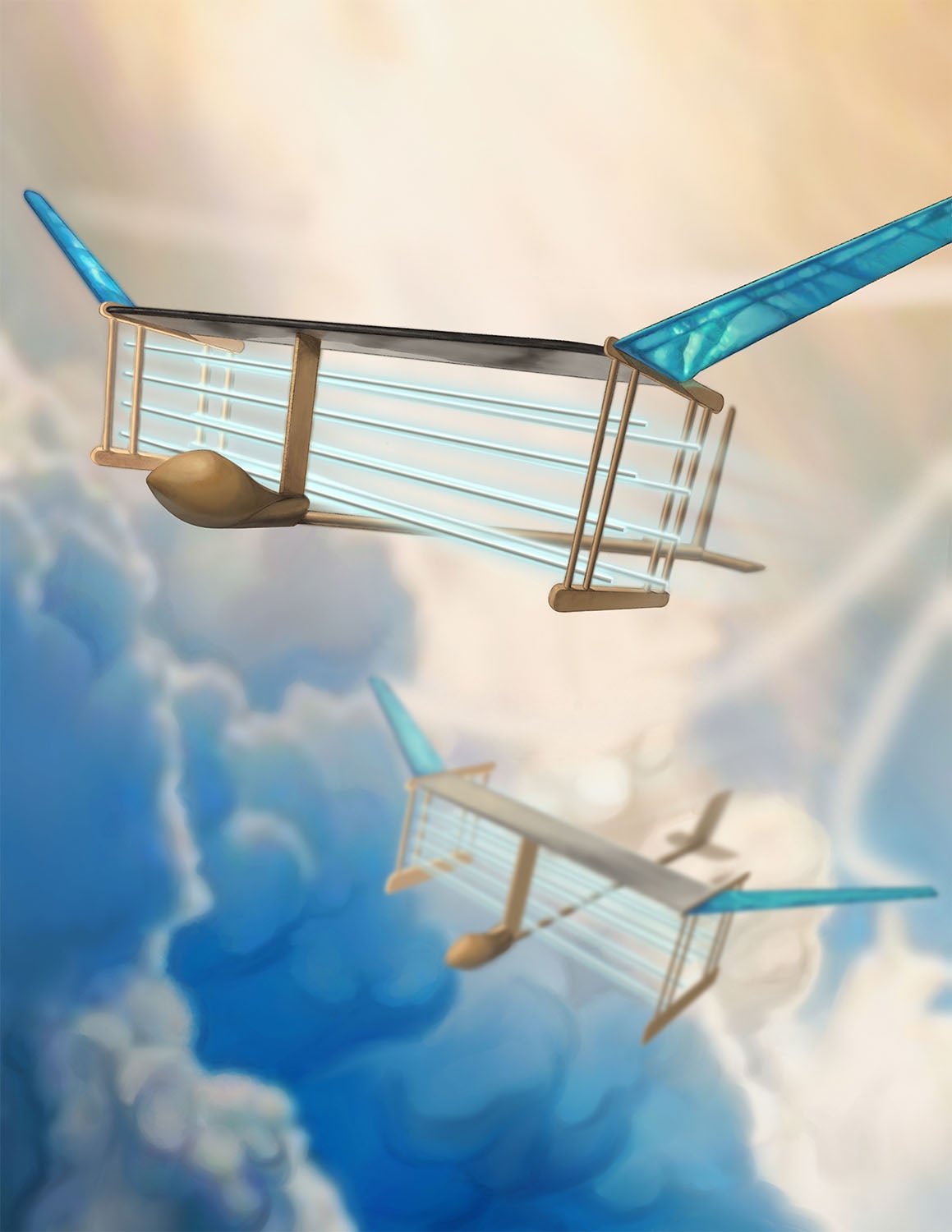

Scientists at the Massachusetts Institute of Technology have constructed and successfully test flown a 16-foot wingspan model plane that uses no fuel and could, theoretically, keep flying forever unrefueled. To top it off, the technology is solid-state, meaning in this case that there are no moving parts.
The technology is called ionic wind and it works not by creating power for a prop or turbine blast of some kind but by creating a wind that gets blown into an airfoil, which makes the plane fly. Additional lifting surfaces create additional lift. In this design, the “engine” is actually another wing.
Are you an aviation enthusiast or pilot?Sign up for our newsletter, full of tips, reviews and more!
In order to produce this wind, the plane uses a system of high-voltage electrodes that scavenge nitrogen from the ambient air, turning its ions’ charge from their normally positive state to a negative one, which speeds the freshly charged nitrogen molecules contained within the air over the lifting airfoil. No fuel required.
The researchers spent two years developing the model, which they recently flew successfully. The results of the experiment were published in the journal Nature.
While the developers of the new plane say it might be a while before we see ionic thrust Skyhawks or Boeings, but that small drones might be candidates for the new form of propulsion.