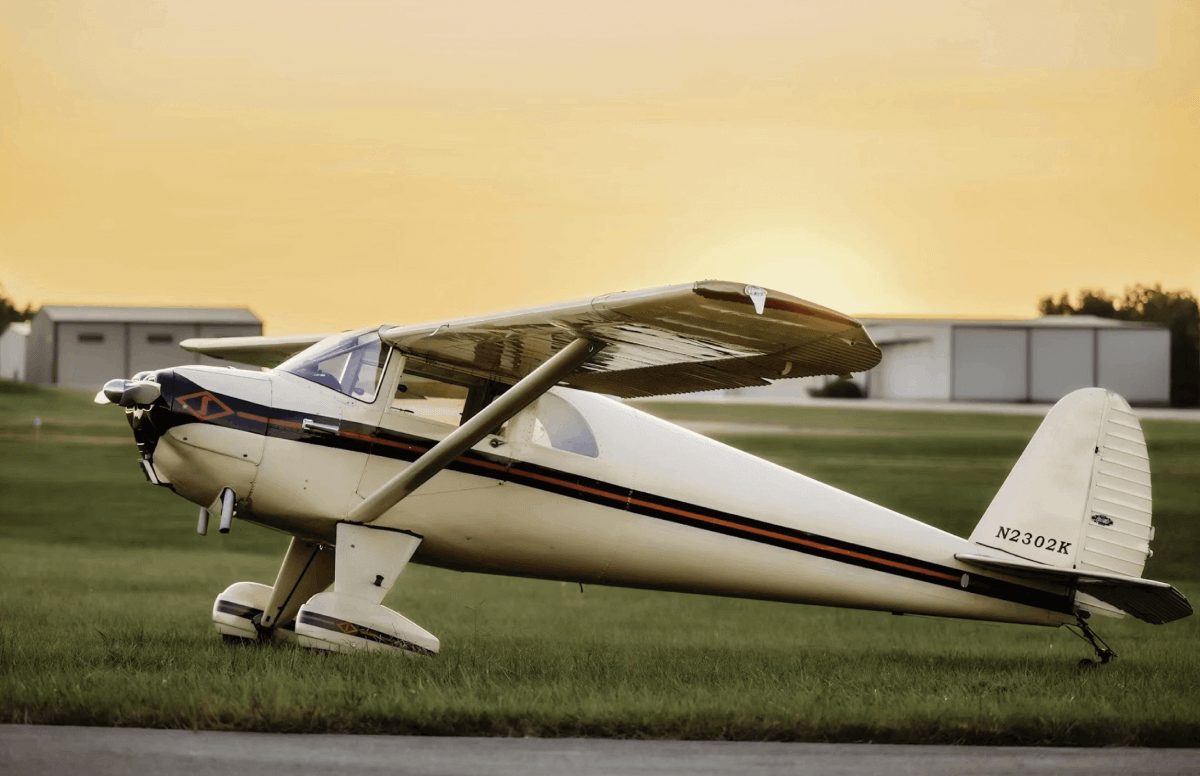











Aviation has acknowledged many individuals who have marked the passage of time and technology to get aviation to where it is today. As a rule, these people have often done something pretty spectacular in the cockpit or, perhaps, in the realm of design.
However, behind the scenes, there are a great many people who, through their work, contribute to the advancement and health of this industry.
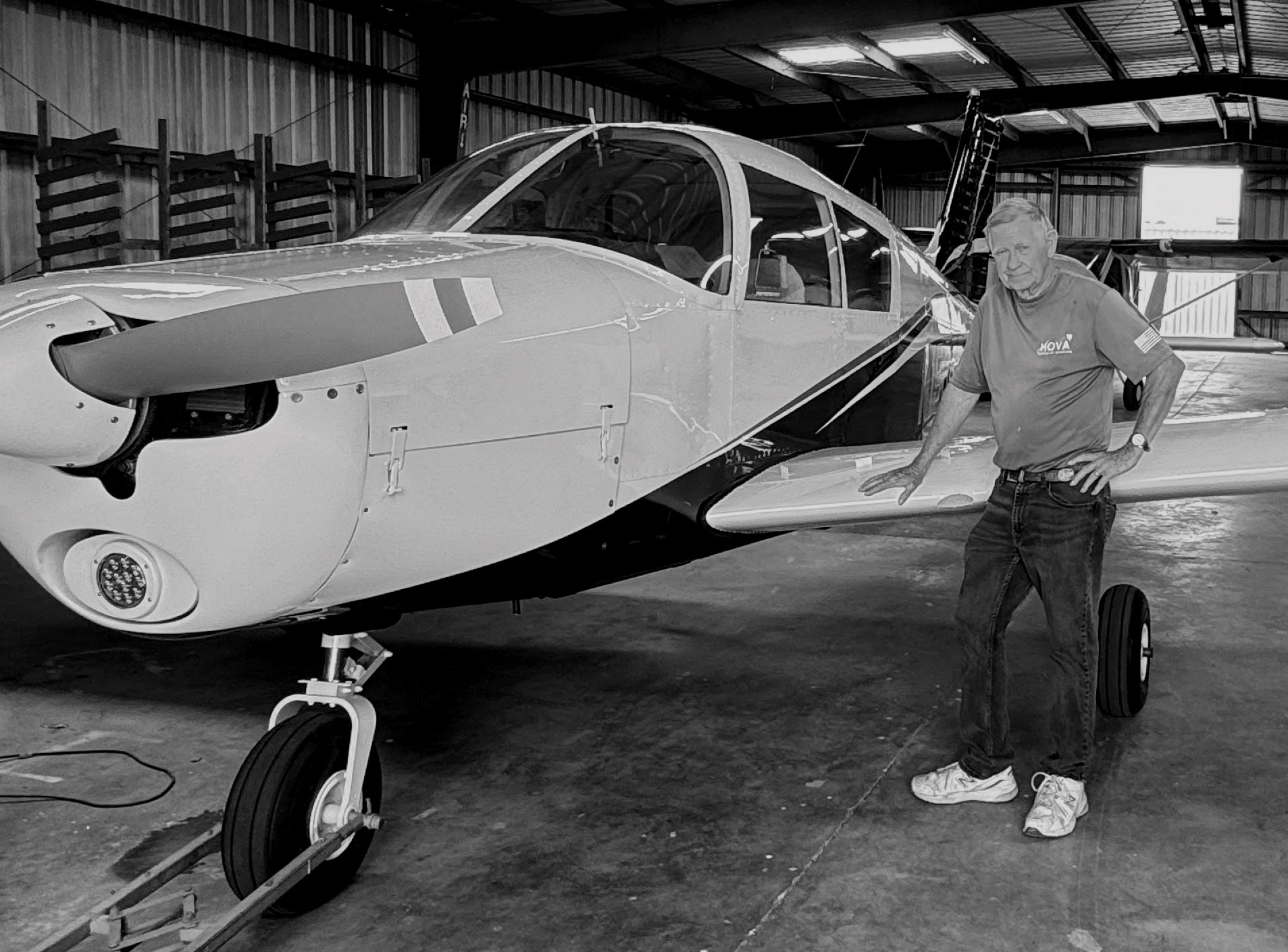
To meet Harold Davis, 81, is to encounter a whirlwind of energy and enthusiasm that belies both his age and his compact stature. Talking to Harold is like trying to drink from the proverbial fire hose. You wish you could record it all and play it back at quarter speed to be able to take it all in.
His résumé reads like a complicated novel encompassing a chicken processing plant, encounters with some very nasty chemicals as a first day apprentice at Beechcraft, the founding of FedEx, and the painting of its first airplanes, a failed bid for an $85 million contract, and an impressive list of aircraft painted for well-known people, including John Travolta, the president of Mexico, and Bill Lear.
Today, as manager of Hova Aircraft Painting in Winter Haven, Florida, the energy is undiminished, and the joy in making customers smile is what gets him out of bed for his sixty-plus-hour work weeks.
Gaining an Apprenticeship
To his peers in the industry, Davis is a great aircraft painter, but he did not get there by the mere fact of longevity or pure luck. His start in the industry, however, was more coincidental than planned back when he was just 19 years old and fresh from experiencing the rigors of working in a chicken processing plant in small-town Arkansas.
A sister, living in Wichita, Kansas, suggested he come and see if there were better work opportunities there. While checking out a bakery where his brother-in-law was a manager, the city and its prospects, his relative mentioned that both Beech and Cessna were seeking apprentices.
Davis headed for the airport and interviewed for a job with Beechcraft purely because it was the nearest to him. It turned out that the interviewer knew his father and put him through a series of tests and a medical before offering him an apprenticeship in his department—the paint shop— and on his shift, which was from 3:40 p.m. to midnight.
On his first day of work, Davis was handed a container full of an aggressive solvent and told to scrub the grease, silicone, and oil that had accumulated during the manufacturing process off the belly of the airplanes. This was a necessary step prior to being able to etch and Alodine the surface of the plane to make the aluminum receptive to the primer.
Unfortunately, after rubbing his eyes and transferring traces of solvent to them with the consequent discomfort, and visit to the nurse, his supervisor asked him if he was going to leave. Davis responded that he “needed a job” and was “not a quitter.”

However, he had very quickly learned to appreciate the reasons for wearing personal protective equipment (PPE), including masks, gloves, and safety glasses. Even to this day, Davis wonders whether that first day solvent experience was a deliberate test to see if he was truly committed. This was an early sign of his determination and belief in the power of positive thinking, which helps explain part of his current very hands-on management style.
Climbing Up the Scale
Apprentices at Beechcraft moved through each element of the paint process one step at a time to build up knowledge, skills, and experience. The starting point was five or six people scrubbing the airplane, wrapping up everything to protect areas not being painted such as windows, followed by etching, applying Alodine, and applying primer and paint.
As an apprentice, after perfecting the cleaning process, Davis was tasked with holding the hoses for the paint guns while observing the way the primer and paint was being applied. After a number of months of satisfactory performance, he was taught how to use the spray gun to apply primer, which he then did for the next three to four months.
Interestingly, unlike Cessna and Piper at that time, Beechcraft also primed the inside of the airplane. The factory had a paint employee skill scale that ran from C through to A-plus, which translated into both job capabilities and pay. At level B they were allowed to paint a stripe, with A-plus corresponding to being able to lay out an entire paint scheme. At that time, Davis was working on a line of aircraft that included the King Air, Queen Air, and Beech 18, then in its last years of production.
The training was purely on the job. There were no specific times for each of the scales because that would partially depend on a job becoming available at the next level up. One way to advance, for example, as a B-plus painter would be to switch plants and take on an A role. Consequently, after 18 months with Beech in Wichita, Davis applied for a job with Beech in Tulsa, Oklahoma, where he both worked in the sheet metal shop and painted as needed. While there he worked on the prototypes of the Beech Duke, which, for reasons he never understood, was very secretive, requiring employees to pass through additional security including X-ray machines.
Importance of Respecting Technology
Davis never claimed to be a gifted student at school other than having an uncanny, natural talent for mental arithmetic—but no obvious artistic gifts. However, as with many people who did not go to college, looking back, he was clearly a poster child for the value of a well-organized, disciplined apprenticeship.
Watching him manage staff now at Hova, almost 60 years later, he continues to stress the importance of the building-block learning process. Indeed, it closely mirrors the step-by-step discipline needed to produce a quality finished paint job, where stripping, preparation, taping, wrapping, and layout far exceed the actual time with hands on a paint spray gun.
A single phrase from Davis captures his philosophy and makes him timeless: “You have to keep up with technology and adapt the way you work.” To be sure, paint design and structure have gone through a revolution of change since his initiation into the industry during the mid- to late 1960s.
Time to Move On
As is often the case in a large company with a rigid approach to advancement, Davis’ experience and skill outgrew the pay scale, so he left Beechcraft to work for another company located on the other side of the field, Air Care Corp.. Having just opened an aircraft paint shop, it offered him the job of lead painter under an experienced paint shop manager where he continued to expand his skill base, including complex paint scheme layouts.
Subsequent moves took Davis to Goodner Brothers, where it was painting about 40 planes per month, and then to Little Rock Airmotive, which was bought out by the newly formed FedEx and became the facility tasked with modifying its first 33 Dassault Falcon 20 jets with a cargo door and new paint. FedEx eventually moved its operations to a new location in West Memphis, Arkansas, leaving French manufacturer Dassault to take over the facility and appoint Davis as its paint shop manager handling all the “green” planes arriving from France.
“The planes arrived into New York with no paint, no interior, and basically a ferry kit of seats and avionics that were removed and returned to France in time for the next shipment,” Davis said. A different ferry kit was then installed to move the planes to the paint and finishing center, where they were completed to specific customer needs. Through a close analysis of the process, Davis was able to reduce paint time from around 780 hours to 350 hours, gaining him a new level of respect in the industry.
This willingness to analyze, review, question, and exercise logic can be seen clearly today in the way he runs Hova Aircraft Painting.
Unexpected Request
There is nothing stranger than real life, so when his growing reputation had reached ASI in California with a paint problem the company could not solve, Davis got an unexpected call. How would he like a weekend trip to the West Coast with all expenses paid and cash in his pocket?
The challenge was to lay out a design separately onto a fuselage of a Gulfstream and onto its tail that was not actually attached, so that when the two were assembled, there would be no discontinuity of design. Being brutally frank, having been told that the ASI staff could not do it, Davis said, “Well, I don’t think I can do it either, but I will give it a go.”
Having taken multiple measurements and making a number of calculations, he presented the design and returned to his job in Arkansas—somewhat richer from the consulting fee. Davis heard nothing for about a week until he got a call from ASI saying that he had pretty much nailed it to within one-thirty-second of an inch and offering him a job as layout design artist at double whatever his current salary was, plus a number of other benefits.
During his time at ASI Davis pulled together a bid to paint 16 regional aircraft for United Airlines Express for his own account as ASI was not interested in bidding. Thanks to his personal delivery of the bid to United and his clear dogged commitment, he was awarded the work.
Having found a suitable building, he recruited painters and got to work, with each plane arriving every three days and taking a total of 10 days apiece to paint. Looking back to this experience and his time working on the Dassault Falcon line, it becomes pretty clear why even now he does not accept the concept of the never-ending paint job that stretches out for months.
Painting for the Stars
Harold went on to manage another paint shop, Renown Aviation, which was initially in California and then New Mexico, where he was paid a salary to paint the refurbished planes but given the freedom to use the shop’s capacity for other work on his own account. During this time he painted a fleet of Convairs, a Boeing 727, a Lockheed L-1011 Tristar, and various planes for the president of Mexico, Bill Lear, John Travolta, Wayne Newton, and a series of other movie and music stars.
For a while, Davis continued to work in both Tulsa, Oklahoma and for Renown in California but eventually dropped Tulsa due to the strain of continued travel.
Challenges of Entrepreneurship
At one point, Davis tried to create a consortium within a 36-day time limit to take on a significant paint contract for Mexico, worth about $85 million, that took him into meetings with the country’s president as well as into the boardrooms of potential investors, including the owner of a major sports franchise.
Ultimately, he came up short on time but learned a lot about the costs and risks of being an entrepreneur, having sunk over $35,000 of his own money into the failed venture.
Truly His Own Boss
In the m-1980s Davis opened his own paint shop in Ohio before selling out in mid-2002 to move to Florida. where he continued to work in various shops until taking a brief retirement in his mid-70s.
After a few years of garden duty, he was introduced to Hova Aircraft Painting in Winter Haven and agreed to come back to work as the lead painter and then manager, which he still does today assisted by other talented painters, including his wife, Maricel.
Lessons Learned
Listening to Davis answer questions on both the process side of painting and the underlying technology, you realize quickly there is a lot more to painting an airplane than simply aiming a spray gun and hoping for the best. That explains why it seems so expensive to get a top-quality paint job.
The more you hear about the effects of temperature, humidity, rivets, compound curves, paint runs, viscosity tests, activators, reducers, the more you understand there is, in fact, a lot of science behind the art. On a typical day in Florida when planning to paint three coats onto a plane—and the heat and humidity have increased between coats—the painter has to recalculate the blend to ensure the paint will still dry at a known rate, look smooth and consistent, and present the right level of shine.
One question about how the painting process has changed over Davis’ 60 years of experience yielded a surprising answer. The enamels and lacquers from the 1960s were “much easier to apply with a smooth result.” But he said the banning of multiple different additives—such as lead, certain resins and, believe it or not, coal—has made the modern urethanes available currently more challenging from an application perspective. This comes despite a lot of technical improvements in the paint construction itself.
He also pointed out that EPA-approved additives and binders are simply not as effective, so the modern painter is often fighting against the tendency for paint to end up with an “orange peel” effect.
Davis admitted to learning to fly “enough to deal with the need to land a plane that someone else took off [in].” So despite soloing in about nine hours in his own Cessna 152, he never felt the need to take the final test.
This “do it and move on” attitude seemed to apply to a lot of completed mechanical, interior, and paint vehicle restoration projects David performed on a Ford Edsel convertible, a Bugatti, a 1966 Ford Mustang Shelby, a Dodge Charger, a 1971 Mustang, and a few motorcycles. As he wryly muses, if he had not sold these vehicles and still had them, he would now have a substantial vehicle investment portfolio.
When asked what makes a good or a great painter, Davis immediately differentiated between the two, pointing out that “good” can be achieved through technical expertise and experience, but “great” comes from “loving the job, being able to read the paint, watching and listening to others with experience, retaining an open mind, and going the extra mile.”
He also said being willing to get dirty, not being in a hurry, learning business basics, and quite simply, being passionate about the job are all pre-requisites for success and satisfaction. As an apprentice Davis learned the three magic words needed to differentiate himself from others—“Can I help?”
If you are looking for a successful career as an aircraft painter, Davis quickly fires off a number of suggestions.
“Go and find a small paint shop with a high-volume of business so that you can build up skills and experience,” he said ”It’s like playing golf—the more you practice the better you get…[Having mechanical skills, including potentially an A (airframe) license will] increase your skills and get you more money, [but] having the experience of working at every stage of the process from cleaning to painting and being able to layout paint schemes [will take you to the next level]. Never be afraid to look back and learn and always aim for the next plane you paint to be even better than this one.”
Choosing a Paint Shop
Research is key, according to Davis.
“Most people don’t know what they are looking for,” Davis said. “[So] their first job is to do some research on the process, so they know what questions to ask and what to look for.You need to shop around and visit some places because if the premises don’t look neat and tidy with proper air filtration, how are they going to prevent dust and other particles from getting into the wet paint? Don’t be afraid to ask to see past work and ask for references.”
Davis is not a fan of shops using automotive paint and a clear coat.
“It will look good coming out of the shop but, once the elements have their way, you will experience the same peeling you see on cars, so it won’t last as long,” he said.
When it comes to fabric aircraft, according to Davis, most shops will turn down the work as the process is a lot different from metal aircraft, so “look for specialists.”
Paint Scheme and Paint Colors
Aircraft paint prices cover a wide spectrum.
“A gallon of paint can cost anywhere from $350 to $3,000 and upwards, depending on color, brand, and type…” Davis said.
The typical starting point would be “base white with two trim colors (stripes).” After that, the price moves relentlessly northward, powered by dreams of metallic, pearlescent, split design, shadows, and so on.
As designs get more complex with multiple colors, labor costs also increase substantially as each layer can require extensive new masking and preparation time.When asked about time frames, Davis indicated that for a standard paint job “three weeks should be achievable,” depending on the starting condition of the plane. However, introduce a highly complex design with special paint, and “it could be months.”
Apparently, red and blue paints are expensive, while yellow paint must have white paint underneath, and lighter colors such as Omaha orange will need additional layers to build up to the desired look.
Paint and Aerodynamics
There are numerous studies that point to the benefits of smooth paint on aerodynamic efficiency, with an International Air Transportation Association (IATA) study linking it, at least in part, to a potential 1 percent savings in fuel burn for airliners. According to Davis, some owners of small planes that he has painted have reported a 3-knot speed increase. For the typical piston-engine plane owner, the justification for new paint has more to do with protecting it, keeping its looks, and retaining its value rather than radical expectations of improved aerodynamics.
What Keeps Him Motivated?
Watching Davis dressed in overalls and wearing a respirator while lying on his back underneath a plane in temperatures in the high 80s, you would be forgiven for wondering both why he was still doing this and, perhaps, how on earth he can still do it.
The how I am not sure about, but the why becomes obvious as you spend time with him. It boils down to the look of happiness and joy when the customer sees the newly painted plane for the first time. For him, “good” is like “average”—in other words not something you deliberately settle for when “great” is available.
There is a reason why Davis’ work has achieved many awards over the years. But, as you walk away impressed by the quality of his work, the enduring image is of a man who quite simply loves what he is doing while passing his knowledge and experience on to subsequent generations.