










Flying to, and in, Alaska is a challenge that tops many a pilot’s bucket list. Here are some resources to help you meet that conquest.
First, let’s get real. Alaska is soberingly huge and far away.
I’m not talking about the southeast arm that contains the Inside Passage, Glacier Bay, and towns of Ketchikan, Sitka, and Juneau. They are beautiful, and I’ve visited them, but let’s set those aside, as well as the southwestern arm, the Aleutian chain, where rain never seems to end.
Pardon me if I momentarily reduce the gigantic body of Alaska to a few pages to help you get the merest glimpse into your head. Think of a giant square that we’ll cut into thirds, going across from east to west—south, central, and north Alaska. To see even a little of all three sections, budget at least three weeks—better yet, a month.
There will be days when a prudent pilot stays on the ground, due to low ceilings, rain, or snow. Now, open up SkyVector (skyvector.com) on your computer, spend time zooming in and out, studying the charts, and follow along.
South Alaska
As you approach the main body of Alaska from the southeast arm and pass the Yakutat Airport (PAYA), Yakutat Seaplane Base (2Y3), and Yakutat Bay, your jaw will drop as the endless jagged, gigantic mountains of Wrangell-St. Elias National Park & Preserve fill the views outside. Innumerable glaciers look like freeways for giants.
You can head north to McCarthy (PAMX), visit the renowned Kenecott Mines National Historic Landmark, and stay at the Kenicott Glacier Lodge (kennicottlodge.com). St. Elias Alpine Guides (steliasguides.com) can take you glacier skiing or hiking.
For ultimate adventure, cuisine, and luxury, the Claus family owns the Ultima Thule Lodge Alaska (ultimathulelodge.com). They can pick you up at McCarthy, fly you to glaciers, and basically blow your mind with their piloting skills and scenery.
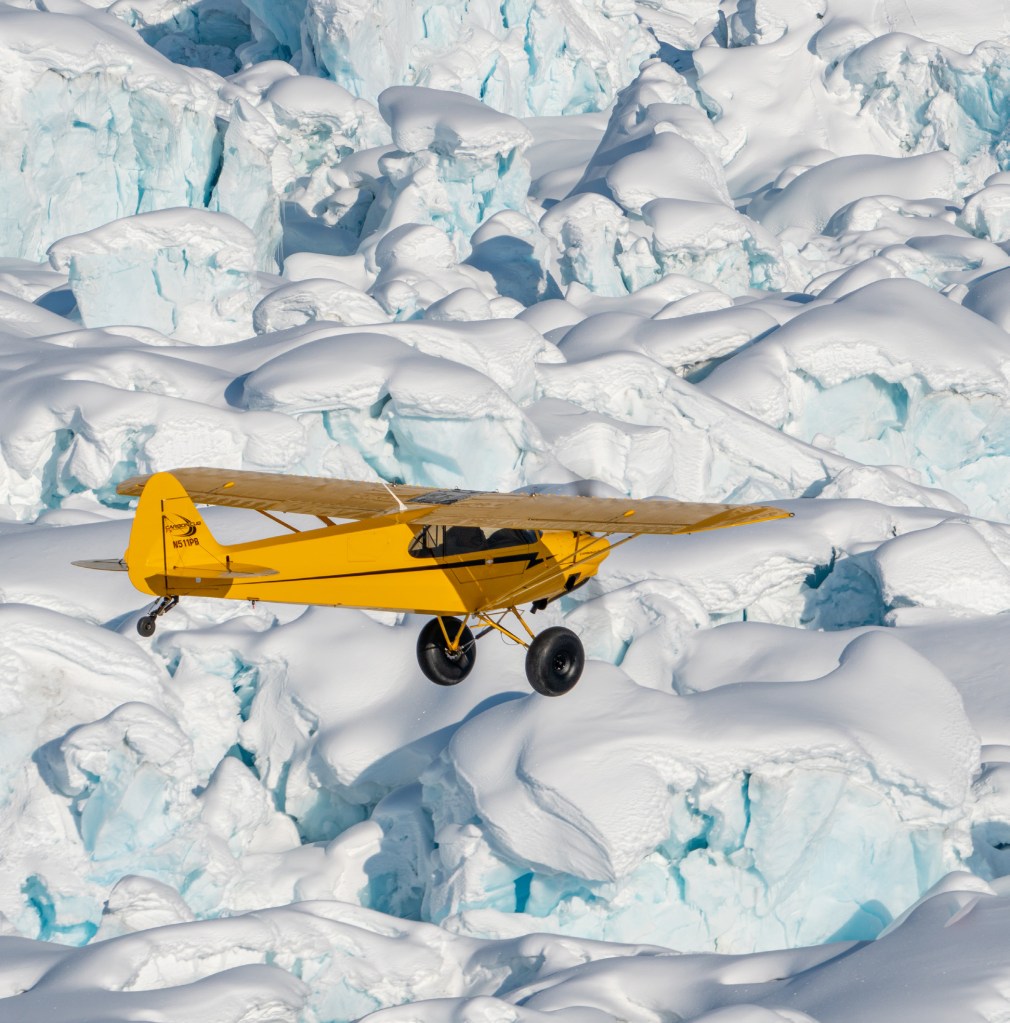
If that’s too much of a budget buster, know that the National Park Service provides 14 free, public-use cabins within Wrangell-St. Elias (https://www.nps.gov/wrst/planyourvisit/public-use-cabins.htm). Most were former mining, trapping, or hunting cabins, accessible only by flying to remote strips (nps.gov/wrst/planyourvisit/flying). They are very rustic, remote, not maintained, and first-come, first-served, except four you can reserve.
Moving across southern Alaska toward the center, you could land for fun along the mighty Copper River at the Chitina Airport (PAAX).
Continuing toward the Chugach Mountains, you can land on gravel beside the road for fuel and food at Cordova (CKU).
Proceed toward the cities of Seward (PAWD) and its Alaska SeaLife Center (alaskasealife.org), Homer (PAHO), where you can catch the halibut of a lifetime, and Anchorage (PANC), where one of the main attractions is Lake Hood (PALH), the world’s largest seaplane base.
Want a seaplane rating? Legendary bush pilot Paul Claus earned his at Alaska Float Ratings (alaskafloatratings.com), 30 miles north of Seward, and so did I. Or get your single-engine sea (SES) rating with AFR’s former head CFI, Darlene Rudisill, now a DPE based in Sterling near Kenai with her own business, Alaska Float & Tailwheel Training (alaskafloattraining.com).
Moving west from Anchorage across the Cook Inlet, you can fly through Lake Clark Pass, where glacier-covered mountains tower above. Study the weather and weather cams first. The Lake Clark National Park & Preserve and Bristol Bay areas comprise my favorite corner of Alaska, brimming with stunning turquoise lakes, volcanoes, sockeye, giant Katmai bears, and some of the state’s greatest fishing lodges.
You can land on dirt or water at Port Alsworth, home to the Lake Clark Resort (lakeclarkresort.com), which opened as the farm lodge in 1977 and is still family owned. Just a 20-minute flight away at Upper Twin Lake sits the cabin of Dick Proenneke, who lived alone there for 30 years, built everything by hand, and had the foresight to film himself in his everyday life. The popular PBS documentary Alone in the Wilderness chronicles his incredible accomplishments (https://www.nps.gov/people/richard-proenneke.htm).
An NPS ranger is generally at this national historic site in summer. Lake Clark Resort’s Glen Alsworth grew up flying with his dad, and they would sometimes visit Proenneke to bring him mail or supplies.
Across and down the lake at the end of a long peninsula is the similarly named Lake Clark Lodge (lakeclarklodgealaska.com). Two other exceptional fishing lodges are the Intricate Bay Lodge (intricatebaylodge.com) on the south side of Iliamna Lake and the famed Alaska Rainbow Lodge (alaskarainbowlodge.com) in a more open area about halfway between Iliamna Lake and Kvichak Bay. Do-it-yourself folks can search a variety of Port Alsworth cabins on Airbnb (airbnb.com).
Central Alaska
The central swath of the state is dominated by the eponymous Alaska Range and crowned by Denali, the tallest point in North America at 20,310 feet. Its 18,000-foot, base-to-peak rise is the largest of anymountain situated entirely above sea level, which makes it seem even more impressive.
Below Denali’s glaciers sit Talkeetna, Wonder Lake, a staggering array of wildlife, and about a trillion mosquitoes (aka the Alaska state bird), with Fairbanks to the northeast.
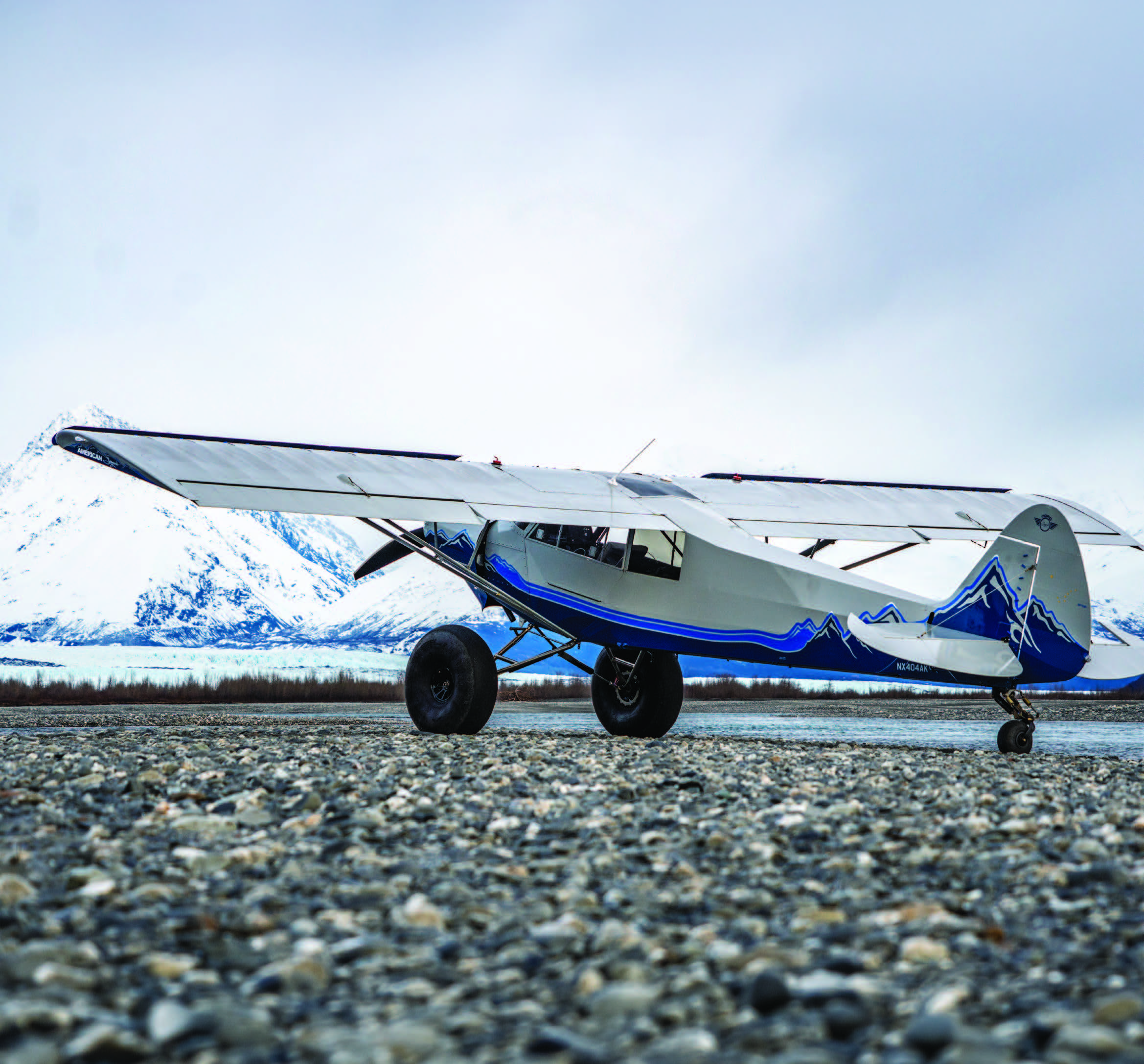
Quirky Talkeetna (PATK) has been, and still is, home to many of Alaska’s most accomplished bush pilots. From here the legendary Don Sheldon flew out to drop off or rescue mountain climbers, landing on seemingly impossible ledges.
Christiansen Lake Seaplane Base (AK8) is here too. Take a commercial flight and land on a glacier (nps.gov/dena/planyourvisit/flightseeing), or self-fly around Denali, known as “The High One,” but study and follow the FAA’s SOPs (nps.gov/dena/planyourvisit/pilotinformation). Traffic can be heavy on good-weather days. Remember these mountains create their own weather, and even the sturdiest GA airplane is no match for nasty downdrafts that can develop.
South of the mountains, just outside the southern border of the park, is Chelatna Lake, with the lodge of the same name at its southern end (chelatna.com). Denali National Park & Preserve boasts 6 million acres (for comparison, Yellowstone National Park has 2.2 million acres) and one road—the 135-mile-long Denali Highway that parallels the north side of the Alaska Range.
If you follow the highway, the Alaska Airmen’s Association asks pilots to offset as far as practical from the road, preferably to the north. Most hikers stay relatively close to the road, so the offset gives them peace of mind and alleviates complaints about aircraft noise.
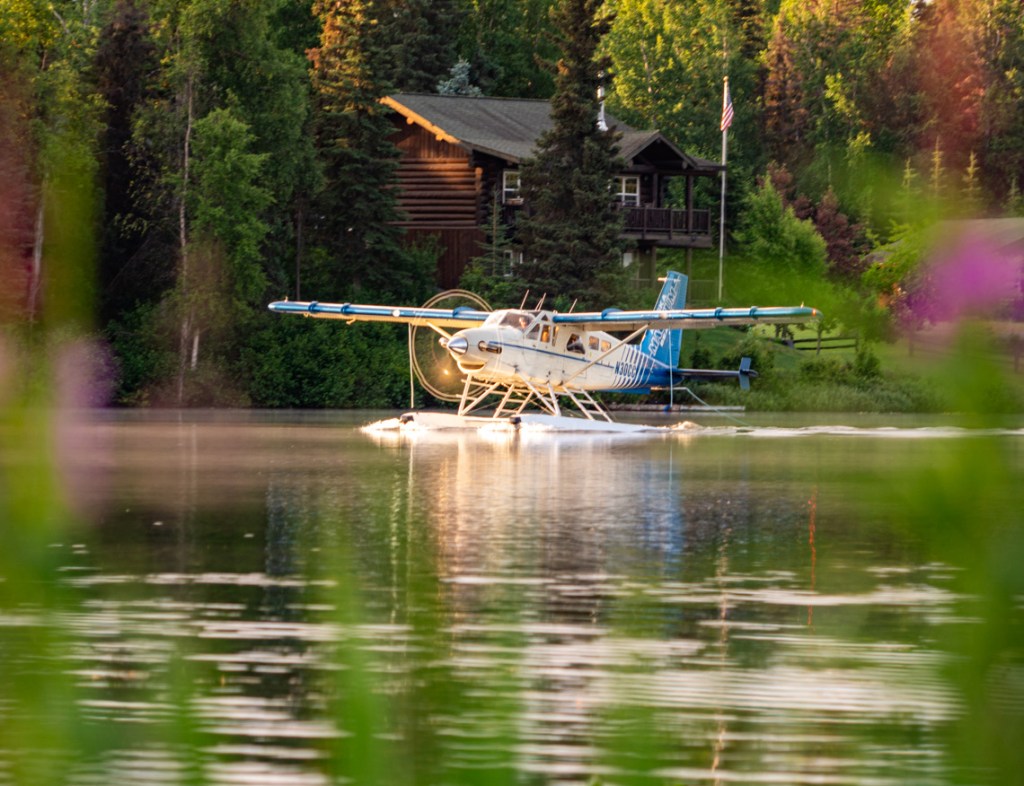
Near the road’s end is Wonder Lake and the 1,950-foot, rough gravel Kantishna (5Z5) airstrip. Overfly the strip to check conditions, and use caution due to wind shear. Brush and trees rise abruptly on both sides. Wind permitting, land uphill on Runway 10, and take off from Runway 28. With prior arrangement, the Alaska Native-owned Kantishna Roadhouse (kantishnaroadhouse.com) can pick up guests at the airstrip.
Fairbanks International Airport (PAFA) has a great aviator’s campground adjacent to the Float Pond on the east ramp with covered picnic areas, grills, water, toilets, and free loaner bikes.
North Alaska
The northern swath of the 49th state is crowned by the forbidding Brooks Range that, like the Alaska Range, also sweeps east to west.
About 155 nm northwest of Fairbanks, Bettles Airport (PABT) has a 5,190-foot runway, weather cam, instrument approaches, and fuel. Floatplanes land in the Vor Lake Waterlane (2A4), 1.6 nm south.
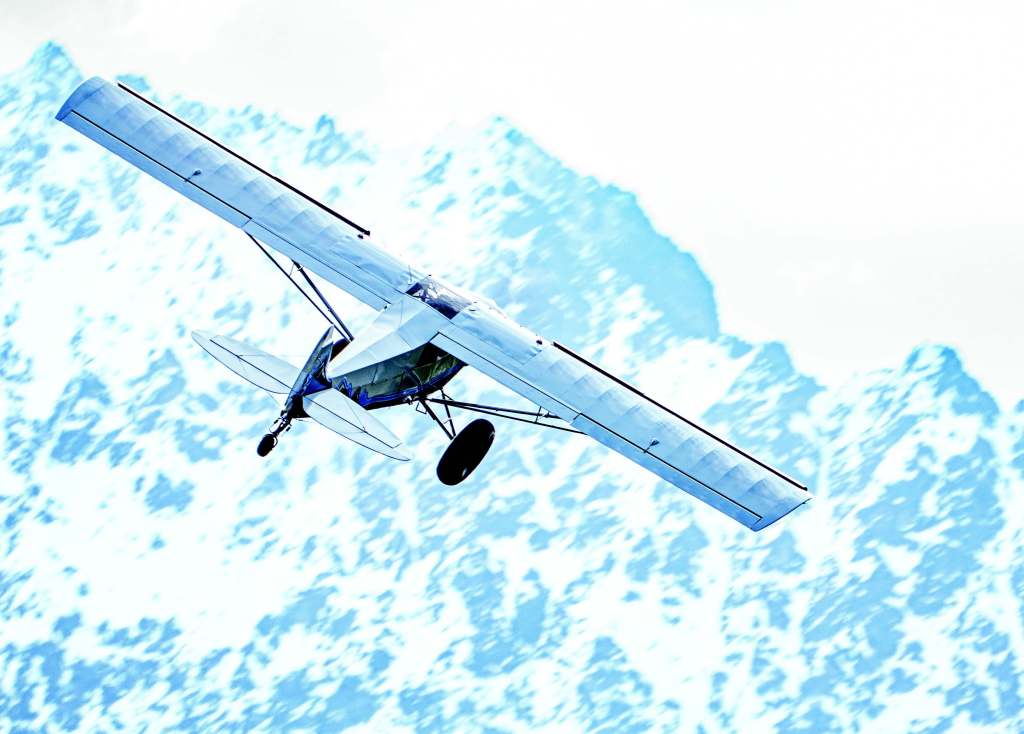
In the foothills of the Brooks Range, Bettles is the jumping-off point to Alaska’s Far North.
Since 1950, Bettles Lodge and Air Service (bettleslodge.com), another national historic site, has provided customized fishing, hiking, or floating trips into the Brooks Range and Gates of the Arctic National Park & Preserve. Aurora viewing and dog mushing trips are popular winter activities. The jagged Arrigetch Peaks just might be the most beautiful and awe-inspiring flight you ever do.
North of the Brooks Range, it’s a long, lonely downhill over braided rivers and hungry bears, all the way to Deadhorse Airport (PASC) and the Arctic Ocean.
Alaska beckons, so what are you waiting for?
General Recommendations
- Get the latest FAA Chart Supplement Alaska (aeronav.faa.gov), which details important procedures and much more.
- Ask questions. Call local CFIs or contact the Alaska Airmen’s Association (alaskaairmen.org).
- Bring mosquito repellent and hair nets. I never saw one at Moose Pass when I got my seaplane rating, but that’s the only time I’ve been so lucky.
- Bring safely stored bear spray and, if camping, bear-proof food storage. Your plane is not bear-proof.
- Search “Fly to Alaska” on aopa.org for more tips.
- Always confirm fly-in procedures with any lodge for last-minute parking or weather tips.
This article first appeared in the September/October 2026 Issue of Plane + Pilot magazine.