

 |
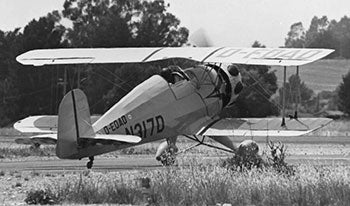
| STANDARD DATA: Seats: 1; Gross weight: 1,290 lbs.; Empty weight: 925 lbs.; Engine: 160 hp Siemens. PERFORMANCE: Top speed: 137 mph; Cruise speed: 125 mph; Initial climb rate: 1,150 fpm; Stall: 54 mph; Range: 310 nm; Ceiling: 19,500 ft. |
The Jungmeister, first introduced in 1935, quickly developed an international reputation for its outstanding aerobatic capabilities. Until recently, Jungmeisters were heavily involved in world acrobatic competition and were widely used by exhibition pilots. Most of the 700 or so Jungmeisters built were constructed in Germany, but others of the type were built in Spain and Switzerland. Several examples are currently registered in the United States, at least three of which have been reengined with Warner radials. In 1968, the Aero Technik Canary in Munich, Germany, began production of the BU-133 D-1, also called the Jungmeister. Its engine is a remanufactured Siemens-Halske Sh-14A4; however, due to this engine’s limited availability and demand for more power, a new version, the BU-133F, was built by Wolf Hirth GmbH with a 220 hp Franklin engine.