











Dangers Of Overly Realistic Training
In an effort to demonstrate the effect of asymmetric thrust resulting from an engine failure on the takeoff roll, I once allowed a piston-twin student to reach half of Vr speed before I suddenly reduced an engine to idle. As we headed for the runway lights at a 90-degree angle, it dawned on me that this was a very poor procedure. I was simply trying, with too much enthusiasm, to prepare the student for a bad event, and in doing so, I nearly created one. In the future, I briefed the maneuver in advance, made the power cut at a much slower speed, and made sure to do the demonstration on a wide runway.
Another potential trap I encountered was in teaching an instrument takeoff, with the student’s view-limiting device in place. While useful as a confidence builder, the ITO really has no place in testing standards or practical flying. It involves aligning the heading indicator precisely with the runway centerline and holding the heading with no deviation until liftoff speed is reached. If the pilot is good, it can be done—but not if a crosswind is thrown into the mix and the student isn’t briefed to respond to the instructor’s “I have the controls” call. I hadn’t considered these two elements, and the student dutifully held his heading while we drifted toward the downwind edge of the pavement. Only a wide runway saved the day.
Twin-engine training has long required a demonstration of Vmc, which calls for placing the airplane into a situation fraught with peril. The student is supposed to learn that, as speed deteriorates, rudder is no longer capable of opposing the asymmetric thrust produced by takeoff power on one engine while the other propeller is windmilling at idle. Carried to extreme, this training can result in the aircraft rolling over on its back and going split-S for the ground. The instructor needs to be fully in the loop, briefing the student carefully on the procedure’s risks and making sure he or she reduces power on the operating engine at the first sign of uncontrolled yaw or any other departure from controlled flight. A safe altitude is mandatory. But, although it is tempting to only teach Vmc demos at very high altitudes, doing so reduces the available horsepower that creates Vmc yaw, forcing the aircraft to fly slower in an attempt to demonstrate control loss. A single-engine stall is worse than any Vmc encounter. Again, the instructor must manage the risks.
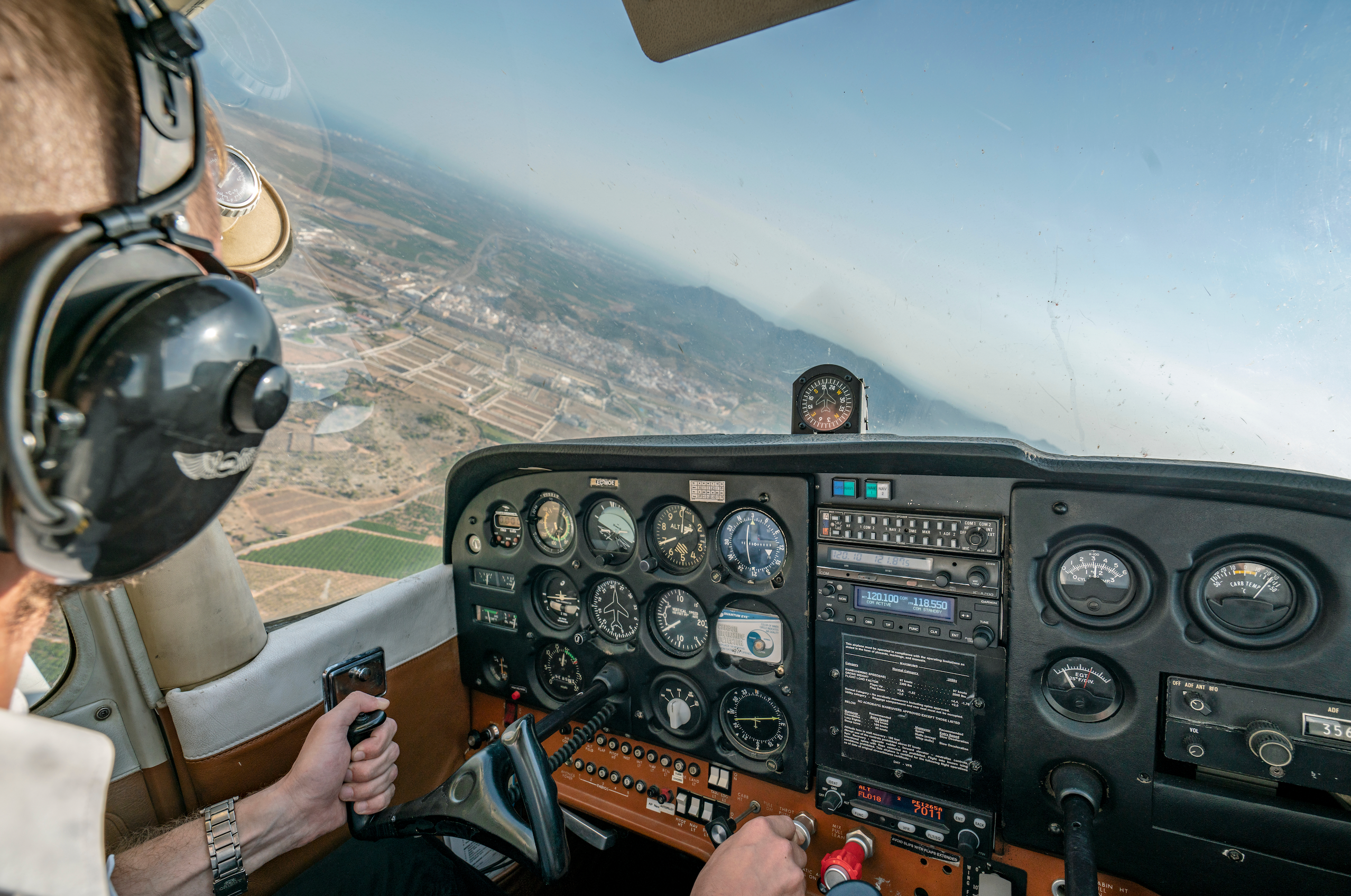
Training in instrument flight using a partial panel, or no panel at all, is, in part, designed to teach a student the danger involved with loss of power to the gyroscopic flight instruments. Early on, I learned not to allow an inept student to fly too long with the instruments covered. A normal spirally stable airplane will take matters into its own hands within about 45 seconds, as the student tries to use his or her own internal gyros unsuccessfully. A visual recovery is sometimes late in coming, resulting in a G-load build-up at speeds approaching redline. Spatial disorientation demonstrations deliver a valuable lesson but one that you manage carefully.
Teaching instrument flying in actual IMC weather is a worthwhile procedure, but the CFI-I has to realize that his or her workload dramatically increases as attention is diverted between ATC coordination, rescuing a stumbling student and keeping track of the weather situation. “Actual” should be reserved for students who’ve proven themselves trustworthy at the controls. I’ve been guilty of trying to finish a training objective in the face of deteriorating conditions, when the flight really should have been called off.
Whenever an accident happens during an instructional flight, we always have to wonder “where was the instructor?,” but sometimes it’s a matter of trying too hard to do a good job or overconfidence in one’s ability to save the day before the crunch comes. Whether receiving training or delivering it, you should never be afraid to voice concern and halt the procedure. If there’s any doubt, there IS no doubt.