











 |
| STANDARD DATA: Gross wt. 1,075. Empty wt. 590. Wingspan 22′. Engine 1,600cc Volkswagen. PERFORMANCE: Top mph 150. Climb rate 800. Range 500 (estimated). Takeoff run 450. |
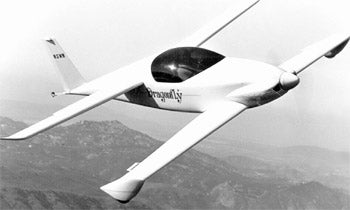
Winner of the “Outstanding New Design” award at Oshkosh 1980, the Dragonfly is another canard-configured composite homebuilt in the same vein as the Quickie and VariEze. With two-place side-by-side seating under a bubble canopy, the Dragonfly is powered by a stock 1,600cc VW engine. The intention of the aircraft is to provide builders with a project that is inexpensive to build and also inexpensive to operate on a readily available engine. The wing and canard are built as a single piece in a jig, and the job can be accomplished in a normal two-car garage. The cockpit width is 43 inches, like that of a Cessna 172. A molded canopy was selected to avoid the soap-bubble effect of a freeblown canopy. A typical 140-mph cruise burns gas at the rate of 45 mpg. A Great American-brand propeller has a 4-inch pitch and 52-inch diameter. The designers have claimed that there will never be an authorization to use a 1,200cc VW, any certified aircraft engine, or any turbocharged powerplant.