












Landing Safely
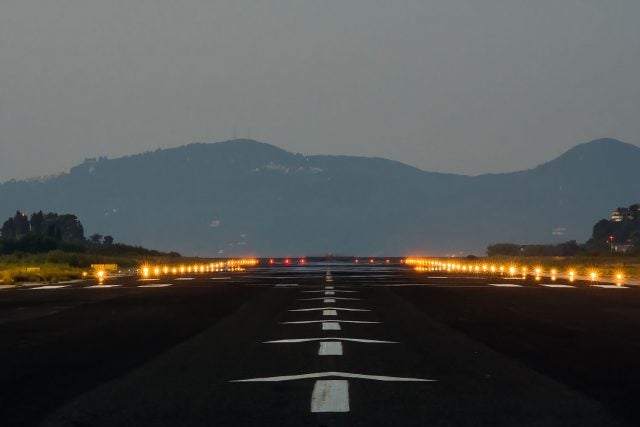
More and more airports are saving pennies by the use of pilot-activated lighting, so you may not find a lighted runway welcoming you as you arrive at your destination. The asterisk beside the “L” in the airport data block on the sectional chart only means the lights are not on all the time; check the Chart Supplement book to see if you have to call ahead to have them turned on, if they are on only part of the night, or if there’s a PCL procedure. In most cases, flicking the mike button seven times on the CTAF frequency will get the lights turned on. If they are already on, they may be in a 15-minute activation cycle triggered by another pilot. Be ready to re-activate the lights if they go out while you’re on final.
Follow the same traffic pattern procedures at night that you would use in daylight, unless the airport has special night operations requirements. Maintain vigilance for other aircraft, which are actually easier to see at night as the anticollision and position lights move across the blackness. Traffic below you may be harder to spot against the ground lights. Beware of a steady, motionless light in your field of vision; it may be converging traffic.
It’s better to fly a larger, more carefully flown approach at night, taking time to line up precisely. Don’t make extreme or rapid maneuvers in the dark; avoid steep banks, and use your altimeter and directional gyro to help set up the legs of the traffic pattern. Always double-check your altitude as you prepare to turn onto final approach; be no less than 300 feet AGL at that point, and add some power to arrest descent if you’re getting close to the minimum. Again, you can’t judge altitude at night by looking out the window. Watch for the VASI lights and stay on the high side of their beams.
When logging the three required takeoffs and landings, I like to make one or more without using the landing lights, just to keep my basic skills sharp in case the landing lights don’t work when asked. Your primary reference for night landings should be the runway boundary lights, used to establish alignment and flare height. Never attempt to land without runway lighting, even if you believe you have excellent landing lights and you think you know where the runway is. Depth perception is tricky in the limited spots illuminated by the landing lights, and you can encounter “target fixation” as you approach the ground, tempting you to fly right into the surface without flaring. On the other hand, good landing light coverage helps see the tire marks and centerline to manage crosswind drift.
In general, landing at night requires an earlier level-off and more of a gradual “feeling for the ground” holding-off technique than in daytime. If you have to go around, be ready to go on instruments to keep the climb attitude and heading steady during the wave-off.
To enjoy VFR night flying, maintain careful weather limits, avoid extreme maneuvers and use all available orientation aids to keep track of your position. The air is usually smooth, there’s less traffic and the views are fantastic, so you’ll find yourself looking for excuses to log some more night hours.