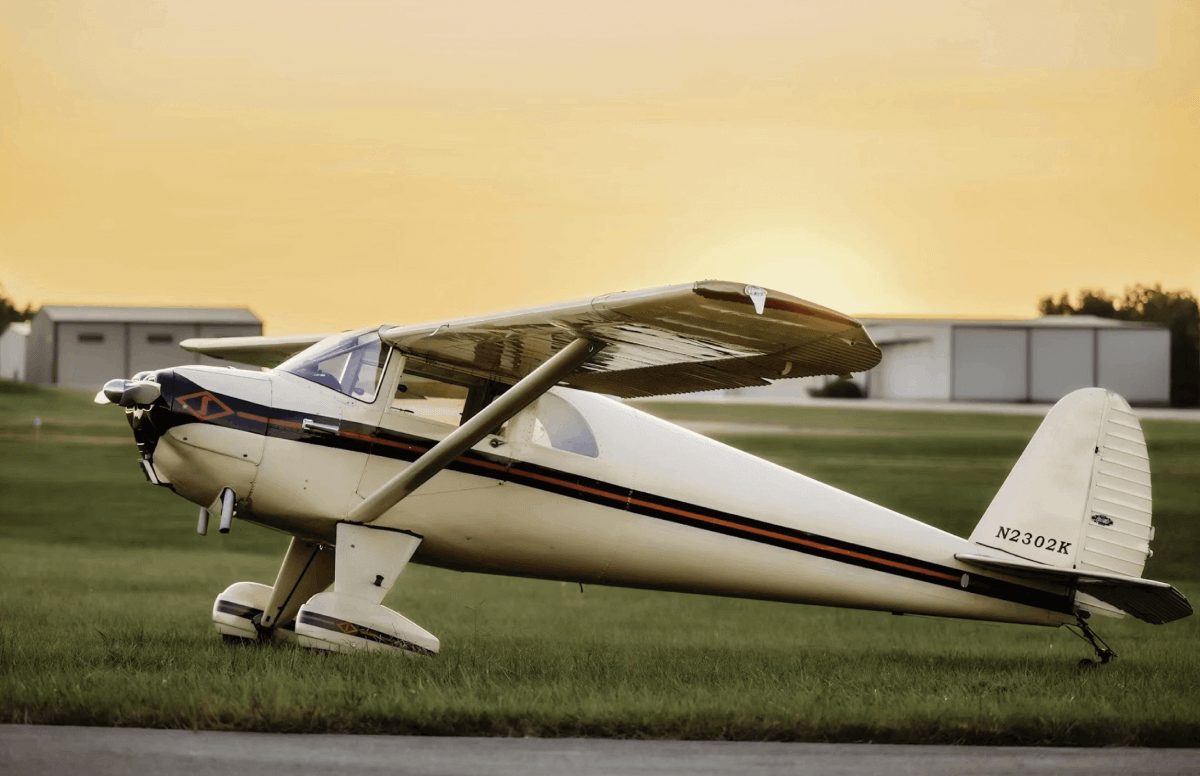











The history of the Cessna 182 actually begins with the 1953 “Golden Year” Cessna 180, introduced during the 50th anniversary of the birth of powered flight, the last new airplane company founder Clyde Cessna got to see before his death. Conceived as a businessman’s airplane to replace the still-extant 195, the sleek 180 took the light four-seat 170’s concept into high-performance territory with its 225-hp O-470 engine and constant-speed propeller. As with the 170B, it had huge semi-slotted flaps borrowed from the L-19 military liaison plane and a pair of 3-foot-wide doors. The 180 differed, however, in such details as a squared-off vertical fin, trimming with an adjustable stabilizer instead of an elevator tab, relocating the battery to the tail cone and using rubber fuel bladders instead of aluminum tanks.
As good as the 180 turned out to be, it was obvious after its first couple of years that the market, driven by Piper’s Tri-Pacer, had a growing preference for tricycle landing gear. Plans were already underway to make a trike out of the 170, so the 180 was a logical co-candidate. The 172 was certified on Nov. 4, 1955, and the 182 followed on March 2, 1956. Hedging its bets, Cessna kept the 170 and 180 tailwheel models in production, but the 170 lasted only one more year; the 180 quietly settled into a utility bushplane role.
The Cessna nosegear was a masterpiece; attached to the firewall rather than the engine mount, it could withstand abuse without transferring shock to the engine’s frame. It was steerable through springs, tailgear style, preventing interference with crosswind landings and lessening feedback to the rudder pedals on rough ground. Because it carried relatively little weight, a smaller 5.00 x 5 nosewheel was sufficient. On the 182, however, the extra moment of the larger engine carried a risk of wrinkling the firewall in a hard landing, an expensive repair best avoided by proper flying technique. The early 182 nosegear forks required replacement with a beefier version, dictated by an Airworthiness Directive back in the 1960s.
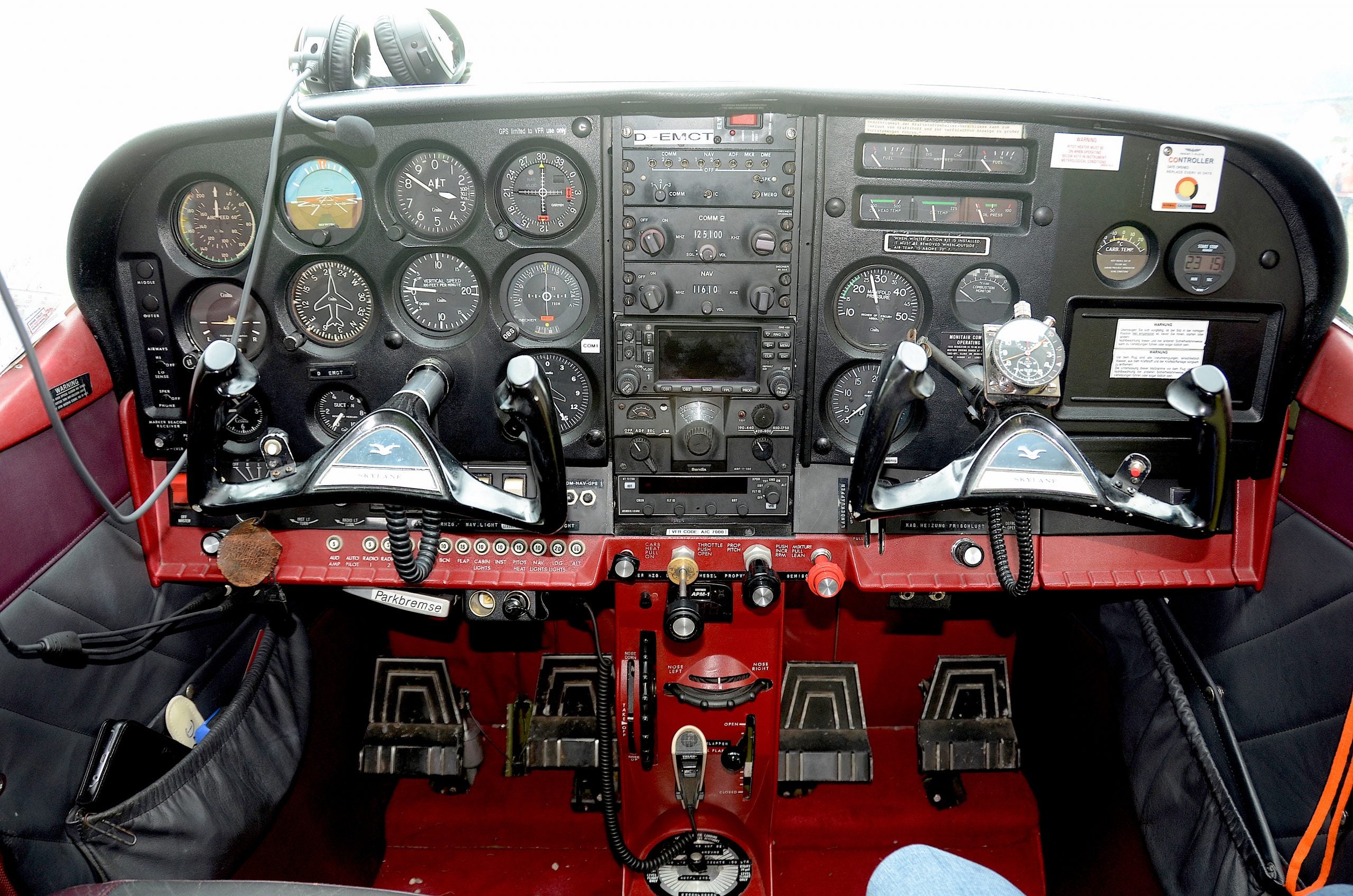
Like most first-year airplanes, the rushed-to-production 1956 Cessna 182 wasn’t all it should have been. It was perched too high on the 180’s maingear legs, so the 1957 182A had its gear widened 5.4 inches and lowered by 4 inches, changing the level ground attitude to 7 degrees nose-up to improve landing handling vastly in a crosswind. The steel spring’s thickness was also increased from 11/16 to 3/4 of an inch. The now-familiar Cessna parking brake handle under the dash was introduced, the direct-reading fuel gauges in the wingroot became electric panel gauges, an extra 5 gallons of gas were found (although usable fuel remained at 55 gallons) and 100 pounds were added to the gross weight. The old prop-open window frame was changed to today’s spring-open method, and the baggage door acquired its own external handle. The cabin door’s latch was given an over-center deadbolt to reduce wind noise, and a confirmation ratchet-click was added to the stabilizer trim wheel. Despite its funky one-year-only engine instruments cluster, the 182A was a vast improvement over the straight 182.