











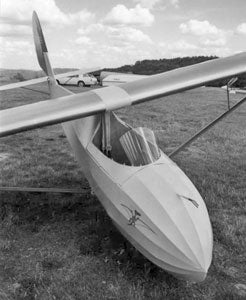
 SGU 1-7 |
 SGS 1-26 |  SGS 2-32 |
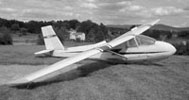 SGS 2-33 | 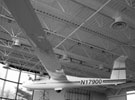 SGS 1-35 |
In December 1999, Schweizer Aircraft celebrated its 60th Anniversary. Since the three Schweizer brothers built their first glider in 1930 and incorporated Schweizer Aircraft in 1939, the company has manufactured more than 2,160 sailplanes. Schweizer is now a major U.S. aerospace contractor and no longer manufactures gliders. Historically significant Schweizer sailplanes include the following:
SGU 1-7—the first of the gliders, this one for Harvard’s Altosqurus Glider Club, in 1937.
SGS 2-8—established a new American two-place distance record of 219 miles.
SGS 1-2—set a new glider distance record of 303 miles.
SGS 1-26—the single-seat SGS 1-26 was originally designed to be marketed in kit form to homebuilders.
The later SGS 1-26E is the production version that introduced an all-metal fuselage. The all-metal mid-wing has fabric-covered ailerons and airbrakes.
SGS 2-32—this high-performance sailplane had a cockpit large enough to carry a pilot and either one large or two smaller passengers. Production began in 1964, and national gliding records were established by pilots flying this aircraft. The wings have speed-limiting brakes; only the tail fin has a fabric-covered control surface.
SGS 2-33—designed for training, the SGS 2-33A flew for the first time in 1966 and entered production in 1967. The two-seater has a strut-braced high-wing built entirely from metal. The fuselage is constructed of welded steel tube, the nose covered with fiberglass, and the remainder is covered with fabric.
SGS 1-34—this high-performance single-seat sailplane was designed to meet Standard Class specifications and is stressed to +8.33Gs and -5.33 Gs. The all-metal aluminum wings were the shoulder type with a Wortmarm FX-61-163 at the root and Wortmann FX-60-126 at the tip. The SGS 1-34B features doubleflap speed-limiting airbrakes and an optional retractable nosewheel. The standard nonretractable nosewheel is fitted with a Cleveland brake and is balanced by a forward skid and tailwheel.
SGS 1-35A/1-35C—the SGS 1-35 was available in two models. The Model A is an unrestricted 15-meterclass sailplane with interconnected flaps and ailerons and an empty weight of 490 pounds. The Model C was a less expensive spin-off intended for club use with no provision for water ballast. The C has a nonretractable nosewheel and a 425-pound empty weight.
SGS 1-36—The Sprite was an all-metal one-design sailplane, compact, lightweight and intended for clubs and schools or individual owners who want Diamond “C” performance. With a 46-foot wingspan, it has an all-aluminum structure with standard effective dive brakes, T-tail, a large cockpit, and good visibility. Two landing gear positions are offered: a forward-wheel position, which makes the ship a “taildragger,” or an aft-wheel position with a nonspring tailwheel and an aluminum nose skid. The latter is recommended for school and club operation. Standard equipment includes tip wheels, deluxe seat cushions, headrest, and rudder pedal adjusters.