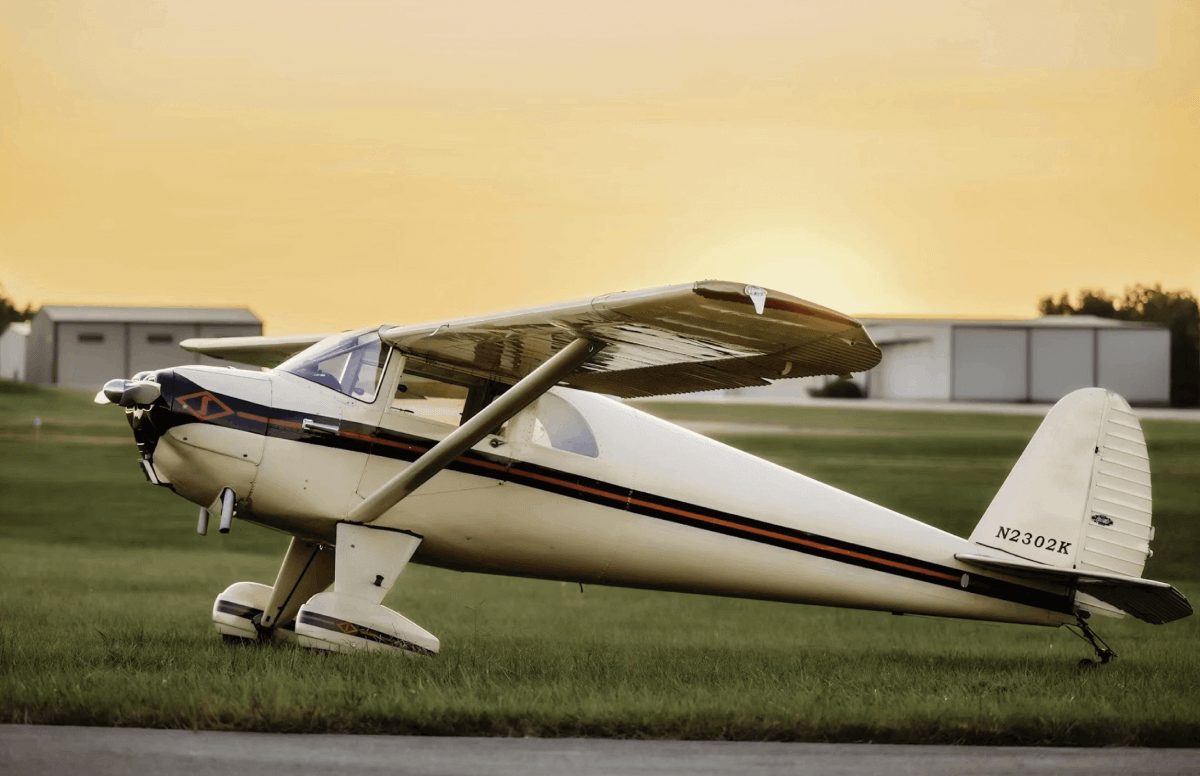












| STANDARD DATA: Seats 2. Gross wt. 1,326. Empty wt. 823. Fuel capacity 18. Engine 90-hp Warner Scarab Junior. PERFORMANCE: Top mph 135. Cruise mph 120. Stall mph 40. Initial climb rate 1,050. Ceiling 20,000. Range 336. |
Both Porterfield models entered production in 1935 and were powered by either the 70-hp LeBlond fivecylinder or the 90-hp Warner Scarab Junior five-cylinder radial engines; thus, the numerical designations 35-70 and 35-90 apply. The Porterfield Aircraft Corp. of Kansas City, Missouri, had been founded one year, and the development work was done by E.E. Porterfield, who was formerly president of the American Eagle Aircraft Corp. Other versions of the first Porterfields were built with 50, 65, and 75-hp Continental or Lycoming engines. The enclosed cabin for two persons had dual controls, but they were quickly removable from either seat. Wing construction was two spruce spars, spruce and plywood ribs, and fabric covering. The fuselage was a fabric-covered steel-tube structure.