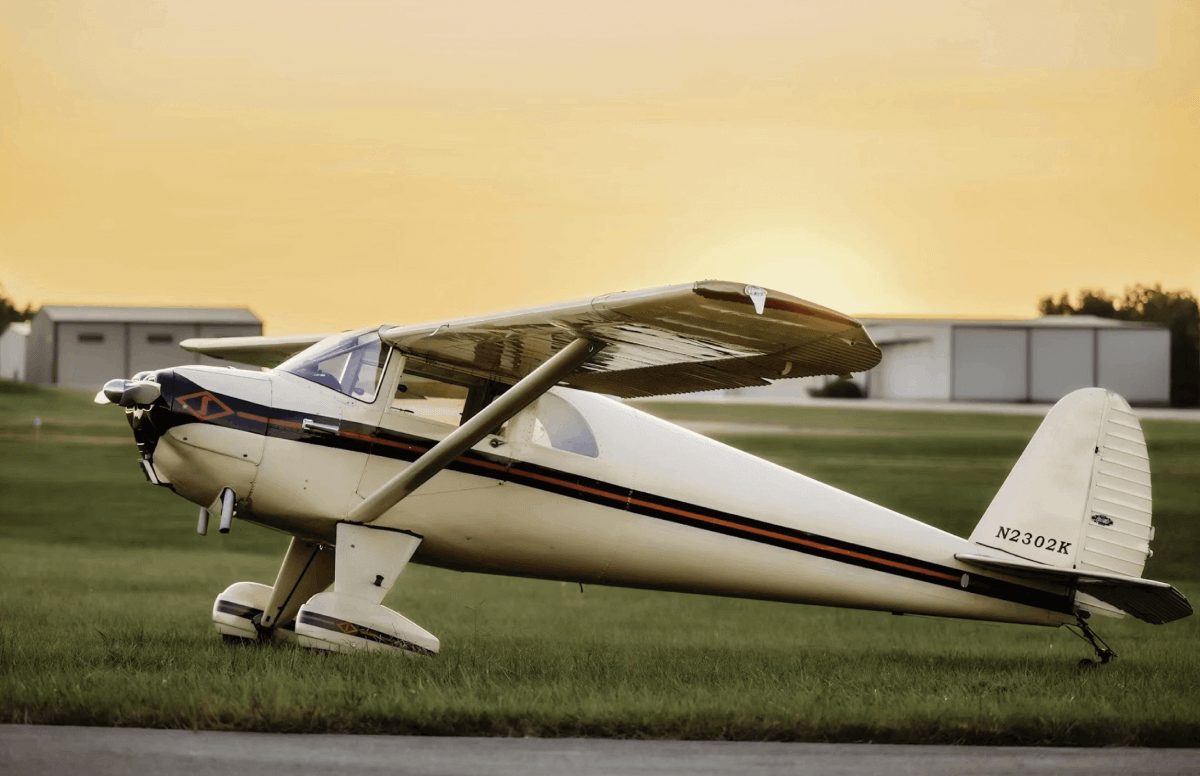












First manmade aerial propellers:China, c. 500 BCE, child’s toy
Leonardo da Vinci airscrew designs:c. 1480
First coaxial helicopter blade design:Mikhail Lomonosov, 1754
Year of first airborne propeller use:1784
Aircraft it was used in:a balloon
Means of power:hand-cranking
Early experimenter with metal prop blades:Sir George Cayley, c. 1790
First practical aircraft propeller design:Wright Brothers
Their discovery:the twisted airfoil design
Basis of twisted airfoil:propeller blades are more like wings than screws
Efficiency of Wrights’ propellers:about 82%
Efficiency of today’s propellers:around 90%
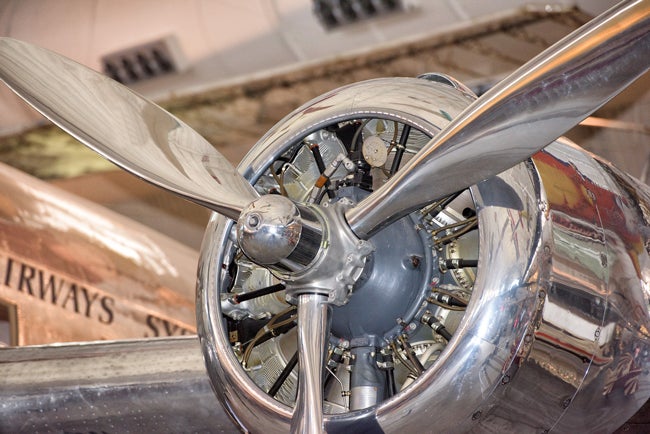
First useful metal aircraft propellers:Alberto Santos-Dumont, 1906
Number of propellers Hartzell produces each year:around 3,000
Largest production plane prop:Garuda prop, 22 ft.6 in. diameter on Linke-Hofmann R.II
One main reason for taildragger configuration:better clearance for longer blades
Largest prop on fighter plane:Vought F4U Corsair, 1939, 13 ft., three-blade
Replacement:four-blade prop with shorter blades
Fewest blades on a production propeller:1
Manufacturer:Everel Propeller Corp.
Applications:J-2 Cub (option), Taylorcraft, Cessna Airmaster
First practical controllable pitch prop:1927, electrically actuated
Advantage over hydraulics:adjustable without engine power
First production constant-speed propeller:1930, Hamilton Standard
Actuation mechanism:hydraulic (oil pressure)
Recognition for achievement:Collier Trophy
First feathering propeller: 1937, Hamilton Standard Hydromatic
First reversible pitch propeller: probably Hamilton Standard, around 1947, DC-6
Propellers on Spruce Goose (H-4):eight four-blade Hamilton Standard, 17 ft. 2 in. diameter
Most common shape of propeller tips:rounded and square
Purported benefit of square tips:greater strength
Advantage of three-blade props vs. two-blades:quieter and smoother
Reason #1 for this:shorter blades = slower tip speeds
Reason #2 for this:more but smaller pressure pulses per revolution
Most propeller blades, production airplane:Antonov SV-24, 14 blades per engine (4 engines)
Arrangement:two discs per engine, 8 blades forward, 6 in the rear
Weight of metal three-blade propeller/spinner on Cirrus SR20:80.7 lbs.
Weight of Hartzell three-blade Raptor composite prop on same plane:51.2 lbs.
Long-accepted forward aircraft speed limit for prop planes: around 500 mph
Reason for a “speed limit”:shockwaves from tips going supersonic
Rationale for more than two blades:shorter blades, slower tip speeds
Negatives for multiple blades:other blades disturb the airstream
Fastest propeller-driven plane (turboprop):XF-84F Thunderscreech, Mach .83 (disputed)
Fastest piston-powered propeller plane:Rare Bear (modified Grumman F8F Bearcat), 528 mph
Fastest combat-duty propeller plane, WWII (disputed):Messerschmitt Me 209, 470 mph
Fastest propeller-driven seaplane:Macchi M.C.72, 441 mph
Popular motorglider propeller type:folding blade
Extension mechanism:centrifugal force
Retraction mechanism:airflow
Next-gen propeller applications:NASA experimental electric planes have as many as 18 engines, all with props