











 |
| STANDARD DATA: Seats 4. Gross wt. 2,000. Empty wt. 1,104. Fuel capacity 36. Engine 150-hp Lycoming. PERFORMANCE: Top mph 140. Cruise mph 130. Stall mph 49. Initial climb rate 800. Range 536. Ceiling 16,000. Takeoff distance (50′) 600. Landing distance (50′) 1,280. STANDARD DATA: Seats 4. Gross wt. 1,950. Empty wt. 1,040. Fuel capacity 36. Engine 135-hp Lycoming. STANDARD DATA: Seats 4. Gross wt. 2,000. Empty wt. 1,110. Fuel capacity 36. Engine 160-hp Lycoming. |
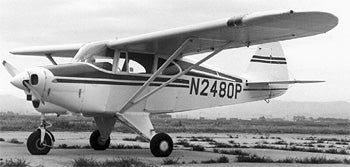
Piper’s Tri-Pacer came to life in 1951 as a redesigned PA-20 Pacer. The conventional-gear Pacer had a tendency to swerve when landing in a crosswind, so Piper Aircraft went to the drawing boards and came up with a tricycle landing gear version. Originally equipped with a 125-hp engine, the power was increased on subsequent models approximately every two years: 135 hp, 150 hp, and 160 hp. When the 160-hp version was introduced in 1958, the 150-hp model also remained in production. To distinguish the two models, the 150-hp version was called the “Caribbean” during 1959 and 1960. The four-seater (really a three-placer) proved very popular with pilots during the 1950s and is continuing to serve faithfully today.
Of fabric-covered tubular construction, the Tri-Pacer was never known for outstanding speed, but it does perform surprisingly well against newer aircraft in its class. In comparison with Piper’s 180 and Cessna’s 172, the Tri-Pacer takes off in less distance, climbs faster, carries almost as much weight, and cruises a little faster than the 172. In spite of its stubby appearance, there are many pilots/owners who speak fondly of these sturdy little birds. Besides, they weren’t designed to win any beauty contests; they were designed to carry four people through the sky from point A to point B, and they do just that very well.