











 |
| STANDARD DATA: Seats 3. Gross wt. 1,750. Empty wt. 930. Fuel capacity 36. Engine 150-hp Lycoming. PERFORMANCE: Top mph 130. Cruise mph 115.Stall mph 43. Initial climb rate 960. Range 460. Ceiling 19,000. Takeoff distance (50′) 500. Landing distance (50′) 725. STANDARD DATA: Seats 2. Gross wt. 1,500. Empty wt. 800. Fuel capacity 18. Engine 90-hp Continental. |
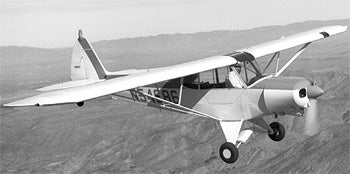
Piper’s PA-18 Super Cub first appeared in 1949 as a replacement for the J-3 and PA-11 series. It follows the same basic design as the older Cubs while offering a more powerful engine. Between 1949 and 1955, the power was gradually increased through several different engines from 90 hp to 150 hp. Some of the earlier models of the Super Cub (PA-18A) had dusting and spraying equipment installed and were used as agricultural aircraft. Other versions, designated L-18 and L-21, were designed for the military as liaison aircraft and have been used as observation planes in Southeast Asia. Along with the increase in engine power, the fuel capacity was quadrupled over that of its predecessor, extending the maximum range to more than 400 miles.
Although its top speed leaves something to be desired, the design of this airplane meets the purpose for which it was intended. After 45 years of production, Piper decided to leave the Super Cub well enough alone. Piper sells every one that it makes, particularly in South America, Asia, and Africa-anywhere a pilot needs to lift off from an unimproved airstrip in 500 feet carrying 820 pounds of people, fuel, and baggage. The PA-18 has earned the distinction of being the longest production run of any single model airplane in the history of aviation. As of 1980, over 30,000 had been built.