











 |
| STANDARD DATA: (Aztec) Seats 6. Gross wt. 5,200. Empty wt. 3,183. Fuel capacity 137-177. Engines two 250-hp Lycomings. PERFORMANCE: Top mph 216. Cruise mph 206. Stall mph 62. Initial climb rate 1,400. Range 909-1,219. Ceiling 17,600. Takeoff distance (50′) 1,980. Landing distance (50′) 1,585. STANDARD DATA: (Turbo) Seats 6. Gross wt. 5,200. Empty wt. 3,322. Fuel capacity 137-177. Engines two 250-hp turbocharged Lycomings. |
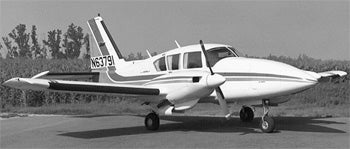
The Piper Aztec grew from the Piper Apache design, and the two aircraft share the same model numerical designation of PA-23 established during the original Apache certification. The earliest versions of the Aztec differed only slightly in appearance from the Apache, although early Aztecs featured higher performance obtained from 150-hp engines. In 1964, these differences became greater with the Aztec C featuring fuel injection, a new configuration, and improved landing gear. The 1966 Aztec C was also the first model to offer turbocharging as an option.
The Aztec F is equipped with flap-to-stabilator trim interconnect to automatically retrim to neutral pitchcontrol pressures when the flaps are extended or retracted. Also, improved slow-flight characteristics give a more positive climb/approach control. The Aztec probably ranks as one of the most docile of the conventional low-wing light twins. While its maximum and cruise speeds compare favorably with the swiftest competitor, the short, thick wing permits slow and safe airspeeds. This means excellent short-field capabilities for critical situations. Both Aztecs can clear the equivalent of a five-story building in just 1,700 feet from brake release. The normally aspirated Aztec’s 75-percent bestpower cruise is 206 mph with a range of 1,134 miles and 45-minute reserve. Optional tanks stretch that range to 1,519 miles. The Turbo model has a cruise speed of 242 mph at 22,000 feet, 961 miles with standard fuel, or 1,318 miles with optional fuel.