











 |
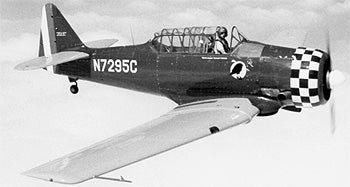
| STANDARD DATA: Seats 2. Gross wt. 5,300. Empty wt. 4,158. Fuel capacity 111. Engine 550-hp Pratt & Whitney Wasp. PERFORMANCE: Top mph 205. Cruise mph 170. Landing mph 67. Initial climb rate 1,600. Range 750. Ceiling 21,500. |
This is one of the most popular and widely used of military surplus aircraft in general aviation. It was manufactured in greater quantities than any other basic training plane. One of the great virtues of the AT-6 is the fact that it is an all-metal plane, which eliminates any concern over deterioration. The AT-6 is not difficult to fly and generally is the first step in ratings for any pilot who wishes to move up to faster surplus military aircraft. It is known under a variety of names and designations, including Texan, Harvard, AT-6, and SNJ-4. More than 10,000 were built by the United States and allied countries during the span of its lifetime. AT-6 was the army designation, and SNJ-4 was the navy designation. The name Harvard applied to those built by the Noorduyn factory in Canada; the Harvard differed only in its lack of armament equipment. The AT-6 was later modernized and used in Korea as a spotter plane. It had slightly more power and better visibility from both seats.