












 |
| STANDARD DATA: (285 hp) Seats 5. Gross wt. 3,315. Empty wt. 1,950. Fuel capacity 108. Engine 285-hp Continental. PERFORMANCE: Top mph 197. Cruise mph 191. Stall mph 59. Initial climb rate 1,375. Range 1,800. Ceiling 21,500. Takeoff distance (50′) 920. Landing distance (50′) 980. |
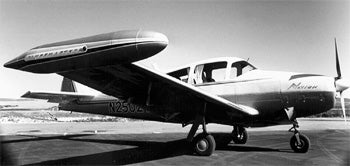
The Rangemaster is a refinement of the earlier North American/Ryan Navion design. It is quite a different airplane despite the fact that it retains the original Navion wing, undercarriage, and fuselage. In the early 1960s, the production of Navions was taken over by the Navion Aircraft Corp., which was made up of members of the American Navion Society. The first Rangemaster took to the air in 1960, and production began in 1961. The first model was designated the Rangemaster G and retained the 260-hp Continental. The Rangemaster G-1 followed in 1962 with redesigned smaller tail surfaces. Rangemasters get their name from the excellent range provided by the extra fuel that can be carried in the two centerline fuel tanks mounted on the tip of each wing. These 34-gallon tip tanks are in addition to the main 40-gallon tank. In 1966, the Rangemaster II was unveiled with its 285-hp powerplant. It quickly became known for its speed, shortfield performance, and of course its exceptional range.