









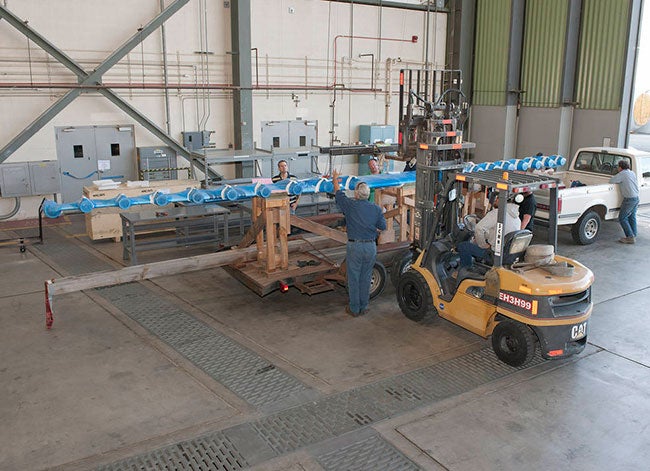

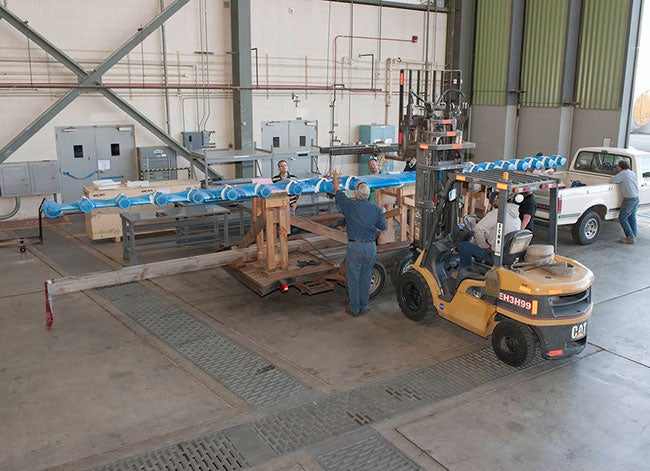
 Technicians unloading the LEAPTech experimental wing during its arrival at NASA Armstrong Flight Research Center. |
The development of alternate forms of propulsion is a favorite of NASA, and the latest one has fascinating potential ramifications for even very light airplanes. Since last February, NASA researchers have been working with an experimental demonstrator at the NASA Armstrong Flight Research Center that has the potential to produce a future where the majority of aircraft motors are powered by electricity. The Leading Edge Asynchronous Propeller Technology project, otherwise known as LEAPTech, will be testing the hypothesis that tighter propulsion-airframe integration will allow for increased safety and efficiency.
Over the span of multiple months researchers from NASA conducted ground testing of a 31-foot-span, carbon composite wing section with 18 electric motors powered by lithium iron phosphate batteries. The wing they were experimenting on, named the Hybrid-Electric Integrated Systems Testbed, or HEIST, was mounted on a customized truck. This allowed researches to utilize the mobile ground rig assembly for important data and risk reduction in order to utilize it for forthcoming flight research. The Heist wing section was fastened to load cells on a supporting truss as the vehicle was driven across a dried lakebed at up to 70-miles an hour at the Edwards Air Force Base. Now that’s some headwind!