











 |
| STANDARD DATA:Seats 2. Gross wt. 1,910. Empty wt. 1,340. Fuel capacity 26. Engine 160-hp Kinner five-cylinder radial. PERFORMANCE: Top mph 120. Cruise mph 105. Landing mph 40. Initial climb rate 1,200. Range 400. Ceiling 17,500. |
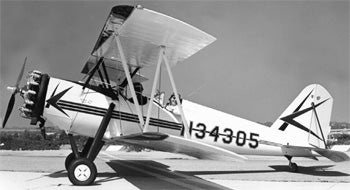
This popular two-seat biplane was introduced in 1939 as a primary trainer. The first model was the OTW- 125, powered by a 125-hp Warner Scarab engine and constructed with a metal fuselage and wooden wings. A year later, Meyers installed a 145-hp Scarab and gave the tandem-seat airplane the OTW-145 designation. The OTW-160 soon followed and featured a 160-hp Kinner. In 1943, the entire production of the Meyers plant in Tecumseh, Michigan, was concentrated on the Model OTW160, and the total output was delivered to schools operating under C.A.A. War Training Service. All three models of the OTW can still be found flying in the United States and Canada.