











 |
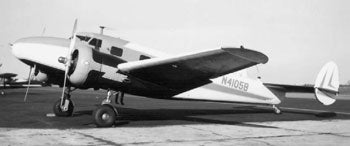
| STANDARD DATA: Seats 8. Gross wt. 8,650. Empty wt. 6,090. Fuel capacity 200. Engines two 420-hp Wright Whirlwinds. PERFORMANCE: Top mph 217. Cruise mph 220. Stall mph 65. Initial climb rate 1,460. Ceiling 21,300. Range 784. |
Housing a crew of two and six passengers, the Model 12 was designed as a lighter, smaller version of the Model 10 Electra. It was first introduced in 1936 with a choice of two powerplants: twin 400-hp Wasp Juniors or twin 420-hp Wright Whirlwinds. The largest engine installed in later years was the 450-hp Pratt & Whitney Wasp Junior; this version of the lightweight Lockheed survives in the greatest numbers. In 1936, the Model 12 had the distinction of being the fastest airplane in its class (commercial twin) produced in the United States. The Model 212-A was a military version fitted with a dorsal gun turret and supplied to several foreign countries, including the Netherlands East Indies.