











 |
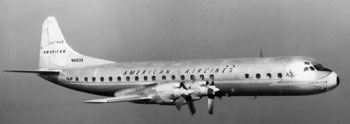
| STANDARD DATA: Seats 74-98. Gross wt. 116,000. Empty wt. 57,300. Fuel capacity 5,520. Engines four 3,750-shp Allison turboprops. PERFORMANCE: Top mph 448. Cruise mph 405. Stall mph 107. Initial climb rate 1,970. Range 2,770. Ceiling 28,400. Takeoff run 4,720. Landing roll 4,300. |
Electras were produced in two versions, the L.188 and the L.188C. The L.188C was fitted with new tanks for increased fuel capacity and longer range. Initially developed according to specifications ordered by American Airlines to meet its need for a medium-range airliner, the Electra first took to the air in 1957. Most were equipped to carry about 74 passengers, but 98 could be packed in if necessary. Several crashes occurred in 1959 that caused Lockheed Corp. to make a few improvements including a stronger wing structure and engine nacelles plus thicker wing skins. The Electra is still used by many airlines around the world on their shorter routes.